Blog

  • FOGO COMBATENDO FOGO, CHUVA, NĀO DE CINZAS E UM MILAGRE

    Worcester, África do Sul 02/02/16

    image

    Ontem eu acordei com uma cortina de fumaça e uma chuva de cinzas que fez uma camada grossa de cinzas no meu quintal. A vista a noite a poucos quilômetros da minha casa era essa. 

    Acontece que de tempos em tempos também temos noites de grande visitaçāo de Deus, e assim foi na noite passada. Enquanto o fogo descendo as montanhas que nos cercam nos dava a visāo de um vulcāo em chamas, nós tinhamos uma noite de muita presença de Deus em uma reuniāo em que buscavamos ao Senhor.

    A cidade, cercada de plantaçőes de uva, estava em alerta enquanto o fogo se alastrava rapidamente em direçāo as plantaçőes e ao Safari. Ao longe, enquanto eu enviava um pedido de oraçāo a igreja brasileira, eu avistei um relâmpago. Esperança.

    Correndo contra a falta de tempo, uma estratégia brilhante surgia. Uma estratégia que iria combater o fogo com… o fogo. Isso mesmo, com o fogo.

    Os donos das plantaçőes, para conter o fogo, colocaram fogo ao redor das suas plantaçőes antes que fogo das montanhas chegasse a eles. Colocaram fogo e o apagaram, queimando assim parte da plantaçāo. Assim fazendo impediram que o fogo se alastrasse e destruísse tudo.

    Com uma chuva momentānea, ajuda dos bombeiros e muita oraçāo o fogo que mais parecia um vulcāo em chamas se extinguiu e hoje eu acordei para um novo dia em que as cinzas do dia anterior se transformaram em alegria. 

    Obrigado a todos pelas orações e pelo suporte.  

  • MONTANHAS EM FOGO, CHUVA DE CINZAS, DESTRUIÇĀO E VISITAÇĀO DE DEUS

    Esta é o que chamamos a semana do Espírito Santo, onde o líder nacional da Jocum ensina por uma semana sobre o Espírito Santo. Ele é do tipo: mais Espírito Santo. Muita presença de Deus sobre a cidade de Worcester na África do Sul!

    image

    Enquanto isso nós oramos desesperadamente por uma forte chuva. O fogo tomou conta das montanhas ao redor da cidade destruindo tudo. Fazendas inteiras perdidas com toda a plantaçāo.

    image

    Pessoas desabrigadas, animais mortos e fugindo. Temos um grande safari cheio de animais expostos ao fogo.

    image

    Por favor orem para que uma chuva abundante venha sobre nós e acabe  com este desastre.

    Yury e Deidre 
     

  • CARTA A IGREJA BRASILEIRA

    image

    E quase 4 anos se passaram. Muito rápido! Esta foto é do primeiro ano aqui na África do Sul. Na foto em uma cozinha que alimenta 120 crianças todos os dias, uma senhora que tinha o rosto pintado de acordo com a tradiçāo dos ancestrais, religiāo africana, em que os ancestrais te protegem.   

    image

    Esta é uma foto do segundo ano. Neste momento eu liderava um ministério com 400 crianças.

    image

    2013 – Indo para o meu terceiro ano aqui. Deus me abençoou com uma esposa linda. Deidre. Agora começava outro tempo na minha vida e ministério. A igreja Sul africana da qual éramos parte nos convidou a trabalhar diariamente no ministério deles.  

    image

    Esta é uma foto do 4 ano, onde somos pastores da igreja aqui, lideramos um grupo de aproximadamente 100 jovens, trabalhamos na prisāo de segurança máxima aqui e continuamos com as crianças carentes.

    Trabalhamos com treinamento de liderança, discipulado, reuniőes de oraçāo e adoraçāo e ensino da palavra.

    image

    Montamos um projeto chamado O Vírus Bíblico. Através do mesmo enviamos um versículo bíblico todos os dias para os participantes e eles podem adicionar pessoas para receberem também. As mensagens sāo enviadas através do what’s app. Uma maneira, fácil, prática e criativa de se estudar a bíblia.  

    image

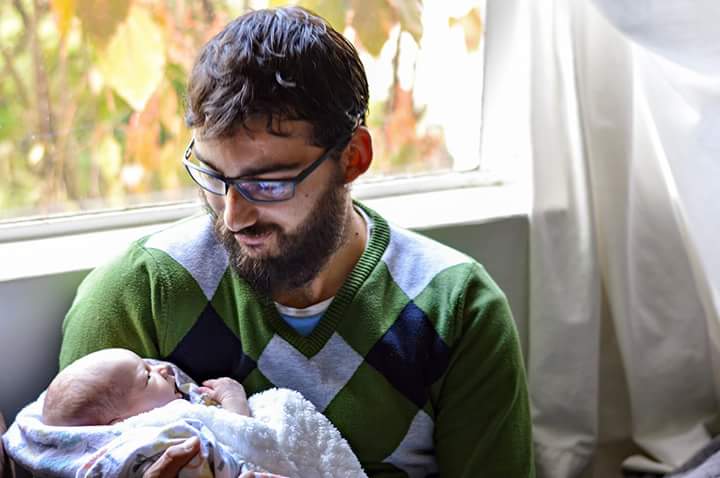
    Neste último ano Deus nos abençoou com a pequena Liora. Com toda certeza a maior alegria da minha vida.

    image

    Nāo resisti! Tive que colocar mais uma.

    A vida missionária é um desafio grande, vcs sabem. Tem o desafio cultural. Tem o desafio da distância. Tem o desafio da língua. Tem o desafio financeiro.

    O desafio cultural é diário, mesmo estando aqui por 4 anos. Tenho que me vigiar pra nāo me comunicar de uma forma errada.  

    A distância da família e amigos é grande e difícil de lidar, principalmente nos 2 primeiros anos. Hoje estou mais adaptado a minha realidade. Mas sempre fica uma saudade.  

    A língua eu aprendi. Inglês. Agora estou aprendendo Afrikaans, um dos dialetos. Desafio, hehe.

    Finanças. Neste 4 anos eu já passei por todas as situaçőes imagináveis. Já tive fome, como Paulo disse e já tive abundância. Fui abandonado por todos (minha igreja no Brasil) e abraçado, adotado por muitos (minha igreja Sul africana). Já vivi momentos de muita incerteza e vi o Senhor operar milagres,  bendito seja o Seu Nome.

    A minha realidade hoje me deixa um pouco ansioso, falando honestamente. A igreja Sul africana parou de pagar o salário de pastor por falta de condições financeiras e como eu nāo vinha tendo muito suporte do Brasil, eu me encontro em oraçāo por um milagre.

    Vc pode ajudar com orações, divulgaçāo e contatos e financeiramente a partir de R 10,00 
    Se quiser ajudar:

    Banco do Brasil
    Agência: 2316-7
    Conta poupança: 16359-7
    Variaçāo 51
    Cpf: 092730357-44
    Yury Alecrim Gomes Gaudard Tavares

    Contatos:
    Tel: +27 71 442 0692    
    Email: yuryalecrim@hotmail.com

    Yury, Deidre e Liora Gaudard.        


  • ISIS INVADINDO O IRAQUE. OREM. URGENTE!

    URGENTE: POR FAVOR OREM!

    image

    O site Open Doors UK – Portas Abertas na Inglaterra recebeu um pedido de oraçāo urgente de um de seus contatos no Oriente Médio.

    Ela nos conta sobre uma série de ataques em larga escala feitos pelo Estado Islâmico no Iraque. Essas sāo as palavras dela:

    “Desde a noite passada o Estado Islamico esta atacando as frentes Kurdas em cinco áreas diferentes. Muitos foram mortos ou estāo feridos. As emergências dos hospitais estāo cheias.

    Nove homens bomba se explodiram e dois foram mortos antes de se explodirem.    

    Os ataques mais sérios foram em Bashiga nas planices de Nínive e Khazer ao norte do lago Mosul. Os ataques ainda continuam fortes em Khazer e vilas vizinhas  se juntaram a luta contra o Estado Islâmico.

    De acordo com informaçőes a coalizāo estrangeira que está ajudando com aviőes foi vista pouquíssimas vezes deixando os kurdos lutando basicamente sozinhos contra o Estado Islâmico.

    Por favor orem para que, de novo, o Estado Islâmico seja impedido.

    Por agora apenas orem.

    PEDIDO DE ORAÇĀO ENVIADO PELO SITE BRITÂNICO PORTAS ABERTAS ATRAVÉS DE SEU CONTATO NO ORIENTE MÉDIO:

    – Para que esta violência e conflitos acabem e que o Estado Islâmico nāo vença. 
    – Por proteçāo de inocentes.
    – Por proteçāo dos parceiros do Portas Abertas que estāo ajudando muitas famílias na regiāo.

  • MINHA IMPRESSIONANTE FUGA DA CORÉIA DO NORTE

    image

    Esta é a impressionante história de Joseph Kim, um entāo menino que conseguiu fugir da fome e abandono na Coréia do Norte. Um fator essencial para a sua fuga foram as palavras, até entāo desconhecidas, igreja e cristāos.
     
    Na Coréia do Norte era como crescer em qualquer outro lugar. Eu tinha meus pais que sempre me mostravam o quanto eles me amavam, eu tinha a minha irmā mais velha que sempre cuidava de mim. Eu sempre brincava na rua com meus amigos e assistia desenhos na Tv.  

    Entāo em 1995 veio uma grande fome sobre o país e a minha infância foi destruída.

    Quando eu tinha 12 anos o meu pai morreu de fome. Nossa casa foi tomada para pagar uma divida de família. Naquele ano a minha māe foi a China em busca de comida e dinheiro.  Ela voltou alguns meses depois e ela tinha vendido a minha irmā. Naquela época nós nāo tinhamos idéia o que o tráfico internacional de pessoas para o sexo era. Minha irmā tinha sido vendida como escrava e nós acreditamos que ela teria uma vida melhor.

    Minha māe nāo era a única Norte Coreana a ter que tomar decisőes que parecem impossíveis. Ela continuou viajando esporádicamente a China em busca de comida até que foi pega pelo governo Norte Coreano e levada a prisāo.

    Minha família estava perdida e eu virei  menino de rua. A possibilidade de me sentir amado de novo começou a se tornar um pensamento muito distante. Antes mesmo de eu decidir sobre mim mesmo quem eu era outros o fizeram por mim. Eu era o sem teto, mendigo, orfāo. Quando eu me aproximava das pessoas no mercado eles me mandavam embora como se eu fosse uma mosca. Ninguem nunca me disse: eu vejo o quāo fraco e sem esperança você esta.

    Com 15 anos eu tinha apenas uma escolha. Ou eu morria de fome como o meu pai ou eu tentava fugir do país e encontrava uma vida melhor. Entre a certeza da morte e a chance de sobreviver eu escolhi a chance se sobreviver.  

    Eu ouvi que a maioria dos Norte Coreanos tentam cruzar a fronteira com a China a noite, entāo eu planejei a minha durante o dia em Fevereiro de 2006. Eu cruzei o rio Tumen e foi um milagre conseguir chegar no outro lado.  

    Eu fugi cheio de esperança. Eu estava certo que eu nāo teria dificuldades de encontrar comida. Eu imaginava as familias chinesas me entregando os restos de comida, um prato de arroz.  Mas uma vez na China, a realidade me alcançou. Ninguem me dava nada, eles se irritavam quando eu pedia restos de comida e eu estava muito desapontado pensando comigo mesmo como que eles podiam ser assim.  

    Por algumas semanas eu consegui tāo pouco que eu mal podia sobreviver. Foi entāo que eu me aproximei de uma senhora idosa e ela me disse: me desculpe mas eu nāo tenho nada a lhe oferecer. Mas ela me disse que eu deveria procurar por uma igreja, um edifício com uma cruz e por cristāos.

    Eu tinha visto uma vez uma cruz vermelha em um hospital na Coréia do Norte. Eu nāo tinha a menor idéia o que a cruz tinha a ver com a igreja mas eu segui o conselho daquela senhora chinesa. Eu caminhei na direçāo que ela me deu mas eu nāo achei nenhum prédio com uma cruz.

    Eu parei um homem e perguntei: onde posso encontrar uma cruz? Ele me disse: olhe pra cima. E lá estava a cruz.

    Esta era a minha primeira vez dentro de uma igreja. Era noite e poucos homens estavam dentro do modesto prédio. Eu disse: Eu venho da Coréia do Norte,  eu nāo conheço ninguém aqui e eu preciso de ajuda. Um homem me deu 20 yuan  e me disse pra gastar com cuidado.

    Daquela cidade no Norte da China eu viajei para Yanji e depois para a cidade de Tumen. Eu vaguei de novo até que eu encontrei outra igreja. Na parede estava escrito: Venham a mim todos os que estāo cansados e eu vos aliviarei.

    Joseph Kim foi ajudado e adotado pelos cristāos até que chegou aos Estados Unidos. Hoje ele vive lá e lançou o livro: Under the same sky que traduzido é: Debaixo do mesmo céu, contando a sua história completa.  

    Fonte: Christianity Today

  • Carta de um missionário africano

    Oi, meu nome e Yury Gaudard, tenho 33 anos, formado em Teologia com especializacao em cultura e  tenho sido missionario na Africa do Sul nos ultimos quatro anos, servindo como pastor de jovens em uma igreja local.

    Tambem sou professor de escola biblica na prisao de seguranca maxima da cidade e fazemos um trabalho de discipulado e transformacao na comunidade mais carente aqui da cidade.

    Eu tambem trabalho em conjunto com a Jocum, que tem uma base de treinamento aqui na cidade e escrevo no meu blog pessoal sobre as dificuldades do Cristianismo no mundo (yuryalecrim.wordpress.com).

    Eu sou casado com uma Sulafricana e tenho uma filha recem nascida.

    Vivemos numa cidade muito violenta aqui na Africa do Sul o que faz com que vivamos em alerta, tomando cuidado e vigiando.

    O nome da cidade e Worcester e os maiores desafios aqui sao: Violencia, desigualdade social, alcoolismo que faz com que a cidade seja a numero 1 do mundo em criancas com deficiencia mental causada pelo alcoolismo dos pais e o racismo, que embora tenha diminuido ainda e muito forte na nacao (outro dia eu me assustei com uma pessoa andando na rua olhando pra mim com cara de odio apenas por causa da minha cor).

    image

    Projeto na Comunidade Avian Park onde damos comida diariamente pra 100 criancas na idade entre 3 – 13 anos e de duas em duas semanas temos um projeto chamado Swop Shop onde as criancas trazem materiais reciclados, nos pesamos o material que sao trocados por brinquedos, material escolar e de higiene pessoal, rpoupas etc… e tambem ensinamos a palavra de Deus a eles. Sao aproximadamente 400 criancas que atendem ao projeto.

    image

    Esta e a minha familia. Minha esposa Deidre e minha filha Liora.

    image

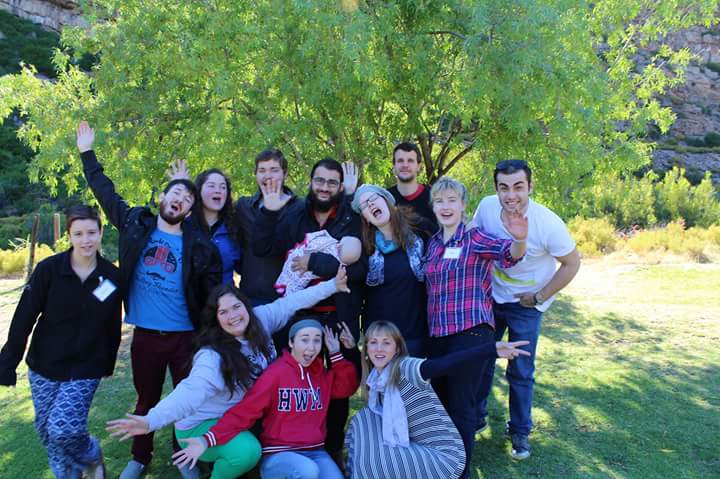
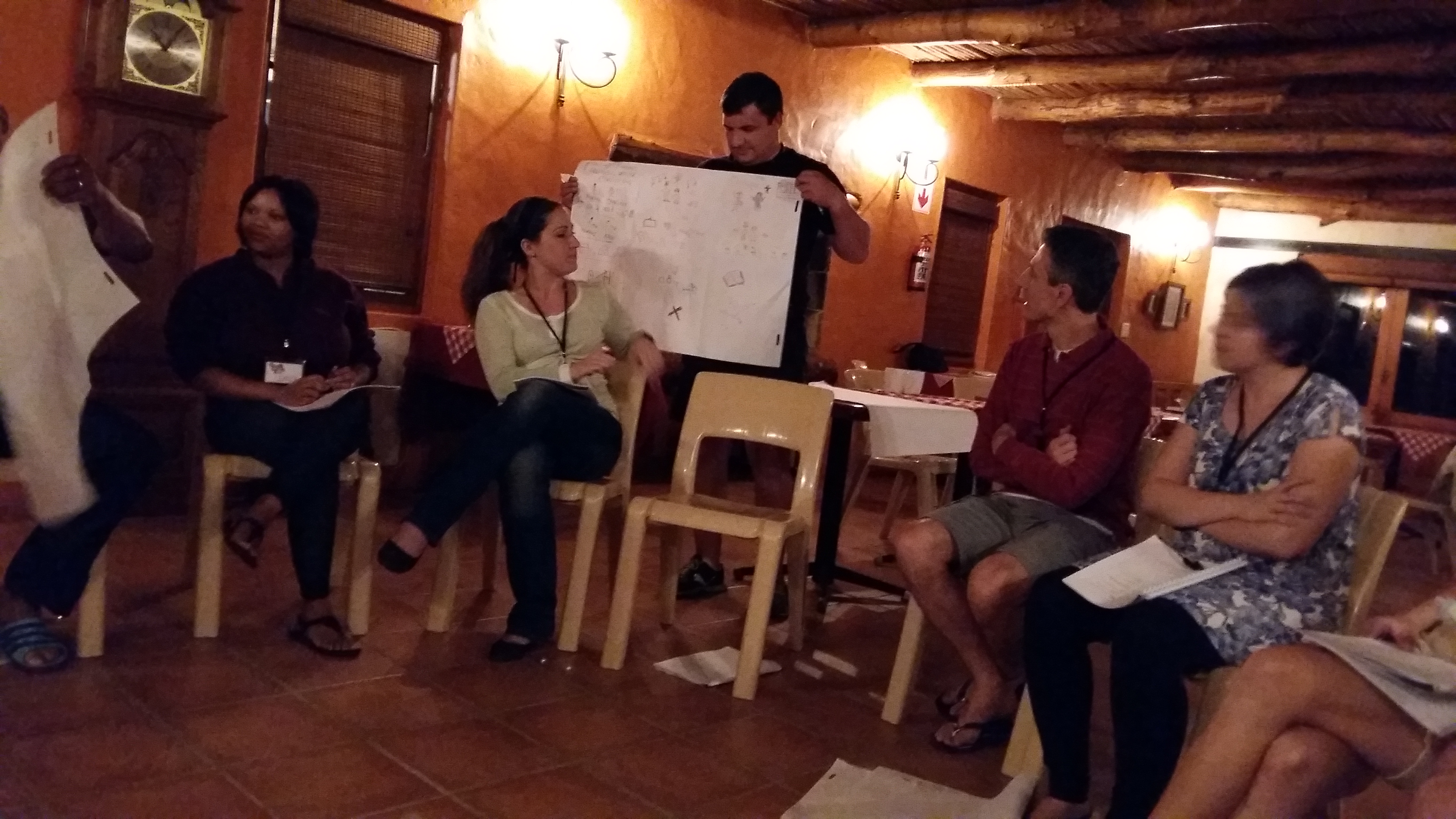
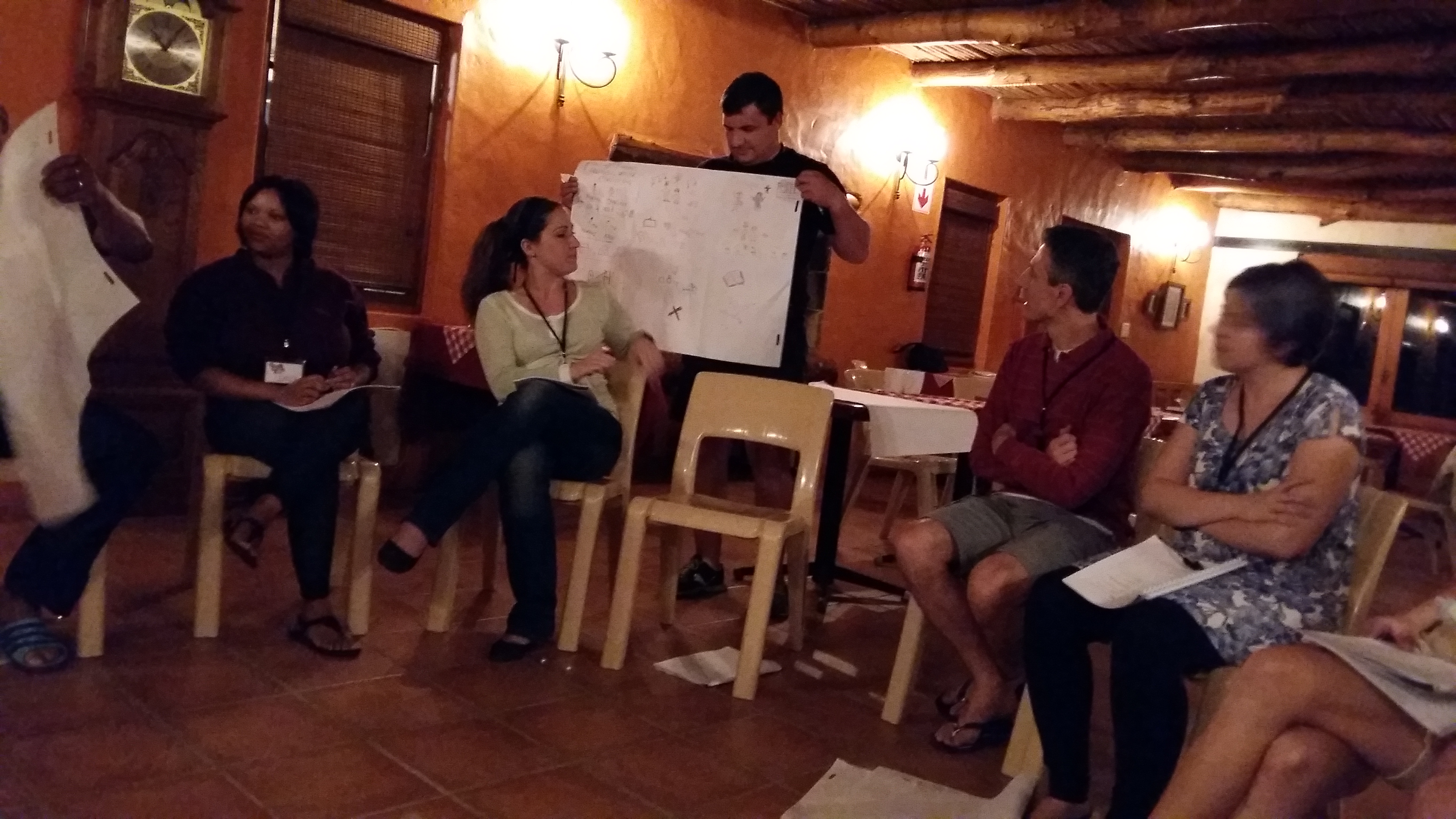
    Este e uma parte do grupo que eu e minha esposa pastoreamos. Nos fazemos discipulado, temos eventos com o proposito de conectar pessoas e eventos de oracao e adoracao com eles. 

    image

    Treinamos lideres e trabalhamos com grupos pequenos. Nosso trabalho inclui aconselhamentos, batismos, treinamentos e acompanhamento.

    image

    Mais uma foto do trabalho com as criancas!

    image

    O por do sol Sulafricano!

    image

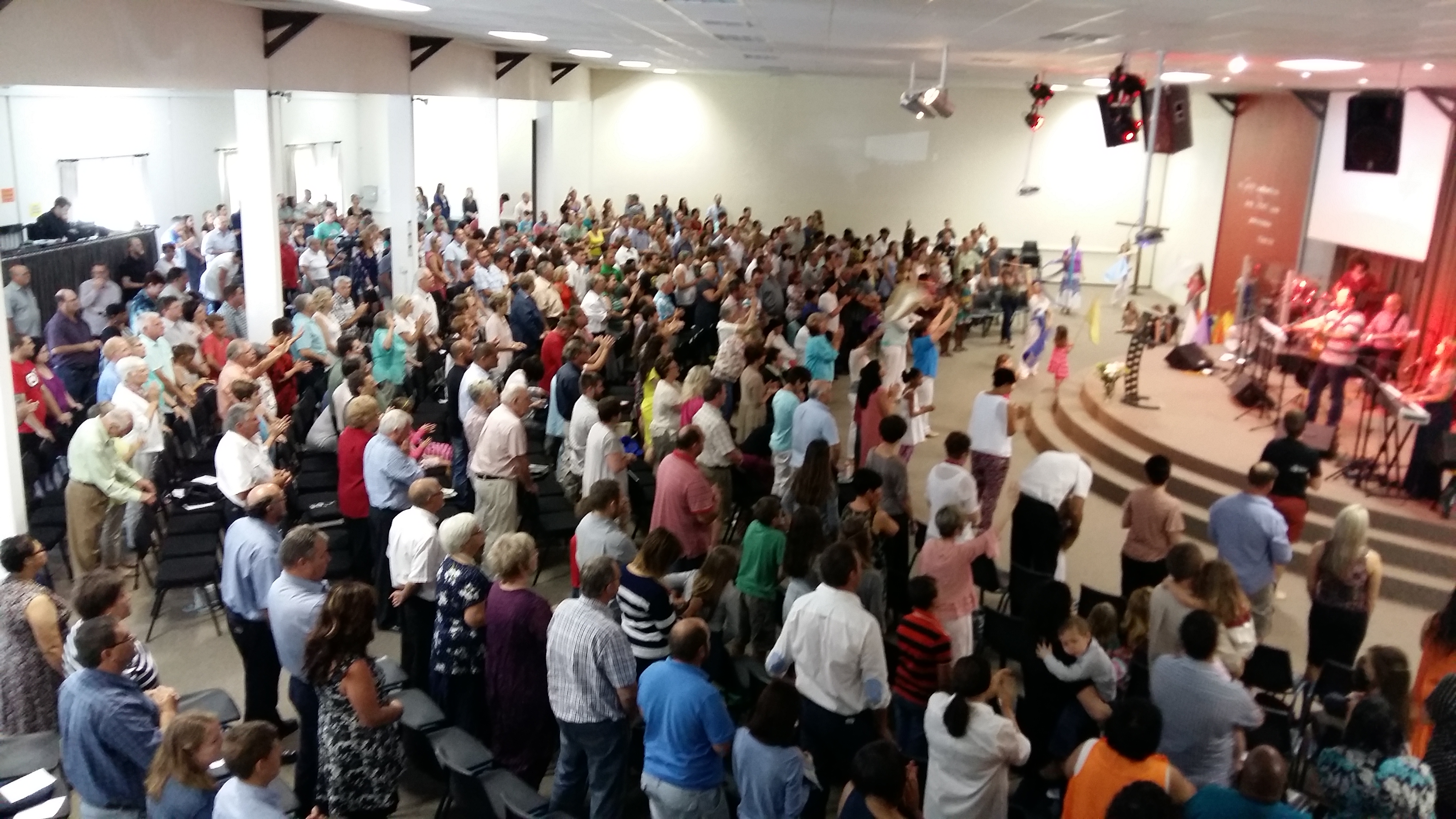
    Noite de adoraçāo na base da Jocum:

    image

    DESAFIOS:
    1- O que eu mais preciso no momento e que uma igreja me adote financeira e espiritualmente. Apesar de eu estar aqui a quarto anos e ter me estabelecido ministerialmente, me adaptado a cultura e lingua, nos precisamos, no momento, de um milagre financeiro que venha de uma forma constante. Eu nao tenho nenhuma igreja que me apoia (a minha igreja no Brasil apenas me apoiou no primeiro ano), e a minha maior necessidade e de um apoio constante.

    2- A curto prazo nos precisamos de um carro para que o nosso ministerio possa crescer. Os carros aqui sao baratos, mas sem mantededores mensais e impossivel fazer qualquer plano.

    COMO AJUDAR: 
    BANCO DO BRASIL
    AGENCIA 2316-7
    CONTA POUPANCA: 16359-7
    VARIACAO: 51
    CPF (em caso de transferencias): 092730357-44
    Yury Alecrim Gomes Gaudard Tavares

    MUITAS BENCAOS A IGREJA BRASILEIRA
    Yury, Deidre e Liora Gaudard

  • CARTA MISSIONÁRIA

    Abaixo temos fotos do que fizemos em Dezembro. Dê uma olhada.

    Contribua a partir de R 10,00 e nos ajude a fazer mais!

    BANCO DO BRASIL
    AGÊNCIA 2316-7
    CONTA POUPANÇA 16359-7
    VARIAÇĀO 51
    CPF 092730357-44
    Yury Alecrim Gomes Gaudard Tavares

    PEDIDO DE ORAÇĀO
    Orem por nossa segurança pois vivemos em um país muito violento.
    Orem por descanso pois teremos férias até Janeiro.   
    Orem pelas nossas finanças pois estamos em um momento dificil.
    Orem por provisāo pois precisamos de um carro. 

    image

    Retiro com 35 jovens dos quais somos pastores.

    image

    Retiro para casais!

    image

    Reuniāo de pastores e líderes de célula.

    image

    Igreja

    image

    Por do Sol

    image

    Adorando

    image

    Familia

  • CARTA MISSIONÁRIA

    Abaixo temos fotos e vídeo do que fizemos em Dezembro. Dê uma olhada.

    Contribua a partir de R 10,00 e nos ajude a fazer mais!

    BANCO DO BRASIL
    AGÊNCIA 2316-7
    CONTA POUPANÇA 16359-7
    VARIAÇĀO 51
    CPF 092730357-44
    Yury Alecrim Gomes Gaudard Tavares

    image

    Conferência de casais 03/04/05 – 11 – 2015

    image

    Reuniāo de pastores e líderes de célula.

    image

    Batizando em o nome do Pai, Filho e Espírito Santo.

    image

    Retiro com 35 jovens dos quais somos pastores. 20/21/22 – 11 – 2015

    image

    Crianças

  • GRUPO DE FREIRAS SE VESTEM DE PROSTITUTAS PARA AJUDAR CONTRA O TRÁFICO HUMANO.

    Freiras estăo se disfarçando de prostitutas para parar o tráfico internacional de pessoas.

    image

    De acordo com o site Christian Today o grupo Talita Cumi tem 1100 freiras. O grupo foi criado em 2004.

    “Eu nāo estou tentando ser sensacional mas sim tentando mostrar que existe um mundo lá fora que perdeu a sua inocência… onde as forças do mal estāo agindo,” disse John Studzinski, o líder do projeto Talita Cumi e investidor.

    O grupo de freiras normalmente se veste de prostitutas e entram em bordéis.

    “As irmās nāo confiam em ninguém. Elas nāo confiam em governos, corporações ou mesmo a polícia. Em alguns casos elas nāo confiam nem mesmo em sacerdotes diz Studzinski.”

    “Elas trabalham secretamente em prostíbulos.”

    Elas também levantam fundos para comprarem crianças que sāo escravas.

    “Este é um projeto com muitas casas de apoio para crianças que seriam vendidas como escravas.” A realidade é chocante!

    O tráfico de mulheres e crianças é real e de acordo com o projeto os números alcançam 73 milhões de pessoas no mundo.

    Que a palavra profética liberada pelo Senhor Jesus se realize e que muitas mulheres e crianças recebam vida através deste lindo projeto!

    TALITA CUMI!

    Fontes: Talita Cumi
    Christian Today

  • COMANDANTE DO ISIS ATINGIDO POR BOMBA ENQUANTO DAVA ENTREVISTA

    O comandante de um dos batalhões de frente do grupo ligado ao Estado Islâmico Al-Nusra é atingido por uma bomba pelo exército Sírio.

    Ele dava entrevista a um repórter Sírio quando a bomba o atingiu, também matando o repórter Ahmed Abu Hanza.

    O comandante se gabava, no momento de sua morte, do sucesso em suas operações na Síria. Ainda com a boca cheia, foi pego de surpresa.   

    Note, no vídeo abaixo, que ele chegou a ver a bomba mas nāo teve tempo de reaçāo.

    Oremos pela restauraçāo da paz na Síria, principalmente para que toda essa barbaridade acabe e o Cristianismo floresça naquele país.

    Fonte: RT NEWS

  • 5 GRANDES DESASTRES EM 24 HORAS! SINAIS DA VOLTA DE JESUS!!!

    Em 24 horas nós tivemos 5 grandes eventos no mundo. Um terremoto no México, um atentado terrorista na França, um terremoto no Japāo, um atentado em Bagdá e um atentado em Beirute.

    Um terremoto no México que alcançou 5 pontos, um no Japāo 7 pontos com uma “pequena Tsunami,” no Iraque um ataque suicída a bomba matou 19 pessoas, na França múltiplos ataques mataram 127 pessoas e em Beirute, no Líbano, 41 pessoas morreram após dois ataques suicídas simultaneos.

    image

    O mundo se volta contra cristāos, que segundo o site Portas Abertas é a pior de todos os tempos, de todas as eras.

    Tudo isto acontece como cumprimento de uma profecia que aponta a volta de Jesus e o final de todas as coisas de acordo com Mateus 24.

    A Bíblia diz:
     
    “E ouvireis de guerras e de rumores de guerras; olhai, não vos assusteis, porque é mister que isso tudo aconteça, mas ainda não é o fim.
    Porquanto se levantará nação contra nação, e reino contra reino, e haverá fomes, e pestes, e terremotos, em vários lugares. Mas todas estas coisas são o princípio de dores. Então vos hão de entregar para serdes atormentados, e matar-vosão; e sereis odiados de todas as nações por causa do meu nome. Nesse tempo muitos serão escandalizados, e trair-se-ão uns aos outros, e uns aos outros se odiarào.
    E surgirão muitos falsos profetas, e enganarão a muitos.
    E, por se multiplicar a iniqüidade, o amor de muitos esfriará.”

    É tempo de cumprirmos, como cristāos, a outra parte da profecia que diz em Mateus 24;14 que diz que o Evangelho do Reino deve ser pregado em todas as nações. Este é o nosso tempo, esta é a nossa hora. Que se levante uma igreja missionária que pregue o Evangelho em todos os cantos do mundo, e entāo, conforme os sinais dos tempos, veremos o fim!

    Fontes: English Alarabia
    BBC  

  • URGENTE! TERREMOTO E TSUNAMI NO JAPĀO

    image

    Um terremoto de magnitude 7.0 acabou de atingir a costa japonesa a 159 km sudoeste da cidade de Makurazaki.

    A Agência Metereológica Japonesa emitiu diversos alertas de Tsunami que podem atingir a costa japonesa.

    Oremos pelo Japāo, que tem sido repetidamente destruído por desastres naturais.

    Fonte: https://www.rt.com/news/321876-japan-earthquake-tsunami-felt/

  • Carta missionaria!

    CARTA MISSIONARIA 10/11/15
    AS ALEGRIAS, CONQUISTAS E DIFICULDADES DO CAMPO

    image

    Tenho tido muitas alegrias desde que cheguei aqui na Africa do Sul. Me lembro muito bem. Cheguei sem nenhuma experiencia em outro pais, sem falar nada de ingles ou de qualquer outra lingua extrangeira e sob forte pressao da igreja em que fazia parte, pois nao acreditavam no meu chamado e nem mesmo me apoivam.
    Mas gracas a Deus, nestes quase quatro como missionario, Deus tem me abencoado muito. Me deu uma linda esposa, da qual eu nao conseguiria chegar aonde estou hoje. Me deu uma casa, na qual podemos morar em seguranca. Me deu dois cachorros lindos. Me deu uma igreja que me abracou dentro de uma cultura fechadissima, me adotou, abriu as portas pra mim e por ultimo, neste ano, me ungiu pastor. Me deu um ministerio lindo, com jovens entre 17 e 30 anos, com 400 criancas carentes em um projeto que visa ensina-los a palavra de Deus e uma maneira de vencer na sociedade e com prisioneiros na prisao de seguranca maxima, aonde eu ensino uma vez por semana. Ufa, ainda tem tempo pra mais. Deus me deu uma filha linda, que derrete meu coracao e me leva a entender ainda mais do amor de Deus todas as vezes que olho pra ela.
    Como sou feliz aqui! Daquele “missionario desacretidado” a pastor de uma igreja linda, com um ministerio lindo, uma familia linda! Quantas alegrias. Quantas conquistas! Hoje ate falo ingles fluente e tambem afrikans (um pouco), lingua da “ultima tribo branca da Africa”. Obrigado Senhor!
    Mas falando em alegrias e conquistas, tambem preciso falar em desafios, que sao muitos. Sendo ainda mais especifico, gostaria de falar de um “Golias” que todos os missionarios passam, inclusive eu.
    Este desafio e chamado a falta de compromisso que as igrejas em geral tem para com os missionarios. Meu maior desafio, desde o principio, foi o de achar e manter mantededores. Nao que eu esteja sozinho nessa, hehehe. Eu passei por um tempo em que eu desisti de tentar, ate mesmo pela falta de resposta que eu obtive durante a minha jornada.
    Felizmente a minha igreja aqui na Africa me ajuda, mas infelizmente nao e o suficiente e atraves desta carta eu gostaria de te convidar a fazer parte da minha jornada, ma ajudando a me manter aqui, assumindo um compromisso com a minha familia e ministerio.
    Caso queira entrar em contato, fazer perguntas ou ate mesmo falar comigo, aqui estao os meus contatos:
    Email: desafioafrica@gmail.com yuryalecrim@hotmail.com
    Telefone: +27714420692 What’s app
    Facebook: Yury Gaudard

    BANCO DO BRASIL AGÊNCIA: 2316-7 C/POUPANÇA: 16359-7 VARIAÇĀO: 51

  • RAMBO DE DEUS, O MISSIONÁRIO DE ALTO RISCO.

    image

    Imagem: Victor Marx

    Com um pai que era cafetāo e traficante de drogas, além de ser totalmente ausente e nunca ter assumido o próprio filho, Victor Marx foi abandonado por um pedófilo em um freezer aos cinco anos de idade. Ele foi deixado lá para morrer.

    Quando adolescente, Victor foi espancado, eletrocutado e torturado pelo seu padrasto, passou por 14 escolas diferentes e viveu em diversas casas. Ele começou a usar drogas quando ainda era adolescente como um mecanismo de fuga. Quando adulto, Victor foi diagnosticado como doente mental.

    Mas esta nāo é a mais uma história triste de um menino cheio de marcas. Esta é a história de um herói cristāo que arrisca a sua vida no nome do Senhor para levar missionários e fazer missőes onde nenhum cristāo normal pensaria em ir. A sua última viagem foi para o Norte do Iraque, área dominada pelo Estado Islâmico para evangelizar pessoas da tribo Yazidi.

    A grande mudança em sua vida aconteceu quando ele entrou para a Marinha e conheceu ao Senhor.

    Hoje Victor nāo está mais na Marinha, onde se tornou faixa preta em artes marciais. Victor é autor, palestrante, trabalha com crianças que sofreram abusos e luta contra o tráfico internacional de adolescentes em todo o mundo.

    Ele leva missionários e organizaçőes de ajuda humanitárias para o que é chamado missőes de alto risco, levando-os onde ninguém quer ir mas a necessidade é muito grande.

    Recentemente ele liderou um time de missionários para o norte do Iraque, área dominada pelo Estado Islâmico para evangelizar pessoas da tribo Yazidi, que tiveram que deixar tudo pra trás para fugir do horror imposto pelo Estado Islâmico. Muitas pessoas da tribo dos Yazidi foram torturadas, estupradas e mortas.

    Victor e seu time de heróis missionários de alto risco tiveram a oportunidade de ministrar o amor de Deus à esta tribo que está sendo dizimada e está espalhada entre os campos de refugiados ao redor.

    Fontes: CBN News

    PBS Hawaii

  • SURPREENDENTE NORTE CORÉIA!

    image

    Padres Sul Coreanos celebraram uma missa na capital Norte Coreana depois que algumas famílias das duas naçőes tiveram permissāo para se encontrar na semana passada, depois de 60 anos separadas.

    Uma delegaçao de 12 padres da Associaçāo Católica Sacerdotes Pela Justiça (Association of Catholic Priests for Justice (CPAJ)) foi convidada pela Associaçāo Católica Norte Coreana, que é controlada pelo governo, para uma visita de 5 dias a Pyongyang, capital Norte Coreana segundo Fides. Uma visita deste porte nāo acontecia desde 2008.

    A celebraçāo da missa foi oferecida em gratidāo pela reunificaçāo das 2 Coréias. Profético isso eu diria!

    Este acontecimento poderia levar a visitas de outros grupos da sociedade, “para que seja promovido o compartilhar de religiőes sem nenhum fim político”, disse uma pessoa do governo Sul Coreano.

    Esta visita é surpreendente, principalmente em vista da perseguiçāo religiosa exercida pelo governo Norte Coreano.

    A organizaçāo cristâ Portas Abertas sempre coloca a Coréia do Norte como o país número um em perseguiçāo religiosa no mundo.

    Mesmo com todas as atrocidades que estāo acontecendo no Oriente Médio, causadas pelo Estado Islâmico, a Coréia do Norte permanece como o lugar mais difícil do mundo para se viver como cristāos de acordo com o site Portas Abertas.

    Embora o evangelismo seja punido com pena de morte ou prisāo em campos de trabalhos forçados, estima-se que existam 300 mil cristāos vivendo em segredo na Coréia do Norte.

    O site Portas Abertas conta a história de uma mulher chamada Chun, que foi enviada para um dos campos de trabalhos forçados depois que ela tentou fugir para a China. O governo Chinês sempre manda de volta para a Coréia do Norte aqueles que de lá tentam fugir.

    “Eu apanhei tanto e passei por tantas torturas que eu mal conseguia ficar de pé”, contou Chun. “Embora a nossa cela era muito suja e estava superlotada, tinha uma mulher que me ajudou muito lá. Todas as vezes que eu era torturada esta mulher me colocava deitada sobre a sua perna e me fazia cafuné.”

    Este ato pode ser o primeiro de muitos por vir em prol de uma Coréia do Norte mais humana e unificada com a sua irmā gêmea, a Coréia do Sul.

    Fontes: Fides
    Portas Abertas
    Christian Today

  • OS CINCO MELHORES MARIDOS DA BÍBLIA

    Aqui estāo os cinco melhores maridos bíblicos de acordo com o site cristāo Christian Today, que mostraram-se fiéis as suas esposas quando o mundo os dizia para fazer o contrário.

    1- Moisés: Em Números 12;1 nós lemos que Miriam e Arāo começaram a murmurar contra Moisés porque ele se casou com uma mulher cushita. O problema deles parece ter sido que a mulher de Moisés era negra, pois a palavra cush na Bíblia significa negro ou preto, descendente de Etiópios. Pode ter sido um problema de preconceito ou porque ela pode ter sido uma escrava. De qualquer forma Moisés ignorou o preconceito do seu próprio povo de sua própria família tratando a sua esposa com honra ao invés de trata-la como sua concumbina.

    2- Boaz. Ele nāo foi o primeiro da lista para se casar com Rute, nora de Naomi, que anos atrás tinha deixado a cidade de Belém para ir morar em Moabe com seus dois filhos e com o seu marido.
    Os filhos de Naomi se casaram com mulheres moabitas e depois de alguns anos os dois morreram, assim como o seu marido. Rute voltou com Naomi para Belém e apesar de ela ser muito pobre e nāo ser israelense  (o que era quase que uma maldiçāo para um homem judeu se casar com uma nāo judia), Boaz a desposou. Esta é uma linda história de amor e se tornou uma inspiraçāo para muitos casais.

    3-Elcana: Ele foi casado com uma mulher que nāo podia ter filhos, o que, para a cultura judaica, era uma grande vergonha. Elcana poderia até mesmo se divorciar dela, mas ao contrário a amou ainda mais. Quando Ana estava chorando, triste no seu canto ele a consolou dizendo a ela que a amava e que ele ira ama-la e faze-la se sentir melhor do que se ela tivesse 10 filhos. 1 Samuel 1;9. O filho um dia chegou e foi um dos profetas e juízes mais influentes da história de Israel.

    4- Paltiel: Ele foi o segundo marido de Mical, a filha de Saul que tinha sido dada em casamento a Davi e o ajudou a escapar das māos de Saul. Quando Davi se tornou rei ele a tomou de volta.
    Paltiel veio atrás de Mical chorando, o que demonstra duas qualidades de seu caráter, o amor que ele tinha pela sua esposa e a sua coragem de se mostrar em frente de um rei. Ninguém tinha essa coragem naqueles dias.

    5-Oséias: Ele foi um profeta que usou o seu casamento como uma metáfora do relacionamento entre Deus e Israel.
    Ele se casou com uma mulher chamada Gomer. Esta mulher foi infiel a ele e embora tudo o que ela fez contra ele, ele a tomou de volta e a amou.

    Fonte: Christian Today

  • UNESCO AJUDA MUÇULMANOS A MUDAR A BÍBLIA

    JERUSALÉM, Israel — A UNESCO declarou que dois lugares santos para os judeus pertencem a muçulmanos e acusou Israel de destratar palestinos no Templo na antiga cidade de Jerusalém.      

    Israel acusa a UNESCO está ajudando muçulmanos a reescrever a Bíblia de acordo com a sua própria religiāo e de tentar transformar o conflito entre Israel e Palestina em um conflito religioso. Israel diz que a UNESCO é controlada por muçulmanos. 

    A UNESCO decretou oficialmente na quarta-feira que a Tumba dos Patriarcas em Hebrom e a Tumba de Raquel em Belém sāo partes integrais da Palestina. Antes disto a UNESCO já havia declarado os dois lugares como mesquitas muçulmanas.          

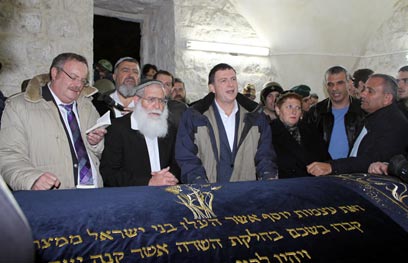
    image

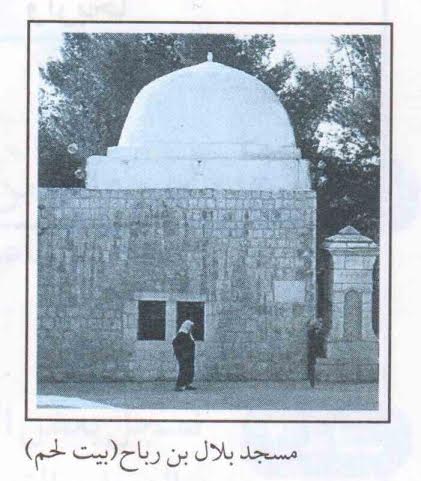
    Esta é a Tumba de Raquel. A inscriçāo diz: Mesquita de Bilal Bin Rabah em Belém.

    O acessor do Ministério de Relaçőes Internacionais israelense Emmanuel Nahshon atacou o ato da UNESCO dizendo que este ato tem o propósito de promover a causa palestina.   

    “Esta é uma tentativa por parte de palestinos e árabes de mudar a história fingindo que estes lugares históricos, santos para os judeus por milhares de anos, sāo na verdade, lugares santos para palestinos e muçulmanos,” disse ele a CBN News.

    Evidências históricas indicam que Abraāo, Isaque e Jacó foram enterrados na Tumba dos Patriarcas com as suas esposas. Já na Tumba de Raquel acredita-se que é o local histórico onde Raquel, esposa de Jacó foi enterrada. 

    A resoluçāo da UNESCO por pouco nāo incluiu o Muro das Lamentações como parte da Palestina. O mesmo seria renomeado “al-Buraq”, o mesmo nome do “cavalo alado de Maomé.”

    “A UNESCO se tornou um fantoche nas māos dos palestinos. Os mesmos palestinos que incitam a violência, que queimaram a Tumba de José alguns dias atrás,”disse o porta voz israelense.

    O doutor Cornelius Bekker da Regent University diz que os cristāos deveriam se preocupar também pois isto é também parte da história cristâ. 

    Ele completa dizendo: “A história de Israel é uma história sobre a escolha de Deus. Deus escolheu Abraāo, Isaque, Jacó e José, do qual a tumba foi incendiada alguns dias atrás. Nós nos sentimos responsáveis pois é a escolha de Deus e também é a nossa história. Jesus era Judeu, Paulo era Judeu, assim como toda a igreja primitiva o era,” completou o doutor Becker.

    Como responsável por este blog eu classifico o ato da UNESCO como racista e injusto. O sentimento é de repúdio.

    Fontes: CBN News

  • TERRORISTA DO ESTADO ISLAMICO DESISTE DE MATAR CRISTAOS DEPOIS DE SER TESTEMUNHA DE QUANTO ELES AMAM UNS AOS OUTROS

    image

    Uma missāo cristâ relatou que soldados do Estado Islâmico estāo se disfarçando de refugiados em alguns campos de refugiados da ONU na Jordânia. Eles estāo matando pessoas e vendendo meninas para serem escravas sexuais.

    Um dos terroristas abandonou a sua missāo após ver com os próprios olhos o quanto os cristāos amam uns aos outros.

    “Os soldados do Estado Islâmico entram nos campos disfarçados de refugiados com um propósito,” disse o lider da missāo cristâ que presta ajuda no local, do qual o nome nāo foi revelado.

    “Eles sāo como a máfia. Pessoas estāo morrendo nos campos de refugiados e todos tem medo de denunciar quando alguém é morto. Se sāo perguntados sobre o que acontece, os refugiados respondem que “nāo sabem, que estavam dormindo.”

    Milhőes de pessoas estāo fugindo da Siria e do Iraque, tentando escapar da Guerra civil. Eles fogem para países vizinhos como Jordãnia e Libano ou Turquia. Eles encontram lugar para dormir, mas estes campos nāo tem muita estrutura.

    “A última vez que eu entrei no campo eu levei um policial comigo. Os campos de refugiados sāo muito perigosos, principalmente porque soldados do Estado Islâmico estāo lá, assim como milícias do Iraque e da Siria.

    O Estado Islâmico tem feito uma limpeza étnica, tendo como alvo, principalmente cristāos e minorias religiosas.

    O diretor compartilhou a história de um dos soldados do Estado Islâmico que veio do norte da Siria para um campo de refugiados na Jordânia.

    A sua missāo era matar trabalhadores cristāos mas ele abandonou o seu plano depois que ele ouviu sobre o evangelho e “viu com os próprios olhos o quanto os cristāos se amam.”

    “A primeira coisa que ele viu foi que o Islamismo fez uma lavagem cerebral nele contra a religiāo cristâ,” disse o diretor da missāo cristâ.

    O soldado ficou tāo empolgado com a sua conversāo que deixou de se importar até mesmo que os outros terroristas soubessem de sua conversāo, passando a correr o mesmo perigo dos demais irmāos na fé.

    Steve Van Valkenburg, o diretor de uma outra missāo de ajuda cristâ no Oriente Médio disse que “todos estāo vendo os muçulmanos lutando as suas guerras enquanto os cristāos estāo cuidando de pessoas, amando e se importando uns com os outros.“

    O fato de que os cristāos nāo estāo buscando implemetar um reino terreno tem sido um testemunho muito forte. Outras histórias de conversoes de soldados do Estado Islâmico ao cristianismo tem acontecido.

    Que o Senhor continue se revelando e que salvaçāo se multiplique entre Jihadistas e extremistas. Que o nome do Senhor continue a ser exaltado através do amor entre os cristāos.

    Fontes: The Christian Post
    The Christian Post

  • 7 IGREJAS INCENDIADAS

    image

    Incendiários usaram gasolina para colocar fogo em 7 igrejas na Tanzânia nos dias 22 e 27 de Setembro.

    Um pastor que trabalha no local disse que extremistas muçulmanos ameacaram cristāos no distrito de Bukoba dizendo que eles iriam “reduzir o numero de igrejas no local.”

    Os extremistas incendiaram 3 igrejas em 2 horas no dia 22 de Setembro na vila de Kashfa e mais 4 igrejas foram incendiadas no dia 27 de Setembro, apenas 5 dias depois.

    Uma Assembléia de Deus foi parcialmente salva por um vigilante que estava do lado de fora da igreja. Ele conseguiu apagar o fogo, que foi causado por uma bomba, antes que o mesmo se espalhasse embora os instrumentos musicais da igreja fossem todos destruidos.

    Outras duas igrejas que também foram incendiadas naquela noite ficaram completamente destruídas. O pastor da Igreja Internacional Águas Vivas, Vedasto Athanas disse que a sua igreja, que tem 70 membros, perdeu tudo. Outra Assembléia de Deus, que conta com 35 membros, também perdeu tudo.

    Um contato do ministério A Voz dos Mártires disse que este é o terceiro ataque que a Igreja Internacional Águas Vivas sofre este ano. Nos dois primeiros ataques a igreja estava pronta para mudar a estrutura do prédio para uma estrutura de cimento, mas nāo o conseguiram fazer a tempo.
    Perderam tudo nos ataques anteriores.

    Pelo menos desta vez 7 suspeitos de comandarem os ataques foram presos pelas autoridades da Tanzânia. As autoridades, desta vez ofereceram uma recompensa por informacőes que levassem aos suspeitos.

    Líderes cristāos acrescentaram que os ataques podem estar ligados ao desentendimento entre cristāos e muçulmanos na area. Os muçulmanos acreditam que eles sao os únicos que podem cortar e vender carne, forçando assim cristāos a comprarem carne mais cara das māos dos muçulmanos.

    Os cristāos nao aceitam isto e por isso existe uma crescente tensāo entre os dois grupos.

    Outro lider cristăo diz que muçulmanos ligados ao governo estāo tentando ao máximo reduzirem o número de igrejas na área. Quando a construcao de igrejas é solicitada o governo sempre vem com a mesma desculpa, dizendo que aquela área é uma área residencial e por isso a construçāo de igrejas nāo é permitida.

    Oremos por nossos irmāos na Tanzânia. Oremos para que as dificuldades que sāo grandes, embora momentâneas, nāo os impeçam de espalhar o evangelho a toda criatura!

    Fonte: VOM

  • PALESTINOS ATEIAM FOGO NA TUMBA DE JOSÉ

    image

    A tumba de José na parte Oeste da cidade de Nablus foi queimada na manhā de Sexta-feira, dia 16/10, por centenas de palestinos. A tumba de José, que é um lugar sagrado de oraçāo para os judeus, ficou bastante destruida. Ninguém ficou ferido no incêndio. 

    Fox News relatou que o incêndio aconteceu logo antes de uma reuniāo de emergência para discutir a violência na regiāo, incluindo atos terroristas como incêndios e pessoas sendo esfaqueadas. A reuniāo foi organizada pela ONU.

    As forças de defesa de Israel disseram que a Tumba de José será restaurada e que o exército israelense identificará os culpados. 

    O ex ministro de relaçőes exteriores Avigdor Lieberman disse que “este incêndio mostra que o ocupaçāo palestina nāo é em nada diferente da ocupaçāo do Estado Islâmico.”   

    O ex ministro ainda disse que os “atos terroristas foram ordenados pelo presidente palestino Mahmoud Abbas, primeiramente matando israelitas a facadas e agora incêndiando sites históricos do mesmo jeito o Estado Islâmico está fazendo na Síria.”

    O presidente palestino disse que os ataques vāo contra os interesses palestinos e que ele nāo apóia os mesmos.

    Oremos pela paz entre Israel e Palestina. Que o Shalom de Deus vena sobre esta regiāo.

    Fonte: Christian Headlines
    Traduçāo: Yury Gaudard


  • CRISTIANISMO PODE SER EXTINTO EM 5 ANOS NO IRAQUE

    O cristianismo no Iraque corre o risco de ser extinto em 5 anos de acordo com uma organizaçāo inglesa que serve a igreja perseguida.

    Desde que o Estado Islamico chegou ao Iraque em 2014 1.140.000 cristāos deixaram o Iraque. Hoje apenas 260.000 cristāos ainda vivem lá.

    O primeiro ministro britânico comentou as atrocidades: “Todos os dias em países ao redor do mundo cristāos sāo sistematicamente discriminados, explorados e até expulsos de suas casas por causa da fé.” Para nāo dizer exterminados.

    “Nāo é tempo de silenciar. Nós precisamos nos unir e lutar contra um mundo em que pessoas sāo perseguidas pela sus fé”, disse David Cameron.

    Este é, com toda a certeza, a maior perseguiçāo contra cristāos em toda a história da humanidade.

    De acordo com a BBC, 100.000 cristāos morrem todos os anos por causa de sua fé. De acordo com o site, 1000.000 (um milhāo) de cristāos foram mortos nos últimos 10 anos por causa de perseguiçāo religiosa.

    Este é um grande sinal dos últimos tempos e da volta de Jesus. O Iraque precisa de nossas oraçőes, assim como os nossos irmāos, que tiveram que fugir e nāo tem “onde repousar a cabeça.”

    Fontes: BBC
    Christian Headlines

  • CASAL CRENTE QUE NĀO ACREDITA EM MEDICINA CONDENADO POR MATAR FILHO

    Um casal americano de Oregon foi condenado por assassinato por negarem ao próprio filho o atendimento médico necessário.

    O jornal Daily Beast diz que o casal Dale e Shannon Hickman, que sāo da congregaçāo Oregon Based Followers of Christ, nāo acreditam em tratamento médico.

    Os membros da congregaçāo acreditam que ter tratamento médico é sinal de fraqueza na fé.

    A corte suprema do estado de Oregon acredita no contrário. A corte os condenou a assassinato em segundo grau por negar o atendimento médico necessário ao próprio filho que nasceu prematuro.

    O filho deles morreu de Pneumonia depois de algumas horas de nascido. O médico de plantāo relatou que o menino teria 99% de chances de sobreviver caso os pais permitissem o tratamento adequado. Os pais nunca trouxeram o menino para o hospital. A māe deu a luz em casa e o menino morreu porque os pais acreditaram que Deus o curaria.

    Os pais disseram que eles nāo imaginavam seu filho estava doente até minutos antes da morte. Eles continuam nāo acreditando em medicina e nāo se dizem arrependidos de sua decisāo.

    “Nós fazemos o que a Bíblia nos manda fazer, que é colocar Deus em primeiro lugar e pedir a Ele por mais fé” disse a māe Shannon Hickman.

    O casal vai para a cadeia.

    E você, o que acha disso?

    Fonte: http://www.christianheadlines.com

  • UMA DAS 200 MENINAS SEQUESTRADAS POR BOKO HARAM ESCAPOU

    image

    Foto: kingslei Olobomi

    Uma das 200 meninas sequestradas pelo grupo terrorista Boko Haram escapou 2 semanas atrás e conseguiu chegar ao grupo militar que esta lutando contra o grupo.

    Ela contou ao grupo que quando as 200 meninas chegaram no campo do grupo terrorista Boko Haram elas foram forçadas a se casarem, se converterem ao Islamismo e algumas delas foram mortas ou por terem suas cabeças cortadas ou por tiros. De acordo com a menina que escapou, existem apenas 59 meninas vivas com o grupo principal.

    Enquanto esteve capturada ela conta que foi estuprada múltiplas vezes, engravidou e contraiu DST.

    Ainda segundo ela, o grupo terrorista Boko Haram esta viajando como que sem um destino certo, deixando bombas pra trás por onde eles passam para atrasar o exército que esta atrás deles. As 200 meninas estāo desaparecidas desde Abril de 2014.       

    O sequestro que chocou o mundo por serem 200 meninas em idade escolar ainda parece longe de um final feliz, mas pelo menos, até agora, uma delas se viu livre do pesadelo.

    Que possamos continuar orando pela libertaçāo dessas meninas e pelo fim das atrocidades cometidas pelo grupo terrorista Boko Haram.

    Fonte: http://www.persecution.com
    ICC  

  • LÍDER DO ESTADO ISLAMICO MORTO?

    image

    Acredita-se que o exército iraquiano bombardeou o comboio em que o líder do Estado Islamico estava. Existe uma “forte esperança” de que  Abu Bark al-Baghdadi esteja morto.

    “O exército iraquiano fez um operaçăo heróica” disseram as forças de segurança iraquiana. O estado de saúde de al-Baghdadi é um mistério, eles disseram.

    Ainda esperamos por confirmaçāo desta informaçāo.

    Fonte: AFP
    Reuters

  • 7 CRISTĀOS ESPANCADOS NO EGITO.

    image

    Pelo menos 7 cristāos foram atacados e espancados no norte do Egito. A comunidade muçulmana continua atacando cristāos e destruindo igrejas enquanto a comunidade cristā cresce em frustraçāo contra as autoridades locais.

    Autoridades locais, que ao meu ponto de vista nāo se importam muito.

    Num país de maioria muçulmana e uma lei muito nova que respalda a liberdade religiosa, o país ainda dá os seus primeiros passos em direçāo a paz e a justiça.     

    Enquanto isso os cristāos sāo massacrados silenciosamente e com o apoio secreto das autoridades.

    Enquanto o sangue dos mártires é derramado naquela terra em forma de semente, o verdadeiro Principe da Paz e a Nossa Justiça se revela nos coraçőes sedentos, lhes dando coragem e força.    

    Oremos para que toda essa perseguiçāo se transforme em vidas salvas para o Senhor Jesus e para que esta igreja que esta sob forte pressāo,  possa transformar esta pressāo em força pra caminhar na presença de Deus.       

    Fonte: http://www.persecution.com
    ICC-INTERNATIONAL CHRISTIAN CONCERN

  • MISSIONARIO ITALIANO SEQUESTRADO NAS FILIPINAS

    Um italiano que fez trabalho missionário foi sequestrado nas Filipinas.
    O site Christian Today relatou que Rolando del Torchio, 53, foi sequestrado por muçulmanos, rebeldes comunistas ou gangsters que se passaram por fregueses na pizzaria que o missionário italiano tinha aberto.
      
    Autoridades disseram que o sequestro de estrangeiros é comum na regiāo. Eles normalmente pedem resgate.

    Del Torchio trabalhou com o Pontifical Institute for Foreign Missions. As autoridades estāo tentando descobrir quem sequestrou o missionário e aonde ele pode estar sendo levado no momento. Acredita-se que ele possa ter sido levado para o sul em cidades costeiras na província de Zamboanga do Norte.

    O site Christian Today também relatou que somente no mês passado foram sequestrados 2 canadenses, um norueguês e uma mulher filipina.

    Oremos para que o nosso irmāo missionário seja liberto e possa voltar a sua missāo, trabalho e família.

    Fonte: http://www.christianheadlines.com
      

  • O PASTOR FOI ENCONTRADO NA PROPRIA PISCINA DE SANGUE

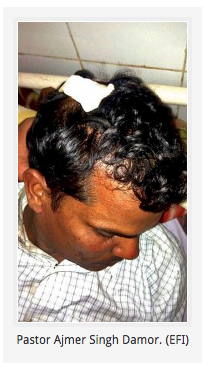
    Um pastor se recupera depois de ter sido encontrado numa piscina de sangue. Ele foi espancado até ficar inconsciente no Estado de Madhya Pradesh na Índia.

    image

    20 extremistas hindus, no dia 10 de Setembro, chutaram, deram socos e cacetadas no pastor Ajmer Singh Damor da igreja Shalom. Eles invadiram uma reuniāo de oraçāo disseram alguns dos líderes da igreja.   
    O pastor Ajmer ficou inconsciente por 5 horas e teve que ser transferido para um hospital maior devido ao seu estado de saúde. “Ele teve de ficar internado por mais de uma semana”, disse um dos líderes da igreja ao site Morning Stars.
    A maioria dos cristāos escaparam  ilesos mas o irmāo Dilu Katara foi levado pelos extremistas e torturado ate ser liberado tarde da noite do mesmo dia. O irmāo Dilu foi para o hospital para receber tratamento por hemorragia interna e machucados na pele. 
    Os extremistas tambem bateram na esposa do pastor Ajmer, a irmā Runita Damor, mas ela conseguiu fugir com a bebezinha do casal disse o reverendo Sam Francis, Outro líder cristāo naquela área.  
    Gritando que toda e qualquer adoraçāo cristā deve acabar, os extremistas destruiram todos os utensįlios da casa do irmāo onde a reuniāo acontecia. Eles também mataram o único carneiro da família, que é muito pobre. 
    Eles gritavam bem alto que toda adoraçāo cristā deveria acabar imediatamente.
    Que oremos pelos nossos irmăos, por força e coragem para que continuem em adoraçāo, oraçāo e ganhando almas para o Reino de Deus.
    Fonte: http://www.christianresponse.org

  • NUMERO DE MORTOS SOBE PARA 40 NA NIGERIA

    Nigeria, 10/08/2015
    Homens, mulheres e criancas estao se suicidando e levando morte aonde quer que vao, enquanto gritam Ala e grande!
    Acredita-se que as criancas estao sendo forcadas a colocarem bombas ao redor dos proprios corpos e entao sao levadas a locais publicos. Esta criancas seriam, muitas delas, criancas sequestradas pelo grupo terrorista Boko Haram.
    Mais cedo, os terroristas do grupo Boko Haram atacaram uma base militar numa area rural, mas nao tiveram sucesso. 100 terroristas foram mortos enquanto 7 soldados nigerianos morreram.
    Horas depois as 6:00 da manha, duas mulheres bomba atacaram uma mesquita, quando a mesma estava cheia no horario de oracao. O grupo terrorista Boko Haram tambem ataca muculmanos que desejam viver em paz com cristaos.
    Uma das mulheres bomba entrou na mesquita e detonou os explosivos, enquanto a outra ficar do lado de fora, rondando a mesquita. Quando interrogada sobre o que estava fazendo la ela detonou o segundo explosivo, morrendo e matando mais pessoas.
    7 pessoas morreram em Damaturu e 15 em Musa. O chefe de policia local disse que nao havia nenhuma possibilidade de conciliar os dois ataques.
    O chefe de policia disse ter havido um terceiro ataque operado por dois homens bomba em Fulani, matando 10 pessoas.
    A Nigeria vive uma guerra civil entre o Boko Haram e a sua populacao. Embora o pais seja dividido entre cristaos e muculmanos, os dois grupos entendem e promovem a paz.
    O terceiro grupo e o grupo terrorista Boko Haram, que sao muculmanos radicais que acreditam na eliminacao de todos aqueles que nao acreditam no mesmo que eles. Eles abertamente se juntaram ao Estado Islamico e hoje trabalham juntos com o objetivo de fundar um reino unificado de muculmanos radicais.
    Fonte: New York Times
    http://mobile.nytimes.com/aponline/2015/10/07/world/africa/ap-af-boko-haram.html?ribbon-ad-idx=26&rref=world/africa&module=Ribbon&version=context&region=Header&action=click&contentCollection=Africa&pgtype=article&_r=0&referer=

  • CHINA URGENTE: 2 PASTORES PRESOS E TORTURADOS

    image

    Dois pastores foram julgados e condenados por “liderarem um culto que vai contra a lei chinesa” e foram para a prisao ontem pela manha.
    Os pastores, Zhao Weilang e Cheng Hongpeng, com outros 20 cristaos estavam cantando hinos numa fabrica numa area rural, quando o predio foi cercado por policiais a paisana no dia 25 de Junho de 2014.
    O julgamento ocorreu ontem e o pastor Zhao pegou 4 anos de prisao e pastor Cheng 3.
    Tudo aconteceu assim: Mais de 50 policiais a paisana cercaram esta fabrica numa zona rural, que pertence a um dos cristaos presos e levaram 22 cristaos presos.
    Entre os presos estava uma mulher gravida e muitas criancas pequenas, incluindo dois bebes com menos de 2 anos. Os policiais tambem confiscaram os instrumentos musicais.
    A policia nao deu comida ao grupo na tentativa de conseguir uma confissao de que eles eram parte de uma seita que desrespeitava as leis chinesas.
    Os guardas trouxeram um pouco de comida quando foram alertados de que as criancas poderiam morrer. As mulheres e criancas foram entao liberadas, ficando na prisao 10 pessoas com os dois pastores.
    Pastor Zhao foi levado a um quarto onde um policial lhe disse: “nao temos cameras aqui, eu posso te espancar ate a morte que ninguem nunca sabera”. O pastor foi algemado, levado a um hotel, e espancado por dias e dias. Durante um certo periodo, ja estando sem comer por dois dias, um dos chefes da policia veio ao hotel e o torturou ainda mais. Ele pulou nas costas do pastor, deu socos no rosto e no peito. O chefe da policia queria que o pastor assumisse que era chefe de uma seita religiosa que ia contra a lei chinesa.
    A resposta do pastor era sempre a mesma, de que ele acreditava no Senhor Jesus Cristo e no verdadeiro Deus.
    Os dez fieis foram soltos em Julho 2014, mas os dois pastores foram condenados pelo artigo 300 da lei chinesa, que diz: “qualquer um que organisa ou ultiliza de seitas superticiosas, sociedades secretas, ou sociedades religiosas que buscam o mal e vao contra a lei chinesa”.
    Autoridades chinesas acusam Zhao de ser o lider da seita e Cheng de ser um importante suporte.
    Em corte, o advogado dos pastores explicou  que eles nao fazem parte de nenhuma seita que vai contra a lei. “Eles estavam apenas cantando.” “Eles nao quebraram nenhuma lei”.
    O advogado fez uma declaracao de perseguicao contra cristaos em corte, dizendo que a China se diz um pais que respeita a liberdade religiosa mas que persegue cristaos aberta e injustamente.
    “E um caso de perseguicao” disse o advogado.
    Oremos por eles irmaos!
    Fontes: http://www.persecution.com
    Voice of Martyrs
    ChinaAid
    Sources: VOM Sources, ChinaAid

  • ASSISTA: ESTADO ISLAMICO TRANSFORMA CRIANCAS EM ASSASSINOS

    Assista o video no link abaixo em que o Estado Islamico treina criancas, das quais algumas acredita-se serem filhos e filhas de cristaos mortos, para que se tornem assassinos.
    O principal objetivo do Estado Islamico e contruir um reino unificado de muculmanos que sao governados pela Sharia, a lei muculmana. Para que isto aconteca eles estao fazendo uma limpeza etnica, tendo como principal alvo a destruicao de igrejas e de tudo o que e relacionado a fe crista.
    Para cumprir este objetivo, eles usam de qualquer artificio, ate mesmo transformar criancas inocentes em assassinos.
    Muito triste, eu diria!

  • O QUE E PERSEGUICAO CRISTA?

    Perseguicao a cristaos e qualquer ato  hostil que cristaos experienciam vindo de qualquer um por causa de sua fe em Jesus Cristo. A perseguicao pode acontece por sentimentos de rejeicao, palavras, acoes e atitudes.
    Mas o que a Biblia diz sobre perseguicao?
    Em Mateus 5; 10-12 o Senhor Jesus diz que ser perseguido e uma bencao, um privilegio. 
    Nao que muitos de nos desejemos isto.
    Em Lucas 6;22 o Senhor Jesus fala sobre perseguicao usando 4 verbos:

    Bem aventurados sereis quando os homens vos odiarem, e quando vos expulsarem da sua companhia,  e vos injuriarem, e rejeitarem o vosso nome como indigno, por causa do filho do homem.    
    Os homens vao nos odiar, nos expulsar,  nos injuriar e rejeitar, mas precisamos nos lembrar, tudo isto e por causa do Senhor Jesus em nossa vida que sofremos perseguicoes.
    Em Romanos 8;17 o apostolo Paulo nos diz que “e, se filhos, tambem herdeiros, herdeiros de Deus e co-herdeiros de Cristo; se e certo que com ele padecemos, para que tambem com ele sejamos glorificados.”
    Quando entao, nos sofremos com o Senhor Jesus (odio, expulsao, injuria e rejeicao) nos tambem nos tornamos herdeiros da sua gloria.
    Os verbos acima tem graus de intensidade e para muitos cristaos este verbos significam morte, martirio, tortura, prisao.
    Nos sempre pensamos em perseguicao como nos graus mais intensos, mas mesmo as perseguicoes em menores escalas, ainda sao perseguicoes e nos fazem herdeiros assim como todos os nosso irmaos ao redor do mundo.
    “Bem aventurados quando te odiarem”
    Fonte: http://www.opendoorsusa.org  

  • TRANSFORMANDO O MUNDO – ESTE MINISTERIO ESTA ACABANDO COM A FOME NO MUNDO SEM DAR COMIDA OU DINHEIRO

    image

    Este eh um caderno de anotacoes de um dos grupos Etiopios de auto ajuda organizado e gerenciado pelo ministerio Tearfund, que tem como prioridade ensinar as pessoas mais pobres do mundo, dos paises mais pobres do mundo, como sair da miseria.

    image

    E assim que funciona: cada linha do caderno significa cada pessoa que participa do grupo e os numeros significam o quanto de dinheiro cada pessoa conseguiu guardar naquela semana. Eles trazem o dinheiro guardado e depositam no fundo do grupo.  
    O que acontece logo apos alguem se junta aos grupos eh maravilhoso. Eles podem comprar comida com um enorme desconto do banco de comida que o ministerio tem preparado. Eles tambem podem pegar dinheiro emprestado do ministerio, mas com um sistema de coaching empresarial, onde todo o dinheiro emprestado eh usado para gerar mais renda para a pessoa que pegou o emprestimo.
    Como por exemplo, eles fazem na Etiopia, fogoes a lenha com areia e cimento pra revender, ou ate mesmo comprar galinhas para vender os ovos.
    Alguns grupos que ja funcionam a alguns anos tem um poder maior de aquisicao por terem guardado dinheiro por mais tempo e tambem ja desenvolveram uma mentalidade empresarial mais apurada. Eles usam de estrategias como ampliar suas casas e alugar os quartos, compram vacas e vendem o leite, compram carros e usam como taxis.

    image

    Cada grupo desenvolve suas proprias regras, com um facilitador de uma das igrejas locais que fora treinado pelo ministerio Tearfund para ajudar na organizacao e desenvolvimento de estrategias. Ninguem diz a ninguem o que fazer, mas as estrategias sao definidas dentro do grupo, assim como a forma de agir.  
    Quando os grupos crescem, eles se tornam federacoes que ajudam outros grupos a crescerem, cuidam das criancas com projetos, treinam as pessoas de seus grupos para que possam trabalhar, cuidam de suas comunidades.
    O custo beneficio eh enorme e os grupos sao praticamente independentes, com um investimento minimo feito pelo ministerio Tearfund.   
    O site do ministerio Tearfund http://www.tearfund.org mostra um curto testemunho de Mereset Kusma que diz: “Antes vcs nos conheciam pelas nossas necessidades, pela nossa pobreza. Mas agora os pobres estao mudando este pais e pobreza nunca mais sera o nosso nome.”
    O ministerio Tearfund esta em 50 paises, incluindo o Brasil e em 20 anos esta mudando a historia de comunidades inteiras, e no caso da Etiopia, de nacoes.
    Todos os obreiros da Tearfund sao cristaos serios e maduros, que tem um especifico chamado de Deus para trabalharem neste ministerio.
    E como se fosse a moderna multiplicacao de paes e peixes, que se tornou no milagre de Elizeu e agora alcanca pessoas numa velocidade assustadora, levando-as a sair da miseria e dependencia de caridade e viver em abundancia. Muitos destes grupos mandam seus filhos para faculdades, onde se tornam doutores.  
    Fonte: http://www.christiantoday.com
    http://www.globaldashboard.org
    http://www.tearfund.org


  • QUANDO O COMUNISMO SE RENDE AO SENHOR

    image

    Vietnam eh um dos ultimos paises comunistas do mundo e embora tenha-se assinado em 2004 um termo de liberdade religiosa no pais, a perseguicao, tortura e morte de cristaos eh muito frequente. As igrejas que tem permissao para funcionar sao as que sao controladas pelo governo.
    A abertura de igrejas no pais eh extremamente complicada e de 116 grupos etnicos, 66 ainda nao ouviram o Evangelho segundo o site http://www.persecution.com
    Mas o sopro de avivamento esta chegando la.
    Segundo o site operationworld.org uma igreja evangelistica, que testemunha do Senhor Jesus esta crescendo a cada dia no pais.
    O avivamento com milhares de conversoes chegou a muitas tribos, muitos grupos etnicos e ate mesmo aos vietnamitas. Os vietnamitas que vivem fora do pais estao se convertendo e voltando ao pais para testificar.
    O poder de Deus eh tamanho, que o entao governo comunista ja nao consegue impedir o crescimento da igreja.
    O pais sofre com problemas como  Aids, drogas e prostituicao, sem contar a fome.
    Mas as cadeias comunistas estao se quebrando e o Evangelho do Reino esta se propagando.
    Oremos por poder do alto para que mais e mais pessoas sejam alcancadas e as correntes que prendem milhoes de vietnamitas continuem caindo!
    Fonte: http://www.persecution.com

  • PAIS DO PASTOR IRANIANO SAEED CHORAM DESCONSOLADAMENTE

    image

    O pastor iraniano Saeed Abedini esta preso a tres anos em uma das mais perigosas prisoes no Ira. Ele foi preso acusado de ser uma ameaca a seguranca nacional do pais enquanto fazia trabalho missionario no pais.
    O seu caso se tornou internacionalmente conhecido logo apos a sua esposa, Naghmeh Abedini, escrever uma carta para o presidente iraniano pedindo para que eles se encontrassem na assembleia da ONU para discutir a liberacao do seu marido. O presidente iraniano negou-se a conversar, dizendo que se os Estados Unidos libertarem prisioneiros iranianos ele ira rever o caso do pastor Saeed.
    O pastor Saeed tem sido torturado constantemente, com choques eletricos e tem apanhado dos guardas da prisao, segundo o site http://www.christianheadlines.com . A ele tambem tem sido negado o atendimento medico.
    Mas a parte mais dolorosa vem do pai e da mae de Saeed, que tem direito a 15 minutos de visita semanalmente. A sua esposa disse em entrevista ao The Christian Post: “Embora eles estejam sempre ansiosos para visitar Saeed na prisao, e muito doloroso ver o que eles (os pais de Saeed) estao sofrendo por ver Saeed na prisao de uma forma injusta. Eles vivem pelos 15 minutos de visita, mas e um trauma brutal para eles”.
    Os pais de Saeed descreveram a ultima visita: “Cada dia mais as noticias sobre que o nosso filho esta passando nos leva as muitas lagrimas. A dor de ver o nosso filho enjaulado, descrevendo a dor das torturas sofridas e mais do que podemos suportar. A entrevista foi dada em meio a um choro descontrolado, e infelizmente, ate o momento, eles nao tem esperanca de solucao.
    A esposa de Saeed, Naghmeh, disse que o seu marido sofre muito por nao poder ver os filhos crescendo. Ela esta levantando uma campanha de jejum e oracao em favor de seu marido.
    Que possamos orar em favor destes herois cristaos modernos.
    Fonte: http://www.christianheadlines.com

  • AVIVAMENTO NO IRA – CORACOES ABERTOS EM MEIO A PERSEGUICAO

    image

    Ira, o setimo pais do mundo que, segundo o Portal Abertas, mais persegue cristaos no mundo esta vivendo um avivamento.
    A lei muculmana, a Sharia, e a lei oficial do pais e qualquer um que se converta ao cristianismo e alvo de perseguicoes. Cristaos sao normalmente presos e torturados. Estamos sempre ouvindo sobre a execucao, tortura e emprisionamento de amados pastores e lideres.
    Mas temos otimas noticias. Como disse um famoso lider cristao do passado,  o sangue dos martires e a semente da igreja.
    A situacao economica do pais, assim como a falta de esperanca no futuro tem sido uma grande porta para o evangelismo, diz o lider do ministerio Iran focused Elam ministries Sam Yeghnazar.
    Ele continua seu depoimento dizendo que o Ira “eh um pais fechado com incontaveis coracoes abertos”. Ainda segundo ele o Ira eh “o pais mais aberto para o evangelho em todo o mundo”. “Dezenas de milhares de iranianos estao se rendendo ao Senhor.”
    Muitos estao se convertendo pela internet e distribuicoes de biblias. Glorias ao Senhor Jesus.

    Oremos pelo Ira.
    Fontes: http://www.opendoorsusa.org e http://www.christianpost.com

  • ESTADO ISLAMICO ENTROU EM ISRAEL

    Na primeira conhecida tentativa do Estado Islamico de atacar Israel, os suspeitos confessaram que estavam treinando no norte de Israel em preparacao para um ataque. 7 israelitas-arabes estao sendo julgados pela corte de Nazare e 4 deles confessaram o plano de ataque.

    Os suspeitos criaram uma celula terrorista com a intencao de fazer ataques na cidade santa.

    Alguns dos suspeitos tambem disseram que existem muitos israelitas-arabes que se juntaram ao Estado Islamico na Siria. Os habitates de Yafa an-Naseriyye na baixa regiao da Galileia Sao suspeitos de ajudar a planejar o ataque. Os acusados estavam treinando na floresta perto da cidade.

    Os acusados serao julgados por contactar e fazer parte de uma organizacao internacional com a intencao de atacar Israel, seus militares e especialmente por atirar em policiais.

    Os suspeitos foram achados com armas ilegais e sao suspeitos de trafico de armas tambem.

    Os nome’s dos suspeitos sao: Ahmed Mahagna (20) from Yafa an-Naseriyye, Mohammad Sharif (22) de Nazere and Mohammad Ghazali (23), Ibrahim Aljawabra (35) e seu irmao Ali (32) de Fureidis e Bahamas Naaram de  Yafa an-Naseriyye.

    O cabeca da celula terrorista established preso desde 2009 por assassinar um motorista de taxi. Seu nome e Ahmed Ahmed e ele orquestrou toda a operacao por telefone com os 7 suspeitos.

    A policia israelense disse que os suspeitos confessaram o crime durante interrogatorio. A policia tem fotos e videos de Sharif com o Estado Islamico, todos tirados do proprio telefone do suspeito.

    Terroristas 646659726762663640360no 5980438093588640360no

    Fonte: http://www.ynetnews.com

  • REPENTANCE – HOW DO I DO THAT?

    Chapter 6 – Repentance.

    Handbook of Personal Evangelism

    by Dr. A. Ray Stanford

    Chapter 6 – Repentance
    THE IMPORTANCE OF REPENTANCE

    What place should repentance have in your presentation of the gospel? Is repentance the same thing as belief? Or is it something distinct from it? Is it important to emphasize repentance, or should we never mention it in this age of grace? What does repentance really mean, anyway? These are some of the questions the soulwinner must face (and answer) regarding the subject of repentance.
    There can be little doubt that all men, from Adam on, have had to repent in order to have a right relationship with God. The importance of this is brought home when we realize men of every Biblical age preached it.

    John the Baptist preached it (Mark 1:15); the Apostle John proclaimed its necessity (Rev. 2:5); Paul preached repentance wherever he went (Acts 17:30; 20:21 ); and the Lord Jesus Christ Himself strongly emphasized that men who refused to repent would perish (Luke 13:3, 5). So, you see, repentance is necessary for salvation.

    THE MISUSE OF THE WORD

    The question is, “What does the Bible MEAN by ‘repent,’ and how should it be presented to the lost?” The important thing is NOT what repentance has COME to mean down through the centuries since Christ’s time, but rather – and this is of utmost importance – what the word did mean WHEN IT WAS SPOKEN by Christ, Paul, Peter, and others in Biblical times.
    If you look up “repent” or “repentance” in a modern dictionary you will read definitions like the following: “regret; to feel sorry for sin and seek forgiveness; to turn from sin.” Based on these definitions, preachers have been going about earnestly trying to get men to quit their sinning, or at least to work up a genuine sorrow for sin. But is this the divinely appointed task of Christians – to get men to change their ways?
    No! This kind of preaching often leads to a form of self-righteousness and self-reformation – not to salvation. Does a sinner have to turn from or give up his sins to be saved? COULD he do this? Did you? Have you yet given up all sinning?

    “If we say that we have no sin, we deceive ourselves, and the truth is not in us” (I John 1:8).

    It is sadly apparent that our modern-day misuse of the word “repent” has done a great deal of harm and has confused multitudes. Because of the wrong use of the word “repent” men have gotten the idea that a Christian is one who doesn’t smoke, drink, curse, go to dances or movies, or do anything that is wrong or immoral.
    This negativism has blinded people to the fact that a Christian is “one of Christ’s” – one who, through faith, has received Christ as his Saviour. Once a person has Christ and His power in his life, THEN his behavior often changes. But this change is the RESULT of being a child of God; it is not the CAUSE.

    Being good is not the way to become a child of God. RememberEphesians 2:8, 9, “For by grace are ye saved through faith; and that not of yourselves: it is the gift of God: Not of works, lest any man should boast.”

    Because preachers have allowed themselves to propagate this error in the teaching of repentance, our churches are full of “good,” self – righteous, moral people who are certain they are “Christians,” yet when they are asked if they are going to heaven, the best answer they can give is, “I hope so.”
    They do not have the assurance that comes from knowing Christ as their Saviour. Instead, they are plagued by the uncertainty that comes from trying to be good enough by their own efforts to gain heaven.
    All too often this idea that “I must be good to gain God’s favor” comes from Bible-believing men who preach that one must either “turn from sin or burn in hell.” How sad and tragic it is that so much damage can be caused by the misuse of one word.

    THE CORRECT MEANING OF “REPENT”

    The word in the New Testament usually translated “repent” is the Greek word “metanoeo,” and the word translated “repentance” is “metanoia.” Both of these Greek words have the same basic meaning: “to change your mind; reconsider; or, to think differently.”
    Granted, if a person changes his mind (repents) toward certain sins in his life, he may become very sorrowful and may even stop those particular outward sins, but the sorrow and the ceasing from certain sins would be the RESULT of repenting, not repentance itself.
    When God tells an unsaved man to repent, He means for that man to change his mind about how to reach God and accept GOD’S way of salvation. The person must CHANGE HIS MIND from any idea of religion he may have to save him, and trust Christ’s payment for everything he has done wrong.

    PASSAGES ON REPENTANCE EXPLAINED

    Luke 13:1 – 5, “There were present at that season some that told Him of the Galileans, whose blood Pilate had mingled with their sacrifices. And Jesus answering said unto them, Suppose ye that these Galileans were sinners above all the Galileans, because they suffered such things? I tell you, Nay: but except ye repent (change your mind) ye shall all likewise perish (i.e., like these Galileans did). Or those eighteen, upon whom the tower in Siloam fell, and slew them, think ye that they were sinners above all men that dwelt in Jerusalem? I tell you, Nay: but, except ye repent (change your mind), ye shall all likewise perish.”

    Try to get the picture. Christ in this passage was talking to good people who believed the old tradition that people suffered only because of their sins. So they logically concluded that those in Galilee and at the Tower of Siloam who died such horrible deaths must have been great sinners.
    Christ contradicts what they “suppose” (v. 2) and “think” (v. 4) and tells these self-righteous people that they need to change their minds and see themselves as sinners, too. Christ is not saying “Turn from your sin,” but that they should recognize that they are sinners, or they will perish in their own self-righteousness.
    Even if one doesn’t know Greek, it is obvious from the passage itself that the meaning of “repent” here cannot be “sorrow for,” or “turning from, sin.” These people obviously needed, above all else, to think differently – in this case, to think differently about themselves, about others, and about God.

    Acts 17:30, “And the times of this ignorance God winked at (or, overlooked); but now commandeth all men everywhere to repent.”

    To understand what God means here by “repent” only requires one to read the last part of verse 29 of the same chapter, “we ought not TO THINK that the Godhead is like unto . . . silver, or stone, graven by art and man’s device.” Instead, what ought these philosophers of Mars’ Hill to think? They needed to CHANGE THEIR MINDS and see that God is quite different from stone! He is judge (v. 31), and He is alive (vv. 31, 32). Again, from the context, the true meaning of “repent” is clear.

    Acts 20:20, 21, “And how I kept back nothing that was profitable unto you, but have shewed you, and have taught you publickly, and from house to house, Testifying both to the Jews and also to the Greeks, repentance toward God, and faith toward our Lord Jesus Christ.”

    Notice that the Bible states here that we are to proclaim repentance TOWARD GOD. There is nothing here about turning from sin. Paul is giving his last words to these be loved Ephesian elders whom he had led to Christ. They had formerly been heathen idol worshipers (Acts 19) and very immoral. However, Paul’s preaching to them was that they needed to change their thinking about God.

    Think what an impact on these sinful heathen the truth of Romans 5:8 would have had: “But God commendeth (displayed) His love toward us, in that, WHILE WE WERE YET SINNERS, Christ died for us.”

    Remember, the word “gospel” means “good news.” Do you think it would have been good news to them if Paul had said, “While we were trying to give up our sins, God tried to love us a little bit,” or, “While we were yet sinners, Christ died for our past sins, and now if we stop all our present sins and never commit any sins in the future, God will love us”?
    No! These sinners needed to know that the God of the universe loved them even as they were. They needed the assurance that God was not requiring of them the impossible – that they stop sinning – but simply that they would trust Christ and His payment for their sins and thus receive salvation.

    Later Scripture makes it clear that God certainly did work in their lives to bring about changes, but this took place only AFTER they were already saved (Eph. 2:10).

    Acts 2:38, “Then Peter said unto them, Repent, and be baptized every one of you in the Name of Jesus Christ for the remission of sins, and ye shall receive the GIFT of the Holy Ghost.”

    Chapter Nine covers the part of this verse dealing with baptism. Here we will concentrate on the part of the verse having to do with repentance. One of the first rules to follow in understanding any Bible verse is to consider the context. In the second chapter of Acts we discover that these Jewish unbelievers thought the disciples were drunk (vv. 13, 15) and that Jesus was only a man whom they crucified (vv. 23, 36). Peter lets them know that the disciples were not drunk but in God’s will (vv. 15 – 17), that Jesus is the Christ (Messiah) sent by God, and that even though men crucified Him, God raised Him from the dead (vv. 24, 32, 36).
    These Jewish men, having been set straight on these matters, were “pricked in their heart (Greek, ‘thoughts’) and said unto Peter and to the rest of the apostles, Men and brethren, what shall we do?” (v. 37)
    Peter’s immediate answer was, “Repent . . . every one of you … for the remission of sins….” In the frenzy of the day that Jesus stood before Pilate the mob had cried, “Crucify Him, crucify Him.” Then they saw Him only as a man and a troublemaker. Now Peter tells them they must repent (think differently) toward this One and realize that He is “both Lord and Christ” (v. 36), and that salvation comes only through Him (vv. 21, 38, 41 ) . This, again, is Biblical repentance.

    USING “REPENTANCE” IN WITNESSING

    If you are going to use the word “repent” or “repentance” in your witnessing, you should always explain what it really means. You can perhaps teach the meaning of repentance through your personal testimony, explaining that you used to think God hated sin so much that He hated you as well, and not until you heard the gospel did you understand that God loves you and wants you to go to heaven. (If this IS part of your testimony.) Then, after understanding the gospel, you began to think differently about God. This way you could have the person understand the plan of salvation . . . he could repent . . . and you would never have to worry about whether or not you confused him by the word “repent.”
    The important thing in witnessing is to lead the lost person from wherever he is spiritually to having faith in Christ as his Saviour. You should try to do this as smoothly and naturally as possible. Using first or third person illustrations in your conversation is an excellent way of achieving the desired results, and particularly in giving a proper, Scriptural explanation of repentance.
    That great giant of the faith Dr. William L. Pettingill put it well in his book, Bible Questions Answered. Under Repentance and Salvation, page 215, he answers the following question: “What place has repentance in salvation? Should we tell people to repent of their sins to be saved?”

    “The Gospel of John is the Holy Spirit’s Gospel tract, written that men might believe that Jesus is the Christ, the Son of God; and that believing they might have life through His Name ( 20: 31 ) . And it does not mention the word ‘repentance.’ But that is only because repentance is a necessary part of saving faith. Strictly speaking, the word repentance means a ‘change of mind.’ It is by no means the same thing as sorrow (II Cor. 7:10). Since it is not possible for an unbeliever to become a believer without changing his mind, it is therefore unnecessary to say anything about it. The only thing for a man to do in order to be saved is to believe on the Lord Jesus Christ: and to believe on Him is the same thing as receiving Him (John 1:11 – 13).”

    Any teaching that demands a change of conduct toward either God or man for salvation is to add works or human effort to faith, and this contradicts all Scripture and is an accursed message (Gal. 1:8, 9;Deut. 27:18). Study the book of Galatians.

    Remember, the closer a counterfeit comes to the truth, the more people it will fool. Don’t be fooled. Yes, a Christian should make every effort to discipline his life, to lay aside every weight and the sins which so easily beset him, but this has to do with SERVICE, which can come only AFTER salvation. Salvation is always a gift; it is nothing we do ourselves.
    Let’s make salvation as clear as we possibly can. If something might possibly confuse someone, let’s find some other way of expressing the truth so that it will be crystal clear instead of confusing.

    “Beware lest any man spoil you through philosophy and vain deceit, after the tradition of men, after the rudiments of the world, and not after Christ” (Col. 2:8).

    “But I fear, lest by any means, as the serpent beguiled Eve through his subtilty, so your minds should be corrupted from the SIMPLICITY that is in Christ” (II Cor. 11:3).

    Written by:

    Name: PerEvan

    Abbreviation: PerEvan

    Title: Handbook of Personal Evangelism

    Author: Stanford, Dr. A. Ray

    Version: 1.1

    Version date: February 6, 2011

    Publish date: 1964, Reprinted in 1975 and 1991

    Description: A guide for personal witnessing.

    Comments:

    Textbook of personal evangelism

    The Handbook of Personal Evangelism is the result of many years of study and active, effective soulwinning by Dr. A. Ray Stanford, Founder of Christian Youth Ranches; Grove Community Church; Florida Bible Church and Florida Bible College. Dr. Stanford was a bomber pilot – 484 BOMB GP. 824 SQD. during World War II and was awarded the Distinguished Flying Cross plus the Air Medal twice.

  • EU FALHEI – ME PERDOEM

    EU FALHEI
    A paz do Senhor, irmãos e amados no Senhor que tem me acompanhado, orado por mim, lido minhas cartas, enviado ofertas e lutado ao meu lado a batalha no Senhor no campo missionário.
    Eu resolvi escrever esta carta a algum tempo, mas não a fiz imediatamente pois achei melhor amadurecer o que eu iria escrever, embora neste momento ainda esteja pensando em como começar e como contar a verdade de uma forma a não magoar ninguém. Esta carta vem sendo amadurecida a 2 anos, e eu tenho lutado contra a mesma pelos mesmos 2 anos.
    Pra começar, eu falhei. Eu falhei e falhei muito. Na minha missão. Esta é a forma que me sinto neste momento, esta é a forma que tenho me sentido e lutado contra isto por algum tempo. Eu lutei trabalhando “hard”, trabalhando duro e dando o melhor que eu posso. Pelas crianças africanas, pelos prisioneiros que eu tenho ensinado, pela igreja em que eu estou inserido, pelos jovens desta igreja, pelo grupo de célula de que somos responsáveis. Eu lutei e sinto que tudo o que lutei falhou. Vai morrer na praia, como diz a expressão.
    Eu falhei não porque pequei ou coisa parecida. Não, minha vida espiritual está em dia com o Senhor. Eu falhei porque após 3 anos tentando encontrar um jeito de sobreviver como missionário, enviando cartas, enviando vídeos, fazendo contatos, orando, abrindo a minha vida e a da minha família para todos verem e até criticarem (muitos o fizeram e mandaram mensagens dizendo que eu deveria parar com o que eu estava fazendo). Eu fiz tudo o que me ensinaram e que eu sabia, tentando ao máximo não ser chato, tentando ao máximo não manipular ninguém pra me ajudar e ajudar ao meu mnistério. Eu fiz de tudo e falhei.
    Desde o começo da minha incrível jornada com o Senhor no campo missionário eu tive dificuldades financeiras pois eu nunca tive alguém me pagando um salário ou minhas despesas. Eu tive sim, pessoas que se aliançaram comigo em diferentes maneiras, ofertando, orando e mandando mensagens pra mim e eu sou incrivelmente grato a todos vcs. Muito obrigado a todos. Deus fez milagres incríveis através de vcs na minha vida e na vida de todos os que alcancei.
    Eu falhei, principalmente porque desde o começo da minha jornada eu não tive dinheiro suficiente pra fazer o que estou fazendo. Deus fez milagres e proveu em incríveis maneiras. Eu lutei com a frase de que se Deus me chamou a fazer algo ele proverá em cada mês as minhas contas estavam vencidas e em cada mês eu não tinha suficiente. Eu falhei em conseguir o contato correto, em mostrar suficiente, em conseguir parceiros que segurassem a outra ponta.
    Eu falhei e agora, neste momento, no final de ano, eu tenho que parar e cuidar da minha família, da minha casa e de como sobreviver ao invés de cuidar da obra do Senhor por tempo integral.
    Eu falhei e está é a frase e o sentimento no meu coração. Eu digo isto não para tentar manipular ninguém a fazer algo, mas para anunciar que a partir do próximo ano eu não estarei (a menos que um milagre ocorra) trabalhando em tempo integral servindo nas comunidades, prisões etc. Eu estou procurando um emprego e tentarei reestabeler minha vida financeira e tudo mais.
    A igreja local me convidou a ser pastor, mas aparentemente eles não tem dinheiro suficiente para pagar um salário (o custo de vida aqui é altíssimo) e por causa disto eu acredito que não o poderei fazer ou pelo menos não o poderei fazer em tempo integral.
    Peço a sua ajuda em oração para que a mudança no estilo de vida seja feita sem danos emocionais para mim e minha esposa, para que eu possa arrumar um emprego que atenda aquilo que eu preciso como um homem de Deus para sobreviver e planejar o crescimento da minha família, que é o que eu tenho em mente.
    Me perdoem porque eu falhei em dar continuidade a um trabalho e me ajudem, aqueles que ainda tem ajudado, por alguns meses até que eu possa me reestabelecer. Obrigado e que o Senhor abençoa a todos.
    Yury e Deidre.

  • Names of God

    God, Names of

    || I. INTRODUCTORY

    1. The Phrase “His Name”

    2. Classification.

    II. PERSONAL NAMES OF GOD IN THE OLD TESTAMENT

    1. ‘Elohim

    2. ‘El

    3. ‘Eloah

    4. ‘Adhon, ‘Adhonay

    5. Yahweh (Yahweh)

    6. Tsur (Rock)

    7. Ka`dhosh

    8. Shadday

    III. DESCRIPTIVE NAMES OF GOD IN THE OLD TESTAMENT

    1. ‘Abhir

    2. ‘El-‘Elohe-Yisra’el

    3. `Elyon

    4. Gibbor

    5. ‘El-ro’i

    6. Tsaddiq

    7. Qanna’

    8. Yahweh Tsebha’oth

    9. “I Am That I Am”

    IV. New Testament NAMES OF GOD

    1. God

    2. Lord

    3. Descriptive and Figurative Names

    LITERATURE

    I. Introduction:

    To an extent beyond the appreciation of modern and western minds the people of Biblical times and lands valued the name of the person. They always gave to it symbolical or character meaning.

    While our modern names are almost exclusively designatory, and intended merely for identification, the Biblical names were also descriptive, and often prophetic. Religious significance nearly always inhered in the name, a parent relating his child to the Deity, or declaring its consecration to the Deity, by joining the name of the Deity with the service which the child should render, or perhaps commemorating in a name the favor of God in the gracious gift of the child, e.g. Nathaniel (“gift of God”); Samuel (“heard of God”); Adonijah (“Yahweh is my Lord”), etc. It seems to us strange that at its birth, the life and character of a child should be forecast by its parents in a name; and this unique custom has been regarded by an unsympathetic criticism as evidence of the origin of such names and their attendant narratives long subsequent to the completed life itself; such names, for example, as Abraham, Sarah, etc. But that this was actually done, and that it was regarded as a matter of course, is proved by the name given to Our Lord at His birth: “Thou shalt call his name Jesus; for it is he that shall save his people” (Mt 1:21). It is not unlikely that the giving of a character name represented the parents’ purpose and fidelity in the child’s training, resulting necessarily in giving to the child’s life that very direction, which the name indicated. A child’s name, therefore, became both a prayer and a consecration, and its realization in character became often a necessary psychological effect. Great honor or dishonor was attached to a name. The Old Testament writings contain many and varied instances of this. Sometimes contempt for certain reprobate men would be most expressively indicated by a change of name, e.g. the change of Esh-baal, “man of Baal,” to Ish-bosheth, “man of shame” (2Sa 2:8), and the omission of Yahweh from the name of the apostate king, Ahaz (2Ki 15:38, etc.). The name of the last king of Judah was most expressively changed by Nebuchadnezzar from Mattaniah to Zedekiah, to assure his fidelity to his overlord who made him king (2Ki 24:17).

    See NAMES, PROPER.

    1. The Phrase “His Name”:

    Since the Scriptures of the Old Testament and New Testament are essentially for purposes of revelation, and since the Hebrews laid such store by names, we should confidently expect them to make the Divine name a medium of revelation of the first importance. People accustomed by long usage to significant character indications in their own names, necessarily would regard the names of the Deity as expressive of His nature. The very phrase “name of Yahweh,” or “His name,” as applied to the Deity in Biblical usage, is most interesting and suggestive, sometimes expressing comprehensively His revelation in Nature (Ps 8:1; compare 138:2); or marking the place of His worship, where men will call upon His name (De 12:5); or used as a synonym of His various attributes, e.g. faithfulness (Isa 48:9), grace (Ps 23:3), His honor (Ps 79:9), etc. “Accordingly, since the name of God denotes this God Himself as He is revealed, and as He desires to be known by His creatures, when it is said that God will make a name for Himself by His mighty deeds, or that the new world of the future shall be unto Him for a name, we can easily understand that the name of God is often synonymous with the glory of God, and that the expressions for both are combined in the utmost variety of ways, or used alternately” (Schultz, Old Testament Theology, English translation, I, 124-25; compare Ps 72:19; Isa 63:14 (refs2); also Davidson, Old Testament Theol., 37-38).

    2. Classification:

    From the important place which the Divine name occupies in revelation, we would expect frequency of occurrence and diversity of form; and this is just that which we find to be true. The many forms or varieties of the name will be considered under the following heads:

    (1) Absolute or Personal Names,

    (2) Attributive, or Qualifying Names, and

    (3) Names of God in the New Testament. Naturally and in course of time attributive names tend to crystallize through frequent use and devotional regard into personal names; e.g. the attributive adjective qadhosh, “holy,” becomes the personal, transcendental name for Deity in Job and Isa. For fuller details of each name reference may be made to separate articles.

    II. Absolute or Personal Names of God in the Old Testament:

    1. ‘Elohim:

    The first form of the Divine name in the Bible is ‘Elohim, ordinarily translated “God” (Ge 1:1). This is the most frequently used name in the Old Testament, as its equivalent theos, is in the New Testament, occurring in Ge alone approximately 200 t. It is one of a group of kindred words, to which belong also ‘El and ‘Eloah. (1) Its form is plural, but the construction is uniformly singular, i.e. it governs a singular verb or adjective, unless used of heathen divinities (Ps 96:5; Ps 97:7 (refs2)). It is characteristic of Hebrew that extension, magnitude and dignity, as well as actual multiplicity, are expressed by the plural. It is not reasonable, therefore, to assume that plurality of form indicates primitive Semitic polytheism. On the contrary, historic Hebrew is unquestionably and uniformly monotheistic.

    (2) The derivation is quite uncertain. Gesenius, Ewald and others find its origin in ‘ul, “to be strong,” from which also are derived ‘ayil, “ram,” and ‘elah, “terebinth”; it is then an expanded plural form of ‘el; others trace it to ‘alah, “to terrify,” and the singular form is found in the infrequent ‘eloah, which occurs chiefly in poetical books; BDB inclines to the derivation from ‘alah, “to be strong,” as the root of the three forms, ‘El, `Eloah and ‘Elohim, although admitting that the whole question is involved in uncertainty (for full statement see BDB, under the word …); a somewhat fanciful suggestion is the Arabic root ‘ul, “to be in front,” from which comes the meaning “leader”; and still more fanciful is the suggested connection with the preposition ‘el, signifying God as the “goal” of man’s life and aspiration. The origin must always lie in doubt, since the derivation is prehistoric, and the name, with its kindred words ‘El and ‘Eloah, is common to Semitic languages and religions and beyond the range of Hebrew records.

    (3) It is the reasonable conclusion that the meaning is “might” or “power”; that it is common to Semitic language; that the form is plural to express majesty or “all-mightiness,” and that it is a generic, rather than a specific personal, name for Deity, as is indicated by its application to those who represent the Deity (Judg 5:8; Ps 82:1 (refs2)) or who are in His presence (1Sa 28:13).

    2. ‘Eloah:

    The singular form of the preceding name, ‘Eloah, is confined in its use almost exclusively to poetry, or to poetic expression, being characteristic of the Book of Job, occurring oftener in that book than in all other parts of the Old Testament. It is, in fact, found in Job oftener than the elsewhere more ordinary plural ‘Elohim. For derivation and meaning see above under 1 (2). Compare also the Aramaic form, ‘elah, found frequently in Ezra and Daniel.

    3. ‘El:

    In the group of Semitic languages, the most common word for Deity is El (‘el), represented by the Babylonian ilu and the Arabic ‘Allah. It is found throughout the Old Testament, but oftener in Job and Psalms than in all the other books. It occurs seldom in the historical books, and not at all in Lev. The same variety of derivations is attributed to it as to ELOHIM (which see), most probable of which is ‘ul, “to be strong.” BDB interprets ‘ul as meaning “to be in front,” from which came ‘ayil, “ram” the one in front of the flock, and ‘elah, the prominent “terebinth,” deriving [‘El] from ‘alah, “to be strong.” It occurs in many of the more ancient names; and, like [‘Elohim], it is used of pagan gods. It is frequently combined with nouns or adjectives to express the Divine name with reference to particular attributes or phases of His being, as ‘El `Elyon, ‘El-Ro’i, etc. (see below under III, “Attributive Names”).

    4. ‘Adhon, ‘Adhonay:

    An attributive name, which in prehistoric Hebrew had already passed over into a generic name of God, is ‘Adhon, ‘Adhonay, the latter formed from the former, being the construct plural, ‘adhone, with the 1st person ending -ay, which has been lengthened to ay and so retained as characteristic of the proper name and distinguishing it from the possessive “my Lord.” the King James Version does not distinguish, but renders both as possessive, “my Lord” (Judg 6:15; Judg 13:8 (refs2)), and as personal name (Ps 2:4); the Revised Version (British and American) also, in Ps 16:2, is in doubt, giving “my Lord,” possessive, in text and “the Lord” in the margin. ‘Adhonay, as a name of Deity, emphasizes His sovereignty (Ps 2:4; Isa 7:7 (refs2)), and corresponds closely to Kurios of the New Testament. It is frequently combined with Yahweh (Gen 15:8; Isa 7:7 (refs2), etc.) and with ‘Elohim (Ps 86:12). Its most significant service in Massoretic Text is the use of its vowels to point the unpronounceable tetragrammaton YHWH, indicating that the word “‘Adhonay” should be spoken aloud instead of “Yah-weh.” This combination of vowels and consonants gives the transliteration “Yahweh,” adopted by the American Standard Revised Version, while the other English Versions of the Bible, since Coverdale, represents the combination by the capitals LORD. Septuagint represents it by Kurios.

    5. Yahweh (Yahweh):

    The name most distinctive of God as the God of Israel is (Yahweh, a combination of the tetragrammaton (YHWH) with the vowels of ‘Adhonay, transliterated as Yehowah, but read aloud by the Hebrews ‘adhonay). While both derivation and meaning are lost to us in the uncertainties of its ante-Biblical origin, the following inferences seem to be justified by the facts:

    (1) This name was common to religions other than Israel’s, according to Friedr. Delitzsch, Hommel, Winckler, and Guthe (EB, under the word), having been found in Babylonian inscriptions. Ammonite, Arabic and Egyptian names appear also to contain it (compare Davidson, Old Testament Theol., 52 f); but while, like ‘Elohim, it was common to primitive Semitic religion, it became Israel’s distinctive name for the Deity.

    (2) It was, therefore, not first made known at the call of Moses (Exod 3:13-16; Exod 6:2-8 (refs2)), but, being already known, was at that time given a larger revelation and interpretation: God, to be known to Israel henceforth under the name “Yahweh” and in its fuller significance, was the One sending Moses to deliver Israel; “when I shall say unto them, The God of your fathers hath sent me unto you; and they shall say to me, What is his name? what shall I say unto them? And God said …. I WILL BE THAT I WILL BE …. say …. I WILL BE hath sent me” (Exod 3:13; Exod 3:14 (refs2) margin). The name is assumed as known in the narrative of Genesis; it also occurs in pre-Mosaic names (Exod 6:20; 1Chr 2:25; 1Chr 7:8 (refs3)).

    (3) The derivation is from the archaic chawah, “to be,” better “to become,” in Biblical Hebrew hayah; this archaic use of w for y appears also in derivatives of the similar chayah, “to live,” e.g. chawwah in Ge 3:20.

    (4) It is evident from the interpretative passages (; ) that the form is the fut. of the simple stem (Qal) and not future of the causative (Hiph`il) stem in the sense “giver of life”–an idea not borne out by any of the occurrences of the word. The fanciful theory that the word is a combination of the future, present and perfect tenses of the verb, signifying “the One who will be, is, and was,” is not to be taken seriously (Stier, etc., in Oehler’s Old Testament Theology, in the place cited.). (refs2)

    (5) The meaning may with some confidence be inferred from Origen’s transliteration, Iao, the form in Samaritan, Iabe, the form as combined in Old Testament names, and the evident signification in Ex 3 and other passages, to be that of the simple future, yahweh, “he will be.” It does not express causation, nor existence in a metaphysical sense, but the covenant promise of the Divine presence, both at the immediate time and in the Messianic age of the future. And thus it became bound up with the Messianic hope, as in the phrase, “the Day of Yahweh,” and consequently both it and the Septuagint translation Kurios were applied by the New Testament as titles of Christ.

    (6) It is the personal name of God, as distinguished from such generic or essential names as ‘El, ‘Elohim, Shadday, etc. Characteristic of the Old Testament is its insistence on the possible knowledge of God as a person; and Yahweh is His name as a person. It is illogical, certainly, that the later Hebrews should have shrunk from its pronunciation, in view of the appropriateness of the name and of the Old Testament insistence on the personality of God, who as a person has this name. the American Standard Revised Version quite correctly adopts the transliteration “Yahweh” to emphasize its significance and purpose as a personal name of God revealed.

    6. Tsur (Rock):

    Five times in the “Song” of Moses (Deut 32:4; Deut 32:15; Deut 32:18; Deut 32:30; Deut 32:31 (refs5)) the word tsur, “Rock,” is used as a title of God. It occurs also in the Psalms, Isa and poetical passages of other books, and also in proper names, Elizur, Zuriel, etc. Once in the King James Version (Isa 44:8) it is translated “God,” but “Rock” in the American Standard Revised Version and the American Revised Version, margin. The effort to interpret this title as indicating the animistic origin of Old Testament religion is unnecessary and a pure product of the imagination. It is customary for both Old Testament and New Testament writers to use descriptive names of God: “rock,” “fortress,” “shield,” “light,” “bread,” etc., and is in harmony with all the rich figurativeness of the Scriptures; the use of the article in many of the cases cited further corroborates the view that the word is intended to be a descriptive title, not the name of a Nature-deity. It presents the idea of God as steadfast: “The appellation of God as tsur, `rock,’ `safe retreat,’ in Deuteronomy refers to this” (Oehler, Old Testament Theology). It often occurs, in a most striking figure, with the pers. suffix as “my rock,” “their rock,” to express confidence (Ps 28:1).

    7. Kadhosh:

    The name (qadhosh, “holy”) is found frequently in Isaiah and Psalms, and occasionally in the other prophets. It is characteristic of Isaiah, being found 32 times in that book. It occurs often in the phrase qedhosh yisra’el, “Holy One of Israel.” The derivation and meaning remain in doubt, but the customary and most probable derivation is from qadhash, “to be separate,” which best explains its use both of man and of the Deity. When used of God it signifies: (1) His transcendence, His separateness above all other beings, His aloneness as compared to other gods; (2) His peculiar relation to His people Israel unto whom He separated Himself, as He did not unto other nations. In the former sense Isaiah used it of His sole deity (40:25), in the latter of His peculiar and unchanging covenant-relation to Israel (43:3; 48:17), strikingly, expressed in the phrase “Holy One of Israel.” Qadhosh was rather attributive than personal, but became personal in the use of such absolute theists as Job and Isaiah. It expresses essential Deity, rather than personal revelation.

    8. Shadday:

    In the patriarchal literature, and in Job particularly, where it is put into the mouths of the patriarchs, this name appears sometimes in the compound ‘el shadday, sometimes alone. While its root meaning also is uncertain, the suggested derivation from shadhadh, “to destroy,” “to terrify,” seems most probable, signifying the God who is manifested by the terribleness of His mighty acts. “The Storm God,” from shadha’, “to pour out,” has been suggested, but is improbable; and even more so the fanciful she, and day, meaning “who is sufficient.” Its use in patriarchal days marks an advance over looser Semitic conceptions to the stricter monotheistic idea of almightiness, and is in accord with the early consciousness of Deity in race or individual as a God of awe, or even terror. Its monotheistic character is in harmony with its use in the Abrahamic times, and is further corroborated by its parallel in Septuagint and New Testament, pantokrator, “all-powerful.”

    III. Descriptive Names of God in the Old Testament:

    It is often difficult to distinguish between the personal and the attributive names of God, the two divisions necessarily shading into each other. Some of the preceding are really attributive, made personal by usage. The following are the most prominent descriptive or attributive names.

    1. ‘Abhir:

    This name (‘abhir), translated in English Versions of the Bible “Mighty One,” is always combined with Israel or Jacob; its root is ‘abhar, “to be strong” from which is derived the word ‘ebher, “pinion,” used of the strong wing of the eagle (Isa 40:31), figuratively of God in De 32:11. It occurs in Jacob’s blessing (Ge 49:24), in a prayer for the sanctuary (Ps 132:2; Ps 132:5 (refs2)), and in Isa (1:24; 49:26; 60:16), to express the assurance of the Divine strength in behalf of the oppressed in Israel (Isa 1:24), or in behalf of Israel against his oppressors; it is interesting to note that this name was first used by Jacob himself.

    2. ‘El-‘Elohe-Israel:

    The name ‘El is combined with a number of descriptive adjectives to represent God in His various attributes; and these by usage have become names or titles of God. For the remarkable phrase ‘EL-‘ELOHE-ISRAEL (Ge 33:20), see separate article

    3. `Elyon:

    This name (`elyon, “highest”) is a derivative of `alah, “to go up.” It is used of persons or things to indicate their elevation or exaltation: of Israel, favored above other nations (De 26:19), of the aqueduct of “the upper pool” (Isa 7:3), etc. This indicates that its meaning when applied to God is the “Exalted One,” who is lifted far above all gods and men. It occurs alone (Deut 32:8; Ps 18:13 (refs2)), or in combination with other names of God, most frequently with El (Gen 14:18; Ps 78:35 (refs2)), but also with Yahweh (Ps 7:17; Ps 97:9 (refs2)), or with Elohim (Ps 56:2 the King James Version; Ps 78:56). Its early use (Ge 14:18 f) points to a high conception of Deity, an unquestioned monotheism in the beginnings of Hebrew history.

    4. Gibbor:

    The ancient Hebrews were in constant struggle for their land and their liberties, a struggle most intense and patriotic in the heroic days of Saul and David, and in which there was developed a band of men whose great deeds entitled them to the honorable title “mighty men” of valor (gibborim). These were the knights of David’s “Round Table.” In like manner the Hebrew thought of his God as fighting for him, and easily then this title was applied to God as the Mighty Man of war, occurring in David’s psalm of the Ark’s Triumphant Entry (Ps 24:8), in the allegory of the Messiah-King (Ps 45:3), either alone or combined with El (Isa 9:6; Jer 32:18 (refs2)), and sometimes with Yahweh (Isa 42:13).

    5. ‘El-Ro’i:

    When Hagar was fleeing from Sarah’s persecutions, Yahweh spoke to her in the wilderness of Shur, words of promise and cheer. Whereupon “she called the name of Yahweh that spake unto her, Thou art El roi” (Ge 16:13 margin). In the text the word ro’i, deriv. of ra’ah, “to see,” is translated “that seeth,” literally, “of sight.” This is the only occurrence of this title in the Old Testament.

    6. Tsaddiq:

    One of the covenant attributes of God, His righteousness, is spoken of so often that it passes from adjective to substantive, from attribute to name, and He is called “Righteous” (tsaddiq), or “the Righteous One.” The word is never transliterated but always translated in English Versions of the Bible, although it might just as properly be considered a Divine name as `Elyon or Qadhosh. The root tsadhaq, “to be straight” or “right,” signifies fidelity to a standard, and is used of God’s fidelity to His own nature and to His covenant-promise (Isa 41:10; Isa 42:6 (refs2); compare Ho 2:19); it occurs alone (Ps 34:17), with El (De 32:4), with Elohim (Ezra 9:15; Ps 7:9; Ps 116:5 (refs3)), but most frequently with Yahweh (Ps 129:4, etc.). In Ex 9:27 Pharaoh, in acknowledging his sin against Yahweh, calls Him `Yahweh the Righteous,’ using the article. The suggestive combination, “Yahweh our Righteousness,” is the name given to David’s “righteous Branch” (Jer 23:6) and properly should be taken as a proper noun–the name of the Messiah-King.

    7. Kanna:

    Frequently in the Pentateuch, most often in the 3 versions of the Commandments (Exod 20:5; Exod 34:14; Deut 5:9 (refs3)), God is given the title “Jealous” (qanna’), most specifically in the phrase “Yahweh, whose name is Jealous” (Ex 34:14). This word, however, did not bear the evil meaning now associated with it in our usage, but rather signified “righteous zeal,” Yahweh’s zeal for His own name or glory (compare Isa 9:7, “the zeal of Yahweh,” qin’ah; also Zech 1:14; Zech 8:2 (refs2)).

    8. Yahweh Tsebha’-oth:

    Connected with the personal and covenant name Yahweh, there is found frequently the word Sabaoth (tsebha’oth, “hosts”). Invariably in the Old Testament it is translated “hosts” (Isa 1:9; Ps 46:7; Ps 46:11 (refs3), etc.), but in the New Testament it is transliterated twice, both in the Greek and English (Rom 9:29; Jas 5:4 (refs2)). The passage in Roman is a quotation from Isa 1:9 through Septuagint, which does not translate, but transliterates the Hebrew. Origin and meaning are uncertain. It is used of heavenly bodies and earthly forces (Ge 2:1); of the army of Israel (2Sa 8:16); of the Heavenly beings (Ps 103:21; Ps 148:2; Dan 4:35 (refs3)). It is probable that the title is intended to include all created agencies and beings, of which Yahweh is maker and leader.

    9. “I Am That I Am”:

    When God appeared to Moses at Sinai, commissioning him to deliver Israel; Moses, being well aware of the difficulty of impressing the people, asked by what name of God he should speak to them: “They shall say to me, What is his name?” Then “God said unto Moses, I AM THAT I AM …. say …. I AM hath sent me unto you” (Ex 3:14). The name of the Deity given here is similar to Yahweh except that the form is not 3rd person future, as in the usual form, but the 1st person (‘ehyeh), since God is here speaking of Himself. The optional reading in the American Revised Version, margin is much to be preferred: “I WILL BE THAT I WILL BE,” indicating His covenant pledge to be with and for Israel in all the ages to follow. For further explanation see above, II, 5.

    IV. New Testament Names of God.

    The variety of names which characterizes the Old Testament is lacking in the New Testament, where we are all but limited to two names, each of which corresponds to several in the Old Testament. The most frequent is the name “God” (Theos) occurring over 1,000 t, and corresponding to El, Elohim, etc., of the Old Testament.

    1. God:

    It may, as [‘Elohim], be used by accommodation of heathen gods; but in its true sense it expresses essential Deity, and as expressive of such it is applied to Christ as to the Father (John 20:28; Rom 9:5 (refs2)).

    2. Lord:

    Five times “Lord” is a translation of despotes (Luke 2:29; Acts 4:24; 2Pet 2:1 (refs3) the King James Version; Judg 1:4; Rev 6:10 (refs2) the King James Version). In each case there is evident emphasis on sovereignty and correspondence to the ‘Adhon of the Old Testament. The most common Greek word for Lord is Kurios, representing both Yahweh and ‘Adhonai of the Old Testament, and occurring upwards of 600 times. Its use for Yahweh was in the spirit of both the Hebrew scribes, who pointed the consonants of the covenant name with the vowels of Adhonay, the title of dominion, and of the Septuagint, which rendered this combination as Kurios. Consequently quotations from the Old Testament in which Yahweh occurs are rendered by Kurios. It is applied to Christ equally with the Father and the Spirit, showing that the Messianic hopes conveyed by the name Yahweh were for New Testament writers fulfilled in Jesus Christ; and that in Him the long hoped for appearance of Yahweh was realized.

    3. Descriptive and Figurative Names:

    As in the Old Testament, so in the New Testament various attributive, descriptive or figurative names are found, often corresponding to those in the Old Testament. Some of these are: The “Highest” or “Most High” hupsistos), found in this sense only in Lu (1:32,35,76; 2:14, etc.), and Equivalent to ‘Elyon (see III, 3, above); “Almighty,” Pantokrator (2Cor 6:18; Rev 1:8 (refs2), etc.), corresponding to Shadday (see II, 8 above; see also ALMIGHTY); “Father,” as in the Lord’s Prayer, and elsewhere (Matt 6:9; Matt 11:25; John 17:25; 2Cor 6:18 (refs4)); “King” (1Ti 1:17); “King of kings” (1Ti 6:15); “King of kings,” “Lord of lords” (Rev 17:14; Rev 19:16 (refs2)); “Potentate” (1Ti 6:15); “Master” (Kurios, Eph 6:9; 2Pet 2:1; Re 6:10 (refs3)); “Shepherd,” “Bishop” (1Pe 2:25).

    LITERATURE.

    Theology of Old Testament by various authors: Oehler, Schultz, Davidson; Delitzsch, Psychology of the Old Testament; H.P. Smith, “Theophorous Names of OT” in Old Testament and Semitic Studies; Gray, HPN; “God” in HDB and EB.

    Edward Mack

    <<PrevGo to topNext>>

  • THE THIRD OLDEST CHRISTIAN DOCUMENT IN AUDIO AND FOR FREE

    THE APOLOGY OF JUSTIN MARTYR IN AUDIO FOR FREE IS MADE AVAILABLE BY THE SITE archive.org AND PROUDLY SHARED BY ME FOR ALL LOVERS OF THE HISTORY OF THE PRIMITIVE CHURCH. IT IS MAINLY INDICATED FOR THOSE WHO HAVE SOME KNOWLEDGE OF THE MATTER, BUT ALSO FOR THOSE WHO WANT TO LEARN MORE ABOUT THE PRIMITIVE CHURCH AND ITS FATHERS.

    https://archive.org/details/first_apology_dl_0810_librivox

  • A PÁSCOA E A ÚLTIMA CEIA

    O KIDDUSH E A ÚLTIMA CEIA

    A origem da última ceia no Ocidente é uma questão que iremos discutir brevemente. Até bem pouco tempo o entendimento que tínhamos era o de que a Última Ceia era o jantar da Páscoa, celebrada pelo Senhor Jesus e seus discipulos na última noite em que ele foi traído. Mas as evidências foram examinadas novamente e um novo entendimento que tem sido aceito foi encontrado como iremos explicar.

    Podemos resumir desta forma:

    A Última Ceia é conhecida por ter sido derivada de uma simples reunião semanal entre grupos pequenos de homens judeus, normalmente por um Rabi ou mestre judeu e seus discípulos.

    O seu propósito era o de preparação para o Sábado ou para um festival e era uma renião religiosa em sua essência. Esta reunião era constituída de uma discussão religiosa seguida de um lanche simples com pão normal ou não levedado e vinho misturado com água, com um copo apenas passando por todas as pessoas que lá estavam e em seguida uma oração era oferecida. Esta reunião era conhecida na cultura judaica como o Kiddush e era observado por pessoas piedosas no dia a dia, principalmente entre cristãos. É quase que certo que o Senhor Jesus e seus discípulos tinham o costume de observar esta reunião nas noites de sábado (pra nós na sexta-feira a noite) ou nas noites antes dos festivais. A Última Ceia foi a última reunião deste tipo que o Senhor Jesus e seus discípulos compartilharam antes de sua morte.
    Nós temos muitas indicações, quando examinamos as narrativas, que nós temos no Kiddush a origem da Última Ceia, como por exemplo:
    Se a Páscoa fosse na mesma noite que o Senhor Jesus foi traído,ele não poderia ter sido julgado e executado pois isto era contra a lei judaica julgar e executar alguém durante a Páscoa (tanto que o Senhor Jesus teve que ser retirado da cruz para não ficar exposto durante os festejos da Páscoa). Mas segundo a Bíblia e os escritos judaicos (não temos referência quais escritos), a Última Ceia aconteceu no mesmo dia do julgamento e execução do nosso Senhor. (da noite de quinta-feira onde a Última Ceia foi celebrada e logo depois o Senhor Jesus foi traído, levado a presença dos magistrados judeus durante a noite, entregue a Põncio Pilates na manhã da sexta-feira, julgado e enviado pra execução que data a hora de sua morte como a nona hora segundo o calendário judeu e as três da tarde no nosso caledário).
    Isto sozinho é suficiente para provar que a Última Ceia era um tipo de reunião pré Páscoa que o Senhor Jesus compartilhou com seus discípulos e não a Páscoa em si. Nós temos que enfatizar, portanto, que estando perto da Páscoa e sendo associada com a Páscoa em si como parte da sua celebração, o Kiddush ou Última Ceia, foi naturalmente chamado de Páscoa, pois na mente judaica isto estaria bem claro que o jantar da Páscoa seria apenas na noite seguinte.
    Indo ainda mais longe, a forma que a Última Ceia foi conduzida era fundamentalmente diferente da maneira que a Páscoa era conduzida. A Páscoa era estritamente restrita a famílias enquanto que o Kiddush era sempre observado por um grupo de homens judeus que eram próximos um do outro. Na Páscoa o cordeiro era oferecido e isto não aconteceu na Última Ceia, levando em conta que este era o principal ponto da Páscoa. Pão sem fermento era um dos requerimentos para a Páscoa enquanto que o pão fermentado era sempre usado na reunião do Kiddush e todas as narrativas especificam que na última ceia o pão que foi usado foi o pão fermentado (uma vez que na língua grega, para se falar pão sem fermento era-se usada uma palavra e pão fermentado outra).
    Mais de um copo era usado na celebração da Páscoa e na Última Ceia assim como no Kiddush se usou apenas um copo. Na Páscoa a passagem bíblica sobre a saída do Egito era invariavelmente lida e não existe nenhuma menção desta passagem na Última Ceia,

    Também existe um ponto mais profundo sobre a Eucarístia ou a Última Ceia (a maneira que a igreja católica a chama) que queremos mencionar. Desde o início a Última Ceia era celebrada toda semana enquanto que a Páscoa apenas uma vez por ano. Ainda mais, a maneira que os discípulos celebraram nos mostra que eles entenderam pelas palavras ditas pelo nosso Senhor na Última Ceia que eles deveriam celebrar a Última Ceia frequentemente. Isto certamente não aconteceria se a celebração da Última Ceia fosse a Páscoa que era para ser celebrada anualmente e não a reunião do Kiddush que era celebrada semanalmente. No Kiddush, nós achamos importante escrever, o vinho era misturado com água assim como em muitas igrejas até hoje é feito.

    Chegamos a conclusão que se levarmos em consideração todos estes pontos, juntos ou separadamente, iremos concordar que a Última Ceia teve a sua origem na reunião do Kiddush e não na festa da Páscoa.

    Texto retirado do livro Christian Worship, Its Development and Forms (Adoração Cristã, Seu Desenvolvimento e Formas) de William D. Maxuel Ph. D. em Teologia.

    Pesquisado e traduzido por Yury Gaudard

  • THE LAST SUPPER AND THE PASSOVER

    THE KIDUSH AND THE LAST SUPPER

    The origin of the East Supper itself is a question that may with profit be briefly discussed at this point. Until recently the traditional view was that the Last Supper was the Passover, celebrated by our Lord with His disciples for the last time on the night of His betrayal. But the evidence has been re-examined, and another view has been put forward, and is now commonly accepted as more nearly explaining the facts. It may be summarized as follows. The Last Supper is held to derive from a simple repast shared weekly by small groups of male Jews, very often by a rabbi and his disciples.

    Its purpose was to prepare for the Sabbath or a festival, and it was religious in character. It consisted of religious discussion followed by a simple meal of common bread and wine mixed with water, the cup being passed from one to
    another, and prayer offered. This meal was known as the Kiddush, and it was commonly observed in pious circles of the day, especially in Messianic circles. It is almost certain that our Lord and His disciples were accustomed to partake
    of this meal of fellowship on the eve of every Sabbath and festival: the last supper’, therefore, was the last of these meals that they shared together.

    There are many indications, as we examine the narratives, that we have here the origin of the Last Supper:
    If the Passover had begun on ‘the night on which He was betrayed our Lord could not have been tried and executed that day, for it was against the law of the Jews to hold a trial or execution during the Passover. But the Last Supper took place, according to Jewish reckoning, on the same day as the trials and crucifixion. This alone is really sufficient to prove that it was a pre-Passover meal that our Lord shared with His disciples, and not the Passover proper; although, being closely associated with the Passover as a normal part of its celebration, it is not unnatural to find it called the Passover in the narratives it would be clear enough to a Jewish reader what was meant.

    Further, the character of the Last Supper was fundamentally different from that of the Passover. The Passover was strictly a family festival; the Kiddush was always observed by a group of male friends. At the Passover the paschal lamb was offered ; this is missing at the Last Supper, yet it was essential to the Passover. Unleavened bread was required for the Passover; but ordinary leavened bread was always used at the Kiddush, and all the narratives specifically state that ordinary bread was used at the Last Supper.

    Several cups were used at the Passover; at the Last Supper, as at the Kiddush, there was only one cup. At the Passover the passage narrating the exodus from Egypt was invariably read ; there is no mention of this having been done at the Last Supper.

    There is a further point relative to the subsequent history of the Eucharist which may also be mentioned. From the beginning the Lord’s Supper was celebrated frequently, a weekly celebration soon becoming the settled practice. The Kiddush, too, was observed weekly, but the Passover only yearly. Yet their subsequent practice clearly shows that the disciples understood from our Lord’s words and actions that they were to celebrate the Eucharist frequently; this would have been unlikely if the Last Supper had been the yearly Passover and not the weekly Kiddush.

    In conclusion, it may be noted that at the Kiddush water was mixed with the wine in the ordinary eastern fashion; and this, apart from the Armenian Church, was the universal practice of the Church in celebrating the Eucharist. These points, taken separately and together, demonstrate conclusively that the Last Supper derives from the Kiddush.

    Taken from the book Development of Christian Worship in History, its Development and Forms by William D. Maxwell

  • CARTA MISSIONÁRIA – ÁFRICA DO SUL

    CARTA MISSIONÁRIA – ÁFRICA DO SUL
    Gostariamos de agradecer a todos os irmãos e amigos por todo o carinho, orações, parceria e ofertas que tem nos sustentado e dado força pra continuar este trabalho tão bonito, tão precioso e tão importante, que é o trabalho de um missionário.
    A ÚLTIMA E ÚNICA TRIBO AFRICANA BRANCA
    Eu fui enviado por Deus a África do Sul para alcançar, trabalhar e fazer parte da única tribo branca em todo o continente africano. Esta tribo é chamada Afrikaneers e é o único povo branco reconhecidamente africana. Eles são decendentes de holandeses, que foram o primeiro povo europeu a se estabelecer na África do Sul, tem uma cultura muito forte e tradicional e através dos anos, quase 400, se tornaram não mais um povo europeu, mas um povo Sulafricano com língua e cultura distintas. Este mesmo povo foi o responsável pelo Apartheid.
    NOTÍCIA MARAVILHOSA
    O propósito de todo missionário é alcançar o coração do povo do qual ele foi enviado, de forma que o mesmo possa ser parte deste povo e então influenciar profundamente este povo. É com muita alegria que este mês, depois de quase dois anos trabalhando com a igreja local, fomos convidados a ser pastores dos jovens entre 19 e 30 anos. Este convite é uma grande confirmação para o nosso chamado pastoral, uma grande confirmação de que alcançamos o respeito e os corações da “tribo” (uma tribo civilizada eu diria) da qual fomos enviados e uma grande honra em nossos corações. Outra notícia maravilhosa é a de que depois de mais de 2 anos longe do Brasil, eu irei visitar o meu país em Fevereiro e apesar de ser uma visita muito curta eu estou feliz de rever todos os meus amigos e família.
    DESAFIOS
    Trabalhamos com 400 crianças muito pobres num lugar bem pobre aqui da região e precisamos de voluntários que se doem e trabalhem conosco e precisamos de melhor infra-estrutura, como um veículo para que eu possa atender a comunidade melhor, um prédio ou casa em que possamos desenvolver mais projetos, pois no momento contamos apenas com um container de ferro, onde é a nossa base. Precisamos de mais professores e voluntários para ensinar a bíblia nas prisões, que atualmente são 9 e ensinamos 300 alunos. Orem por isso.
    DIFICULDADES
    No mês passado fomos assaltados 3 vezes. Arrombaram a nossa garagem e levaram a minha bicicleta e cortador de grama e tentaram entrar na nossa casa, o que graças a Deus não conseguiram. Por vivermos num país que é conhecido como o mais perigoso do mundo, precisamos de constante orações e cobertura por proteção. Outra dificuldade constante que eu encontro é a dificuldade de encontrar mantededores, pois apesar de a igreja local me ajudar com uma certa contia, isto não é suficiente pois o custo de vida aqui é muito caro. Estavamos alugando uma casa por R1000,00 numa área pobre da cidade e estávamos sendo alvos de ladrões o tempo todo. Tivemos, por motivo de segurança, que mudar para uma área em que vamos pagar quase o dobro. O desafio é encontrar igrejas e pessoas que estejam dispostos a serem parceiros permanentes do nosso ministério aqui na África do Sul.
    COMO AJUDAR
    Banco do Brasil – AG: 2316-7 C. Poupança: 16359-7 Variação:51
    Gratos Yury e Deidre.

  • O VERDADEIRO PRINCÍPIO MISSIONÁRIO

    2- O VERDADEIRO PRINCÍPIO MISSIONÁRIO
    Por qual motivo fazemos missões? Está é a principal pergunta a ser respondida neste capítulo e não há nenhum outro lugar onde podemos buscar este princípio e esta razão para se fazer missões senão na bíblia, na palavra viva de Deus. A importância de se ressaltar este princípio e fundamento é de suma importância para a continuação deste trabalho.
    Nós entendemos que a missão de um médico é a de salvar vidas e este é o princípio motivador que o move para sua missão. O de um educador seria o de trazer conhecimento e ensinar. A missão de um político seria, pelo menos no papel, o de servir ao povo e a nação com honestidade e ética através da formulação de leis e a defesa das mesmas para que a qualidade de vida da população seja garantida. Mas o que seria o fundamento missionário então.
    Para que possamos entender este princípio, nós observamos o seguinte verso da bíblia em João 3;16 que diz: Porque Deus amou o mundo de tal maneira que deu o seu Filho unigênito, para que todo aquele que nele crê não pereça, mas tenha a vida eterna.
    Deus, em seu profundo amor pelo homem que criou, enviou seu Filho para que o resgatasse e revelasse o seu profundo amor por ele. Este ato tão poderoso e tão maravilhoso iria resultar na salvação de todo aquele que nele cresse, levando a vida eterna na presença do Pai. O que levou Deus a este ato que trouxe o resultado da salvação é o tema principal deste capítulo e o fundamento do verdadeiro princípio missionário. Deus amou o mundo de tal maneira, Deus amou as pessoas que no mundo estão de uma forma tão intensa que foi movido a uma ação de profunda renúncia e dor para que este homem fosse resgatado e conhecesse as riquezas deste imensurável amor.
    A razão pela qual nós, cristãos, deveríamos fazer missões, está neste pequeno versículo. O amor incomparável, imensurável, irrestrito e sem fim vindo de Deus para com o homem, que resulta numa ação apaixonada e sem medir esforços, ao ponto de entregar a própria vida, ao ponto de sentir a mais intensa dor e humilhação em prol do outro, sem medir esforços ou consequências. Esta ação nos trouxe de volta ao Pai a medida em que fomos apresentados a Ele. Da mesma forma somos chamados a compartilhar este amor vindo do Pai para com os homens com todos os homens no mundo, para que os mesmos recebam o perdão de pecados e cheguem ao conhecimento do Pai, sendo assim salvos da ira que está por vir. O que nos move a fazer isto é o amor do Pai e assim devemos nos mover, amando os homens no mundo e nos entregando por amor ao Pai para trazer este conhecimento de Deus a todos.
    Um grande exemplo histórico desse princípio missionário exercido com exelência e sem medir esforços ou consequências aconteceu no ano de 251 A D, quando uma peste terrível chamada a peste de Cipriano se espalhou pelo império romano, matando 5000 pessoas por dia no império romano. O escrivão de Cipriano escreveu sobre a peste em Cartago:
    “Depois começou uma peste mortal, e uma destruição execiva de uma doença horrível invadiu cada casa da população horrorizada, matando todos os dias abruptamente um incontável número de pessoas, em todas as casas. Todos estavam espalhando a doença, expondo os seus próprios amigos. Pela cidade se via não somente corpos, mas carcaças de muitos e aqueles que contemplavam estas carcaças logo iriam ver as suas próprias carcaças naquele lugar, trazendo uma grande comoção. Ninguém pensou no próximo. Ninguém nunca tinha visto nada parecido. Ninguém fez nada pelo seu próximo o que eles poderiam desejar fosse feito para eles mesmos.”
    O imperador Décio culpava os cristãos pela peste estar acontecendo e os cristãos sofriam dura perseguição naquele momento no império romano. Cipriano, o bispo de Cartago, escreveu sobre a praga no documento intitulado De Mortalitate:
    “Esta prova, que agora os intestines com um fluxo constant acaba com toda a força corporal; Ferimentos causando o escorrimento de fluídos por todo o corpo; vômito constante; os olhos pegando fogo com o fluxo do sangue; os pés ou outra parte do corpo caem porque estão putrefando; o corpo perde a sua força, a audição diminui e enxergar se torna difícil, tudo se torna escuro; é uma prova da nossa fé. Qual grandeza de espírito vai suportar com a perseverança contra esta morte devastadora! Qual sublimidade ficará em pé no meio da desolação da raça humana e não se prostrar com aqueles que não tem esperança em Deus; a melhor coisa a se fazer é se alegrar e abraçar o benefício da ocasião, que é mostrar bravamente a nossa fé, e perseverando no sofrimento, vamos para o Senhor na estrada estreita que Cristo nos deu nós vamos receber as recompensas da vida e fé de acordo com Seu próprio julgamento.
    Os homens da época, de acordo com Eusébio de Cesaréia, estavam jogando na rua os seus pais, irmãos, filhos, esposas e maridos, tudo de acordo com quem se contaminava. As ruas estavam cheias de pessoas morrendo por toda a parte. Em resposta a carta de Cipriano, os cristãos da época tiveram a seguinte reação diante de tão horripilante peste:
    “De fato, a maior parte de nossos irmãos pelo exercício do grande amor e afeição fraternal, não se poupando, mas ligando-se uns aos outros, estavam constantemente supervisionando os doentes, ministrando em suas necessidades sem temor e sem parar, e curando-os em Cristo, partiram mui docemente com eles. Ainda que contraíssem dos outros a doença, tomando-a dos vizinhos, voluntariamente por sucção, extreíam suas dores. (Que exemplo!). Muitos , também, que haviam curado e fortalecido os outros, morreram, transferindo a morte deles para si próprios e exemplificando de fato aquela expressão corrente que antes só parecia uma forma de polidez ou um cumprimento vão. Eles estavam de fato, em sua morte, os marginalizados de todos. Os melhores de nossos irmãos, de fato, prtiram desta vida desta maneira, alguns de fato presbíteros, alguns diáconos e, do povo, os que eram extremamente elogiáveis. De modo que esta própria forma de morte, com a piedade e a fé ardente que a acompanhava, parecia só um pouco inferior ao próprio martírio.”
    A praga, segundo o sociologo Rodney Stark, matou 2 imperadores romanos, Hostilian and Claudius II Gothicus e dois terços da população do Egito e Alexandria. Cientistas modernos acreditam que a peste era Varíola, mas para Cipriano isto era um sinal do fim do mundo. Diante da visão do fim dos tempos, bispos como Dionísio escreveram que este era um tempo de alegria inimaginável para os cristãos no mundo. Segundo o professor da Universidade de Notre Dame e autor do livro o Mito da Perseguição Candida Boss, esta peste, juntamente com a reação em imenso amor e cuidado dos cristãos para com todos, foi o ponto chave do crescimento do cristianismo por todo o império romano.
    Este ano um grupo italiano de arqueologistas missionários descobriram no Egito, na cidade de Luxor, antiga Thebes, o que eles acreditam ser ossadas datadas da época desta peste 251 AD 270 AD. Os ossos estavam cobertos com uma grossa cobertura de lima, que era uma receita antiga para evitar contaminação. Estes ossos tem uma grande probabilidade de serem de cristãos, pois existem relatos da época de cremação de corpos de pessoas mortas pela peste com a exceção dos corpos de cristãos que acreditavam na ressurreição do corpo na vinda do Senhor. Os arqueologistas encontraram potes em um lugar que eles acreditam ter sido usado para a cremação dos corpos e por isso eles puderam conectar as ossadas com a época da peste de Cipriano, segundo o artigo how an apocalyptic plague helped Christianity no CNN blog no endereço: http://religion.blogs.cnn.com/2014/06/23/how-an-apocalyptic-plague-helped-christianity/
    Este é um exemplo extraordinário do princípio missionário correto, do qual queremos pontuar neste capítulo. O fundamento maior é o de que a nossa missão é muito grande, pois boa parte do mundo ainda não ouviu falar do nosso Salvador Jesus Cristo, mas que nós não podemos cumprir o nosso chamado de “ir por todo o mundo e pregar o evangelho a toda criatura”, como fomos ordenados pelo Senhor, se não agirmos debaixo do princípio missionário correto. O princípio missionário correto é este amor sacrificial que vem primeiramente do Senhor para nós e então ele flui em direção ao mundo e aos povos não alcançados.

  • CAN GOD REPENT?

    Repentance


    re-pen’-tans:


    I. OLD TESTAMENT TERMS


    1. To Repent–“to Pant,” “to Sigh”


    2. To Repent–“to Turn” or “Return”


    II. NEW TESTAMENT TERMS


    1. Repent–“to Care,” “Be Concerned”


    2. Repent–“to Change the Mind”


    3. Repent–“to Turn Over,” “to Turn Upon,” “to Turn Unto”


    III. THE PSYCHOLOGICAL ELEMENTS


    1. The Intellectual Element


    2. The Emotional Element


    3. The Volitional Element


    LITERATURE


    To get an accurate idea of the precise New Testament meaning of this highly important word it is necessary to consider its approximate synonyms in the original Hebrew and Greek The psychological elements of repentance should be considered in the light of the general teaching of Scripture.


    I. Old Testament Terms.


    1. To Repent–“to Pant,” “to Sigh”:


    The Hebrew word naham, is an onomatopoetic term which implies difficulty in breathing, hence, “to pant,” “to sigh,” “to groan.” Naturally it came to signify “to lament” or “to grieve,” and when the emotion was produced by the desire of good for others, it merged into compassion and sympathy, and when incited by a consideration of one’s own character and deeds it means “to rue,” “to repent.” To adapt language to our understanding, God is represented as repenting when delayed penalties are at last to be inflicted, or when threatened evils have been averted by genuine reformation (Gen 6:6; Jon 3:10 (refs2)). This word is translated “repent” about 40 times in the Old Testament, and in nearly all cases it refers to God. The principal idea is not personal relation to sin, either in its experience of grief or in turning from an evil course. Yet the results of sin are manifest in its use. God’s heart is grieved at man’s iniquity, and in love He bestows His grace, or in justice He terminates His mercy. It indicates the aroused emotions of God which prompt Him to a different course of dealing with the people. Similarly when used with reference to man, only in this case the consciousness of personal transgression is evident. This distinction in the application of the word is intended by such declarations as God “is not a man, that he should repent” (1Sa 15:29; Job 42:6; Jer 8:6 (refs3)).


    2. To Repent–“to Turn” or “Return”:


    The term shubh, is most generally employed to express the Scriptural idea of genuine repentance. It is used extensively by the prophets, and makes prominent the idea of a radical change in one’s attitude toward sin and God. It implies a conscious, moral separation, and a personal decision to forsake sin and to enter into fellowship with God. It is employed extensively with reference to man’s turning away from sin to righteousness (Deu 4:30; Neh 1:9; Psa 7:12; Jer 3:14 (refs4)). It quite often refers to God in His relation to man (Exo 32:12; Jos 7:26 (refs2)). It is employed to indicate the thorough spiritual change which God alone can effect (Ps 85:4). When the term is translated by “return” it has reference either to man, to God, or to God and man (1Sa 7:3; Psa 90:13 (refs2) (both terms, nacham and shubh; Isa 21:12; Isa 55:7 (refs2)). Both terms are also sometimes employed when the twofold idea of grief and altered relation is expressed, and are translated by “repent” and “return” (Eze 14:6; Hos 12:6; Jon 3:8 (refs3)).


    II. New Testament Terms.


    1. Repent–“to Care,” “Be Concerned”:


    The term metamelomai, literally signifies to have a feeling or care, concern or regret; like nacham, it expresses the emotional aspect of repentance. The feeling indicated by the word may issue in genuine repentance, or it may degenerate into mere remorse (Mat 21:29; Mat 21:32; Mat 27:3 (refs3)). Judas repented only in the sense of regret, remorse, and not in the sense of the abandonment of sin. The word is used with reference to Paul’s feeling concerning a certain course of conduct, and with reference to God in His attitude toward His purposes of grace (2Co 7:8 the King James Version; Heb 7:21).


    2. Repent–“to Change the Mind”:


    The word metanoeo, expresses the true New Testament idea of the spiritual change implied in a sinner’s return to God. The term signifies “to have another mind,” to change the opinion or purpose with regard to sin. It is equivalent to the Old Testament word “turn.” Thus, it is employed by John the Baptist, Jesus, and the apostles (Mat 3:2; Mar 1:15; Act 2:38 (refs3)). The idea expressed by the word is intimately associated with different aspects of spiritual transformation and of Christian life, with the process in which the agency of man is prominent, as faith (Ac 20:21), and as conversion (Ac 3:19); also with those experiences and blessings of which God alone is the author, as remission and forgiveness of sin (Luk 24:47; Act 5:31 (refs2)). It is sometimes conjoined with baptism, which as an overt public act proclaims a changed relation to sin and God (Mar 1:4; Luk 3:3; Act 13:24; Act 19:4 (refs4)). As a vital experience, repentance is to manifest its reality by producing good fruits appropriate to the new spiritual life (Mt 3:8).


    3. Repent–“to Turn Over,” “to Turn Upon,” “to Turn Unto”:


    The word epistrepho, is used to bring out more clearly the distinct change wrought in repentance. It is employed quite frequently in Ac to express the positive side of a change involved in New Testament repentance, or to indicate the return to God of which the turning from sin is the negative aspect. The two conceptions are inseparable and complementary. The word is used to express the spiritual transition from sin to God (Act 9:35; 1Th 1:9 (refs2)); to strengthen the idea of faith (Ac 11:21); and to complete and emphasize the change required by New Testament repentance (Ac 26:20).


    There is great difficulty in expressing the true idea of a change of thought with reference to sin when we translate the New Testament “repentance” into other languages. The Latin version renders it “exercise penitence” (poenitentiam agere). But “penitence” etymologically signifies pain, grief, distress, rather than a change of thought and purpose. Thus Latin Christianity has been corrupted by the pernicious error of presenting grief over sin rather than abandonment of sin as the primary idea of New Testament repentance. It was easy to make the transition from penitence to penance, consequently the Romanists represent Jesus and the apostles as urging people to do penance (poenitentiam agite). The English word “repent” is derived from the Latin repoenitere, and inherits the fault of the Latin, making grief the principal idea and keeping it in the background, if not altogether out of sight, the fundamental New Testament conception of a change of mind with reference to sin. But the exhortations of the ancient prophets, of Jesus, and of the apostles show that the change of mind is the dominant idea of the words employed, while the accompanying grief and consequent reformation enter into one’s experience from the very nature of the case.


    III. The Psychological Elements.


    1. The Intellectual Element:


    Repentance is that change of a sinner’s mind which leads him to turn from his evil ways and live. The change wrought in repentance is so deep and radical as to affect the whole spiritual nature and to involve the entire personality. The intellect must function, the emotions must be aroused, and the will must act. Psychology shows repentance to be profound, personal and all-pervasive. The intellectual element is manifest from the nature of man as an intelligent being, and from the demands of God who desires only rational service. Man must apprehend sin as unutterably heinous, the divine law as perfect and inexorable, and himself as coming short or falling below the requirements of a holy God (Job 42:5; Job 42:6; Psa 51:3; Rom 3:20 (refs4)).


    2. The Emotional Element:


    There may be a knowledge of sin without turning from it as an awful thing which dishonors God and ruins man. The change of view may lead only to a dread of punishment and not to the hatred and abandonment of sin (Exo 9:27; Num 22:34; Jos 7:20; 1Sa 15:24; Mat 27:4 (refs5)). An emotional element is necessarily involved in repentance. While feeling is not the equivalent of repentance, it nevertheless may be a powerful impulse to a genuine turning from sin. A penitent cannot from the nature of the case be stolid and indifferent. The emotional attitude must be altered if New Testament repentance be experienced. There is a type of grief that issues in repentance and another which plunges into remorse. There is a godly sorrow and also a sorrow of the world. The former brings life; the latter, death (Mat 27:3; Luk 18:23; 2Co 7:9; 2Co 7:10 (refs4)). There must be a consciousness of sin in its effect on man and in its relation to God before there can be a hearty turning away from unrighteousness. The feeling naturally accompanying repentance implies a conviction of personal sin and sinfulness and an earnest appeal to God to forgive according to His mercy (Psa 51:1; Psa 51:2; Psa 51:10-14 (refs3)).


    3. The Volitional Element:


    The most prominent element in the psychology of repentance is the voluntary, or volitional. This aspect of the penitent’s experience is expressed in the Old Testament by “turn”, or “return,” and in the New Testament by “repent” or “turn.” The words employed in the Hebrew and Greek place chief emphasis on the will, the change of mind, or of purpose, because a complete and sincere turning to God involves both the apprehension of the nature of sin and the consciousness of personal guilt (Jer 25:5; Mar 1:15; Act 2:38; 2Co 7:9; 2Co 7:10 (refs5)). The demand for repentance implies free will and individual responsibility. That men are called upon to repent there can be no doubt, and that God is represented as taking the initiative in repentance is equally clear. The solution of the problem belongs to the spiritual sphere. The psychical phenomena have their origin in the mysterious relations of the human and the divine personalities. There can be no external substitute for the internal change. Sackcloth for the body and remorse for the soul are not to be confused with a determined abandonment of sin and return to God. Not material sacrifice, but a spiritual change, is the inexorable demand of God in both dispensations (Psa 51:17; Isa 1:11; Jer 6:20; Hos 6:6 (refs4)).


    Repentance is only a condition of salvation and not its meritorious ground. The motives for repentance are chiefly found in the goodness of God, in divine love, in the pleading desire to have sinners saved, in the inevitable consequences of sin, in the universal demands of the gospel, and in the hope of spiritual life and membership in the kingdom of heaven (Eze 33:11; Mar 1:15; Luk 13:1-5; Joh 3:16; Act 17:30; Rom 2:4; 1Ti 2:4 (refs7)). The first four beatitudes (Mt 5:3-6) form a heavenly ladder by which penitent souls pass from the dominion of Satan into the Kingdom of God. A consciousness of spiritual poverty dethroning pride, a sense of personal unworthiness producing grief, a willingness to surrender to God in genuine humility, and a strong spiritual desire developing into hunger and thirst, enter into the experience of one who wholly abandons sin and heartily turns to Him who grants repentance unto life.


    LITERATURE.


    Various theological works and commentaries Note especially Strong, Systematic Theology, III, 832-36; Broadus on Mt 3:2, American Comm.; article “Busse” (Penance). Hauck-Herzog, Realencyklopadie fur protestantische Theologie und Kirche.


    Byron H. Dement

    TEXT COPIED FROM ISBE DICTIONARY

  • NOTES ON CHAP. …

    NOTES ON CHAP. I

    Verse 1. Bereshith bara Elohim eth hashshamayim veeth haarets GOD in the beginning created the heavens and the earth.

    Many attempts have been made to define the term GOD: as to the word itself, it is pure Anglo-Saxon, and among our ancestors signified, not only the Divine Being, now commonly designated by the word, but also good; as in their apprehensions it appeared that God and good were correlative terms; and when they thought or spoke of him, they were doubtless led from the word itself to consider him as THE GOOD BEING, a fountain of infinite benevolence and beneficence towards his creatures.

    A general definition of this great First Cause, as far as human words dare attempt one, may be thus given: The eternal, independent, and self-existent Being: the Being whose purposes and actions spring from himself, without foreign motive or influence: he who is absolute in dominion; the most pure, the most simple, and most spiritual of all essences; infinitely benevolent, beneficent, true, and holy: the cause of all being, the upholder of all things; infinitely happy, because infinitely perfect; and eternally self-sufficient, needing nothing that he has made: illimitable in his immensity, inconceivable in his mode of existence, and indescribable in his essence; known fully only to himself, because an infinite mind can be fully apprehended only by itself. In a word, a Being who, from his infinite wisdom, cannot err or be deceived; and who, from his infinite goodness, can do nothing but what is eternally just, right, and kind. Reader, such is the God of the Bible; but how widely different from the God of most human creeds and apprehensions!

    The original word Elohim, God, is certainly the plural form of El, or Eloah, and has long been supposed, by the most eminently learned and pious men, to imply a plurality of Persons in the Divine nature. As this plurality appears in so many parts of the sacred writings to be confined to three Persons, hence the doctrine of the TRINITY, which has formed a part of the creed of all those who have been deemed sound in the faith, from the earliest ages of Christianity. Nor are the Christians singular in receiving this doctrine, and in deriving it from the first words of Divine revelation. An eminent Jewish rabbin, Simeon ben Joachi, in his comment on the sixth section of Leviticus, has these remarkable words: “Come and see the mystery of the word Elohim; there are three degrees, and each degree by itself alone, and yet notwithstanding they are all one, and joined together in one, and are not divided from each other.” See Ainsworth. He must be strangely prejudiced indeed who cannot see that the doctrine of a Trinity, and of a Trinity in unity, is expressed in the above words. The verb bara, he created, being joined in the singular number with this plural noun, has been considered as pointing out, and not obscurely, the unity of the Divine Persons in this work of creation. In the ever-blessed Trinity, from the infinite and indivisible unity of the persons, there can be but one will, one purpose, and one infinite and uncontrollable energy.

    “Let those who have any doubt whether Elohim, when meaning the true God, Jehovah, be plural or not, consult the following passages, where they will find it joined with adjectives, verbs, and pronouns plural.

    “Gen 1:26; Gen 3:22; Gen 11:7; Gen 20:13; Gen 31:7; Gen 31:53; Gen 35:7 (refs7).

    “Gen 4:7; Gen 5:23; Gen 24:19; Gen 24:1; Gen 4:8; Gen 4:2; Gen 7:23 (refs7)

    “Gen 58:6; Gen 6:8; Gen 10:10; Gen 23:36 (refs4).

    “See also Gen 9:10; Gen 30:3; Gen 149:2; Gen 5:7; Gen 12:1 (refs5);

    “Gen 5:1; Gen 6:3; Gen 54:5; Gen 62:5; Gen 11:12 (refs5),

    or Gen 12:1; Gen 1:6; Gen 5:18; Gen 5:20; Gen 7:18; Gen 7:22 (refs6).”-PARKHURST.

    As the word Elohim is the term by which the Divine Being is most generally expressed in the Old Testament, it may be necessary to consider it here more at large. It is a maxim that admits of no controversy, that every noun in the Hebrew language is derived from a verb, which is usually termed the radix or root, from which, not only the noun, but all the different flections of the verb, spring. This radix is the third person singular of the preterite or past tense. The ideal meaning of this root expresses some essential property of the thing which it designates, or of which it is an appellative. The root in Hebrew, and in its sister language, the Arabic, generally consists of three letters, and every word must be traced to its root in order to ascertain its genuine meaning, for there alone is this meaning to be found. In Hebrew and Arabic this is essentially necessary, and no man can safely criticise on any word in either of these languages who does not carefully attend to this point.

    I mention the Arabic with the Hebrew for two reasons. 1. Because the two languages evidently spring from the same source, and have very nearly the same mode of construction. 2. Because the deficient roots in the Hebrew Bible are to be sought for in the Arabic language. The reason of this must be obvious, when it is considered that the whole of the Hebrew language is lost except what is in the Bible, and even a part of this book is written in Chaldee. Now, as the English Bible does not contain the whole of the English language, so the Hebrew Bible does not contain the whole of the Hebrew. If a man meet with an English word which he cannot find in an ample concordance or dictionary to the Bible, he must of course seek for that word in a general English dictionary. In like manner, if a particular form of a Hebrew word occur that cannot be traced to a root in the Hebrew Bible, because the word does not occur in the third person singular of the past tense in the Bible, it is expedient, it is perfectly lawful, and often indispensably necessary, to seek the deficient root in the Arabic. For as the Arabic is still a living language, and perhaps the most copious in the universe, it may well be expected to furnish those terms which are deficient in the Hebrew Bible. And the reasonableness of this is founded on another maxim, viz., that either the Arabic was derived from the Hebrew, or the Hebrew from the Arabic. I shall not enter into this controversy; there are great names on both sides, and the decision of the question in either way will have the same effect on my argument. For if the Arabic were derived from the Hebrew, it must have been when the Hebrew was a living and complete language, because such is the Arabic now; and therefore all its essential roots we may reasonably expect to find there: but if, as Sir William Jones supposed, the Hebrew were derived from the Arabic, the same expectation is justified, the deficient roots in Hebrew may be sought for in the mother tongue. If, for example, we meet with a term in our ancient English language the meaning of which we find difficult to ascertain, common sense teaches us that we should seek for it in the Anglo-Saxon, from which our language springs; and, if necessary, go up to the Teutonic, from which the Anglo-Saxon was derived. No person disputes the legitimacy of this measure, and we find it in constant practice. I make these observations at the very threshold of my work, because the necessity of acting on this principle (seeking deficient Hebrew roots in the Arabic) may often occur, and I wish to speak once for all on the subject.

    The first sentence in the Scripture shows the propriety of having recourse to this principle. We have seen that the word Elohim is plural; we have traced our term God to its source, and have seen its signification; and also a general definition of the thing or being included under this term, has been tremblingly attempted. We should now trace the original to its root, but this root does not appear in the Hebrew Bible. Were the Hebrew a complete language, a pious reason might be given for this omission, viz., “As God is without beginning and without cause, as his being is infinite and underived, the Hebrew language consults strict propriety in giving no root whence his name can be deduced.” Mr. Parkhurst, to whose pious and learned labours in Hebrew literature most Biblical students are indebted, thinks he has found the root in alah, he swore, bound himself by oath; and hence he calls the ever-blessed Trinity Elohim, as being bound by a conditional oath to redeem man, c., c. Most pious minds will revolt from such a definition, and will be glad with me to find both the noun and the root preserved in Arabic. ALLAH [Arabic] is the common name for GOD in the Arabic tongue, and often the emphatic [Arabic] is used. Now both these words are derived from the root alaha, he worshipped, adored, was struck with astonishment, fear, or terror and hence, he adored with sacred horror and veneration, cum sacro horrore ac veneratione coluit, adoravit.-WILMET. Hence ilahon, fear, veneration, and also the object of religious fear, the Deity, the supreme God, the tremendous Being. This is not a new idea God was considered in the same light among the ancient Hebrews; and hence Jacob swears by the fear of his father Isaac, Ge 31:53. To complete the definition, Golius renders alaha, juvit, liberavit, et tutatus fuit, “he succoured, liberated, kept in safety, or defended.” Thus from the ideal meaning of this most expressive root, we acquire the most correct notion of the Divine nature; for we learn that God is the sole object of adoration; that the perfections of his nature are such as must astonish all those who piously contemplate them, and fill with horror all who would dare to give his glory to another, or break his commandments; that consequently he should be worshipped with reverence and religious fear; and that every sincere worshipper may expect from him help in all his weaknesses, trials, difficulties, temptations, c, freedom from the power, guilt, nature, and consequences of sin; and to be supported, defended, and saved to the uttermost, and to the end.

    Here then is one proof, among multitudes which shall be adduced in the course of this work, of the importance, utility, and necessity of tracing up these sacred words to their sources; and a proof also, that subjects which are supposed to be out of the reach of the common people may, with a little difficulty, be brought on a level with the most ordinary capacity.

    In the beginning] Before the creative acts mentioned in this chapter all was ETERNITY. Time signifies duration measured by the revolutions of the heavenly bodies: but prior to the creation of these bodies there could be no measurement of duration, and consequently no time; therefore in the beginning must necessarily mean the commencement of time which followed, or rather was produced by, God’s creative acts, as an effect follows or is produced by a cause.

    Created] Caused existence where previously to this moment there was no being. The rabbins, who are legitimate judges in a case of verbal criticism on their own language, are unanimous in asserting that the word bara expresses the commencement of the existence of a thing, or egression from nonentity to entity. It does not in its primary meaning denote the preserving or new forming things that had previously existed, as some imagine, but creation in the proper sense of the term, though it has some other acceptations in other places. The supposition that God formed all things out of a pre-existing, eternal nature, is certainly absurd, for if there had been an eternal nature besides an eternal God, there must have been two self-existing, independent, and eternal beings, which is a most palpable contradiction.

    eth hashshamayim. The word eth, which is generally considered as a particle, simply denoting that the word following is in the accusative or oblique case, is often understood by the rabbins in a much more extensive sense. “The particle ,” says Aben Ezra, “signifies the substance of the thing.” The like definition is given by Kimchi in his Book of Roots. “This particle,” says Mr. Ainsworth, “having the first and last letters of the Hebrew alphabet in it, is supposed to comprise the sum and substance of all things.” “The particle eth (says Buxtorf, Talmudic Lexicon, sub voce) with the cabalists is often mystically put for the beginning and the end, as α alpha and ω omega are in the Apocalypse.” On this ground these words should be translated, “God in the beginning created the substance of the heavens and the substance of the earth,” i.e. the prima materia, or first elements, out of which the heavens and the earth were successively formed. The Syriac translator understood the word in this sense, and to express this meaning has used the word [Arabic] yoth, which has this signification, and is very properly translated in Walton’s Polyglot, ESSE, caeli et ESSE terrae, “the being or substance of the heaven, and the being or substance of the earth.” St. Ephraim Syrus, in his comment on this place, uses the same Syriac word, and appears to understand it precisely in the same way. Though the Hebrew words are certainly no more than the notation of a case in most places, yet understood here in the sense above, they argue a wonderful philosophic accuracy in the statement of Moses, which brings before us, not a finished heaven and earth, as every other translation appears to do, though afterwards the process of their formation is given in detail, but merely the materials out of which God built the whole system in the six following days.

    The heaven and the earth.] As the word shamayim is plural, we may rest assured that it means more than the atmosphere, to express which some have endeavoured to restrict its meaning. Nor does it appear that the atmosphere is particularly intended here, as this is spoken of, Ge 1:6, under the term firmament.

  • UNDERSTANDING JOHN 1 – LOGOS OF GOD

    LOGOS

    LITERATURE


    The doctrine of the Logos has exerted a decisive and far-reaching influence upon speculative and Christian thought. The word has a long history, and the evolution of the idea it embodies is really the unfolding of man’s conception of God. To comprehend the relation of the Deity to the world has been the aim of all religious philosophy. While widely divergent views as to the Divine manifestation have been conceived, from the dawn of Western speculation, the Greek word logos has been employed with a certain degree of uniformity by a series of thinkers to express and define the nature and mode of God’s revelation.


    Logos signifies in classical Greek both “reason” and “word.” Though in Biblical Greek the term is mostly employed in the sense of “word,” we cannot properly dissociate the two significations. Every word implies a thought. It is impossible to imagine a time when God was without thought. Hence, thought must be eternal as the Deity. The translation “thought” is probably the best equivalent for the Greek term, since it denotes, on the one hand, the faculty of reason, or the thought inwardly conceived in the mind; and, on the other hand, the thought outwardly expressed through the vehicle of language. The two ideas, thought and speech, are indubitably blended in the term logos; and in every employment of the word, in philosophy and Scripture, both notions of thought and its outward expression are intimately connected.


    In this article it will be our aim to trace the evolution of the doctrine from its earliest appearance in Greek philosophy through its Hebrew and Alexandrian phases till it attained its richest expression in the writings of the New Testament, and especially in the Fourth Gospel.


    The doctrine may be said to have two stages: a Hellenistic and a Hebrew; or, more correctly, a pre-Christian and a Christian. The theory of Philo and of the Alexandrian thinkers generally may be regarded as the connecting link between the Greek and the Christian forms of the doctrine. The Greek or pre-Christian speculation on the subject is marked by the names of Heraclitus, Plato and the Stoics. Philo paves the way for the Christian doctrine of Paul, Hebrews and the Johannine Gospel.


    I. Greek Speculation.


    The earliest speculations of the Greeks were occupied with the world of Nature, and the first attempts at philosophy take the shape of a search for some unitary principle to explain the diversity of the universe.


    1. Heraclitus:


    Heraclitus was practically the first who sought to account for the order which existed in a world of change by a law or ruling principle. This profoundest of Greek philosophers saw everything in a condition of flux. Everything is forever passing into something else and has an existence only in relation to this process. We cannot say things are: they come into being and pass away. To account for this state of perpetual becoming, Heraclitus was led to seek out a new and primary element from which all things take their rise. This substance he conceived to be, not water or air as previous thinkers had conjectured, but something more subtle, mysterious and potent–fire. This restless, all-consuming and yet all-transforming activity–now darting upward as a flame, now sinking to an ember and now vanishing as smoke–is for him at once the symbol and essence of life. But it is no arbitrary or lawless element. If there is flux everywhere, all change must take place according to “measure.” Reality is an “attunement” of opposites, a tension or harmony of conflicting elements. Heraclitus saw all the mutations of being governed by a rational and unalterable law. This law he calls sometimes “Justice,” sometimes “Harmony”; more frequently “Logos” or “Reason,” and in two passages at least, “God.” Fire, Logos, God are fundamentally the same. It is the eternal energy of the universe pervading all its substance and preserving in unity and harmony the perpetual drift and evolution of phenomenal existence. Though Heraclitus sometimes calls this rational principle God, it is not probable that he attached to it any definite idea of consciousness. The Logos is not above the world or even prior to it. It is in it, its inner pervasive energy sustaining, relating and harmonizing its endless variety.


    2. Anaxagoras:


    Little was done by the immediate successors of Heraclitus to develop the doctrine of the Logos, and as the distinction between mind and matter became more defined, the term nous superseded that of Logos as the rational force of the world. Anaxagoras was the first thinker who introduced the idea of a supreme intellectual principle which, while independent of the world, governed it. His conception of the nous or “mind” is, however, vague and confused, hardly distinguishable from corporeal matter. By the artificial introduction of a power acting externally upon the world, a dualism, which continued throughout Greek philosophy, was created. At the same time it is to the merit of Anaxagoras that he was the first to perceive some kind of distinction between mind and matter and to suggest a teleological explanation of the universe.


    3. Plato:


    In Plato the idea of a regulative principle reappears. But though the word is frequently used, it is nous and not Logos which determines his conception of the relation of God and the world. The special doctrine of the Logos does not find definite expression, except perhaps in the Timaeus, where the word is employed as descriptive of the Divine force from which the world has arisen. But if the word does not frequently occur in the dialogues, there is not wanting a basis upon which a Logos-doctrine might be framed; and the conception of archetypal ideas affords a philosophical expression of the relation of God and the world. The idea of a dominating principle of reason was lifted to a higher plane by the distinction which Plato made between the world of sense and the world of thought, to the latter of which God belonged. According to Plato, true reality or absolute being consisted of the “Ideas” which he conceived as thoughts residing in the Divine mind before the creation of the world. To these abstract concepts was ascribed the character of supersensible realities of which in some way the concrete visible things of the world were copies or images. Compared with the “Ideas,” the world of things was a world of shadows. This was the aspect of the Platonic doctrine of ideas which, as we shall see, Philo afterward seized upon, because it best fitted in with his general conception of the transcendence of God and His relation to the visible world. Three features of Plato’s view ought to be remembered as having a special significance for our subject:


    (1) While God is regarded by Plato as the intelligent power by which the world is formed, matter itself is conceived by him as in some sense eternal and partly intractable.


    (2) While in the Philebus Plato employs the expression, “the regal principle of intelligence in the nature of God” nous basilikos en te tou Dios phusei), it is doubtful if reason was endowed with personality or was anything more than an attribute of the Divine mind.


    (3) The ideas are merely models or archetypes after which creation is fashioned.


    4. Aristotle:


    The doctrine of the Logos cannot be said to occupy a distinctive place in the teaching of Aristotle, though the word does occur in a variety of senses (e.g. orthos logos, “right insight,” the faculty by which the will is trained to proper action). Aristotle sought to solve the fundamental problem of Greek philosophy as to how behind the changing multiplicity of appearances an abiding Being is to be thought by means of the concept of development. Plato had regarded the “ideas” as the causes of phenomena–causes different from the objects themselves. Aristotle endeavored to overcome the duality of Plato by representing reality as the essence which contains within itself potentially the phenomena, and unfolds into the particular manifestations of the sensible world. This conception has exerted a powerful influence upon subsequent thought, and particularly upon the monotheistic view of the world. At the same time in working it out, the ultimate “prime-mover” of Aristotle was not materially different from the idea of “the Good” of Plato. And inasmuch as God was conceived as pure thought existing apart from the world in eternal blessedness, Aristotle did not succeed in resolving the duality of God and the universe which exercised the Greek mind.


    5. Stoics:


    It is to the Stoics we must look for the first systematic exposition of the doctrine of the Logos. It is the key to their interpretation of life, both in the realms of Nature and of duty. Interested more in ethical than physical problems, they were compelled to seek general metaphysical basis for a rational moral life. Some unitary idea must be found which will overcome the duality between God and the world and remove the opposition between the sensuous and supersensuous which Plato and Aristotle had failed to reconcile. For this end the Logos-doctrine of Heraclitus seemed to present itself as the most satisfactory solution of the problem. The fundamental thought of the Stoics consequently is that the entire universe forms a single living connected whole and that all particulars are the determinate forms assumed by the primitive power which they conceived as never-resting, all-pervading fire. This eternal activity or Divine world-power which contains within itself the conditions and processes of all things, they call Logos or God. More particularly as the productive power, the Deity is named the logos spermatikos, the Seminal Logos or generative principle of the world. This vital energy not only pervades the universe, but unfolds itself into innumerable logoi spermatikoi or formative forces which energize the manifold phenomena of Nature and life. This subordination of all particulars to the Logos not only constitutes the rational order of the universe but supplies a norm of duty for the regulation of the activities of life. Hence, in the moral sphere “to live according to Nature” is the all-determining law of conduct.


    II. Hebrew Anticipation of Doctrine.


    So far we have traced the development of the Logos-doctrine in Greek philosophy. We have now to note a parallel movement in Hebrew thought. Though strictly speaking it is incorrect to separate the inner Reason from the outer expression in the term Logos, still in the Hellenistic usage the doctrine was substantially a doctrine of Reason, while in Jewish literature it was more especially the outward expression or word that was emphasized.


    1. Word as Revelation of God:


    The sources of this conception are to be found in the Old Testament and in the post-canonical literature. The God who is made known in Scripture is regarded as one who actively reveals Himself. He is exhibited therefore as making His will known in and by His spoken utterances. The “Word of God” is presented as the creative principle (Gen 1:3; Psa 33:6); as instrument of judgment (Ho 6:5); as agent of healing (Ps 107:20); and generally as possessor of personal qualities (Isa 55:2; Psa 147:15). Revelation is frequently called the “Word of the Lord,” signifying the spoken as distinct from the written word.


    2. Suggestions of Personal Distinctions in Deity:


    In particular, we may note certain adumbrations of distinction of persons within the Being of God. It is contended that the phrase “Let us make” in Genesis points to a plurality of persons in the God-head. This indefinite language of Genesis is more fully explained by the priestly ritual in Nu (6:23-26) and in the Psalter. In Jer, Ezr and the vision of Isa (6:2-8) the same idea of Divine plurality is implied, showing that the Old Testament presents a doctrine of God far removed from the sterile monotheism of the Koran (compare Liddon, Divinity of our Lord, and Konig).


    3. Theophanies:


    Passing from these indefinite intimations of personal distinction in the inner life of God, we may mention first that series of remarkable apparitions commonly known as the theophanies of the Old Testament. These representations are described as the “Angel of Yahweh” or of “the Covenant”; or as the “Angel of his presence.” This angelic appearance is sometimes identified with Yahweh (Gen 16:11; Gen 16:13; Gen 32:29-31; Exo 3:2; Exo 13:21), sometimes distinguished from Him (Gen 22:15; Gen 24:7); sometimes presented in both aspects (Exo 3:6; Zec 1:11). We find God revealing Himself in this way to Abraham, Sarah, Lot, Hagar, Jacob, Moses, Joshua, Gideon, Manoah. Who was this angel? The earliest Fathers reply with general unanimity that He was the “Word” or “Son of God.” But while the earlier church teachers distinguished between the “Angel of the Lord” and the Father, the Arians sought to widen the distinction into a difference of natures, since an invisible Being must be higher than one cognizable by the senses. Augustine insists upon the Scriptural truth of the invisibility of God as God, the Son not less than the Father. He will not presume, however, to say which of the Divine persons manifested Himself in this or that instance; and his general doctrine, in which he has been followed by most of the later teachers of the church, is that theophanies were not direct appearances of a Person of the Godhead, but self-manifestations of God through a created being.


    4. Wisdom:


    A further development of the conception of a personal medium of revelation is discernible in the description of Wisdom as given in some of the later books of the Old Testament. The wisdom of Jewish Scripture is more than a human endowment or even an attribute of God, and may be said to attain almost to a personal reflex of the Deity, reminding us of the archetypal ideas of Plato. In Job, wisdom is represented as existent in God and as communicated in its highest form to man. It is the eternal thought in which the Divine Architect ever beholds His future creation (Job 28:23-27). If in Job wisdom is revealed only as underlying the laws of the universe and not as wholly personal, in the Book of Proverbs it is coeternal with Yahweh and assists Him in creation (Pr 8:22-31). It may be doubtful whether this is the language of a real person or only of a poetic personification. But something more than a personified idea may be inferred from the contents of the sapiential books outside the Canon. Sirach represents Wisdom as existing from all eternity with God. In Baruch, and still more in Wisdom, the Sophia is distinctly personal–“the very image of the goodness of God.” In this pseudo-Solomonic book, supposed to be the work of an Alexandrian writer before Philo, the influence of Greek thought is traceable. The writer speaks of God’s Word (me’mera’) as His agent in creation and judgment.


    5. Targums:


    Finally in the Targums, which were popular interpretations or paraphrases of the Old Testament Scripture, there was a tendency to avoid anthropomorphic terms or such expressions as involved a too internal conception of God’s nature and manifestation. Here the three doctrines of the Word, the Angel, and Wisdom are introduced as mediating factors between God and the world. In particular the chasm between the Divine and human is bridged over by the use of such terms as me’mera’ (“word”) and shekhinah (“glory”). The me’mera proceeds from God, and is His messenger in Nature and history. But it is significant that though the use of this expression implied the felt need of a Mediator, the Word does not seem to have been actually identified with the Messiah.


    III. Alexandrian Synthesis.


    We have seen that according to Greek thought the Logos was conceived as a rational principle or impersonal energy by means of which the world was fashioned and ordered, while according to Hebrew thought the Logos was regarded rather as a mediating agent or personal organ of the Divine Being. The Hellenistic doctrine, in other words, was chiefly a doctrine of the Logos as Reason; the Jewish, a doctrine of the Logos as Word.


    Philo:


    In the philosophy of Alexandria, of which Philo was an illustrious exponent, the two phases were combined, and Hellenistic speculation was united with Hebrew tradition for the purpose of showing that the Old Testament taught the true philosophy and embodied all that was highest in Greek reflection. In Philo the two streams meet and flow henceforth in a common bed. The all-pervading Energy of Heraclitus, the archetypal Ideas of Plato, the purposive Reason of Aristotle, the immanent Order of the Stoics are taken up and fused with the Jewish conception of Yahweh who, while transcending all finite existences, is revealed through His intermediatory Word. As the result of this Philonic synthesis, an entirely new idea of God is formulated. While Philo admits the eternity of matter, he rejects the Greek view that the world is eternal, since it denies the creative activity and providence of God. At the same time he separates Divine energy from its manifestations in the world, and is therefore compelled to connect the one with the other by the interposition of subordinate Powers. These Divine forces are the embodiment of the ideai, of Plato and the aggeloi, of the Old Testament. The double meaning of Logos–thought and speech–is made use of by Philo to explain the relation subsisting between the ideal world existing only in the mind of God and the sensible universe which is its visible embodiment. He distinguishes, therefore, between the Logos inherent in God (logos endiathetos), corresponding to reason in man, and the Logos which emanates from God (logos prophorikos), corresponding to the spoken Word as the revelation of thought. Though in His inner essence God is incomprehensible by any but Himself, He has created the intelligible cosmos by His self-activity. The Word is therefore in Philo the rational order manifested in the visible world.


    Some special features of the Philonic Logos may be noted:


    (1) It is distinguished from God as the instrument from the Cause.


    (2) As instrument by which God makes the world, it is in its nature intermediate between God and man.


    (3) As the expressed thought of God and the rational principle of the visible world, the Logos is “the Eldest or Firstborn Son of God.” It is the “bond” (desmos) holding together all things (De Mundi, i.592), the law which determines the order of the universe and guides the destinies of men and nations (same place) . Sometimes Philo calls it the “Man of God”: or the “Heavenly man,” the immortal father of all noble men; sometimes he calls it “the Second God,” “the Image of God.”


    (4) From this it follows that the Logos must be the Mediator between God and man, the “Intercessor” (hiketes) or “High Priest,” who is the ambassador from heaven and interprets God to man. Philo almost exhausts the vocabulary of Hebrew metaphor in describing the Logos. It is “manna,” “bread from heaven,” “the living stream,” the “sword” of Paradise, the guiding “cloud,” the “rock” in the wilderness.


    These various expressions, closely resembling the New Testament descriptions of Christ, lead us to ask: Is Philo’s Logos a personal being or a pure abstraction? Philo himself seems to waver in his answer, and the Greek and the Jew in him are hopelessly at issue. That he personifies the Logos is implied in the figures he uses; but to maintain its personality would have been inconsistent with Philo’s whole view of God and the world. His Jewish faith inclines him to speak of the Logos as personal, while his Greek culture disposes him to an impersonal interpretation. Confronted with this alternative, the Alexandrian wavers in indecision. After all has been said, his Logos really resolves itself into a group of Divine ideas, and is conceived, not as a distinct person, but as the thought of God which is expressed in the rational order of the visible universe.


    In the speculations of Philo, whose thought is so frequently couched in Biblical language, we have the gropings of a sincere mind after a truth which was disclosed in its fullness only by the revelation of Pentecost. In Philo, Greek philosophy, as has been said, “stood almost at the door of the Christian church.” But if the Alexandrian thinker could not create the Christian doctrine, he unconsciously prepared the soil for its acceptance. In this sense his Logos-doctrine has a real value in the evolution of Christian thought. Philo was not, indeed, the master of the apostles, but even if he did nothing more than call forth their antagonism, he helped indirectly to determine the doctrine of Christendom.


    IV. Christian Realization.


    We pass now to consider the import of the term in the New Testament. Here it signifies usually “utterance,” “speech” or “narrative.” In reference to God it is used sometimes for a special utterance, or for revelation in general, and even for the medium of revelation–Holy Scripture. In the prologue of the Fourth Gospel it is identified with the personal Christ; and it is this employment of the term in the light of its past history which creates the interest of the problem of the New Testament doctrine.


    1. Pauline Doctrine:


    The author of the Fourth Gospel is not, however, the first New Testament writer who represents Jesus as the Logos. Though Paul does not actually use the word in this connection, he has anticipated the Johannine conception. Christ is represented by Paul as before His advent living a life with God in heaven (Gal 4:4; Rom 10:6). He is conceived as one in whose image earthly beings, and especially men, were made (1Co 11:7; 1Co 15:45-49); and even as participating in the creation (1Co 8:6). In virtue of His distinct being He is called God’s “own Son” (Ro 8:32).


    Whether Paul was actually conversant with the writings of Philo is disputed (compare Pfleider, Urchristentum), but already when he wrote to the Colossians and Ephesians the influence of Alexandrian speculation was being felt in the church. Incipient Gnosticism, which was an attempt to correlate Christianity with the order of the universe as a whole, was current. Most noticeable are the pointed allusions to Gnostic watchwords in Eph 3:19 (“fullness of God”) and in Col 2:3 (“Christ, in whom are all the treasures of wisdom and knowledge hidden”), where Paul shows that everything sought for in the doctrine of the Pleroma is really given in Christ. The chief object of these epistles is to assert the unique dignity and absolute power of the Person of Christ. He is not merely one of the Eons which make up the Pleroma, as Gnostic teachers affirm, but a real and personal Being in whom all the fullness of the Godhead dwells. He is not merely an inferior workman creating glory for a higher Master. He creates for Himself. He is the end as well as the source of all created. things (Col 1:15-20). Though throughout this epistle the word “Logos” is never introduced, it is plain that the eikon, of Paul is equivalent in rank and function to the Logos of John. Each exists prior to creation, each is equal to God, shares His life and cooperates in His work.


    2. Doctrine in Hebrews:


    In the Epistle to the Hebrews we have an equally explicit, if not fuller, declaration of the eternal Deity of Christ. Whatever may be said of Paul there can be little doubt that the author of He was familiar with the Philonic writings. Who this writer was we do not know; but his Philonism suggests that he may have been an Alexandrian Jew, possibly even a disciple of Philo. In language seemingly adapted from that source (“Son of God,” “Firstborn,” “above angels,” “Image of God,” “Agent in Creation,” “Mediator,” “Great High Priest” “Melchizedek”) the author of He sneaks of Christ as a reflection of the majesty and imprint of the nature of God, just as in a seal the impression resembles the stamp. The dignity of His title indicates His essential rank. He is expressly dressed as God; and the expression “the effulgence of his glory” (the Revised Version (British and American) apaugasma) implies that He is one with God (Heb 1:3). By Him the worlds have been made, and all things are upheld by the fiat of His word (Heb 1:3). In the name He bears, in the honors ascribed to Him, in His superiority to angels, in His relationship as Creator both to heaven and earth (Heb 1:10), we recognize (in language which in the letter of it strongly reminds us of Philo, yet in its spirit is so different) the description of one who though clothed with human nature is no mere subordinate being, but the possessor of all Divine prerogatives and the sharer of the very nature of God Himself.


    3. Doctrine in the Fourth Gospel:


    In the Fourth Gospel the teaching of Paul and the author of He finds its completest expression. “The letter to the He stands in a sense half-way between Pauline and Johannine teaching” (Weizsacker, Apostolic Age, V, 11). It is, however, too much to say that these three writers represent the successive stages of single line of development. While all agree in emphasizing the fact of Christ’s Divine personality and eternal being, Paul represents rather the religious interest, the Epistle to the Hebrews the philosophical. In the Johannine Christology the two elements are united.


    In discussing the Johannine doctrine of the Logos we shall Speak first of its content and secondly of its terminology.


    (1) Content of Doctrine.


    The evangelist uses “Logos” 6 times as a designation of the Divine preexistent person of Christ (Joh 1:1; Joh 1:14; Joh 1:1; Rev 19:13), but he never puts it into the mouth of Christ. The idea which John sought to convey by this term was not essentially different from the conception of Christ as presented by Paul. But the use of the word gave a precision and emphasis to the being of Christ which the writer must have felt was especially needed by the class of readers for whom his Gospel was intended. The Logos with whom the Fourth Gospel starts is a Person. Readers of the Synoptics had long been familiar with the term “Word of God” as equivalent to the Gospel; but the essential purport of John’s Word is Jesus Himself, His Person. We have here an essential change of meaning. The two applications are indeed connected; but the conception of the perfect revelation of God in the Gospel passes into that of the perfect revelation of the Divine nature in general (compare Weizsacker, Apostolic Age, V, ii, 320).


    In the prologue (which, however, must not be regarded as independent of, or having no integral connection with, the rest of the book) there is stated: (a) the relation of the Logos to God; and (b) the relation of the Logos to the world.


    (a) Relation of Logos to God:


    Here the author makes three distinct affirmations:


    (i) “In the beginning was the Word.”


    The evangelist carries back his history of our Lord to a point prior to all temporal things. Nothing is said of the origin of the world. As in Ge 1:1, so here there is only implied that the Logos was existent when the world began to be. When as yet nothing was, the Logos was. Though the eternal preexistence of the Word is not actually stated, it is implied.


    (ii) “The Word was with God.”


    Here His personal existence is more specifically defined. He stands distinct from, yet in eternal fellowship with, God. The preposition pros (bei, Luther) expresses beyond the fact of coexistence that of perpetual intercommunion. John would guard against the idea of mere self-contemplation on the one hand, and entire independence on the other. It is union, not fusion.


    (iii) “The Word was God.”


    He is not merely related eternally, but actually identical in essence with God. The notion of inferiority is emphatically excluded and the true Deity of the Word affirmed. In these three propositions we ascend from His eternal existence to His distinct personality and thence to His substantial Godhead. All that God is the Logos is. Identity, difference, communion are the three phases of the Divine relationship.


    (b) Relation of Logos to the World:


    The Logos is word as well as thought, and therefore there is suggested the further idea of communicativeness. Of this self-communication the evangelist mentions two phases–creation and revelation. The Word unveils Himself through the mediation of objects of sense and also manifests Himself directly. Hence, in this section of the prologue (Joh 1:3-5) a threefold division also occurs.


    (i) He is the Creator of the visible universe. “All things were made through him”–a phrase which describes the Logos as the organ of the entire creative activity of God and excludes the idea favored by Plato and Philo that God was only the architect who molded into cosmos previously existing matter. The term egeneto (“becomes,” werden), implies the successive evolution of the world, a statement not inconsistent with the modern theory of development.


    (ii) The Logos is also the source of the intellectual, moral and spiritual life of man. “In him was life; and the life was the light of men.” He is the light as well as the life–the fountain of all the manifold forms of being and thought in and by whom all created things subsist, and from whom all derive illumination (compare 1 Joh 1:1-3; also Col 1:17). But inasmuch as the higher phases of intelligent life involve freedom, the Divine Light, though perfect and undiminished in itself, was not comprehended by a world which chose darkness rather than light (Joh 1:5; Joh 1:11).


    (iii) The climax of Divine revelation is expressed in the statement, The Word became flesh,” which implies on the one hand the reality of Christ’s humanity, and, on the other, the voluntariness of His incarnation, but excludes the notion that in becoming man the Logos ceased to be God. Though clothed in flesh, the Logos continues to be the self-manifesting God, and retains, even in human form, the character of the Eternal One. In this third phase is embodied the highest manifestation of the Godhead. In physical creation the power of God is revealed. In the bestowal of light to mankind His wisdom is chiefly manifested. But in the third especially is His love unveiled. All the perfections of the Deity are focused and made visible in Christ–the “glory as of the only begotten from the Father, full of grace and truth” (Joh 1:14).


    Thus the Word reveals the Divine essence. The incarnation makes the life, the light and the love which are eternally present in God manifest to men. As they meet in God, so they meet in Christ. This is the glory which the disciples beheld; the truth to which the Baptist bore witness (Joh 1:7); the fullness whereof His apostles received (Joh 1:16); the entire body of grace and truth by which the Word gives to men the power to become the sons of God.


    There is implied throughout that the Word is the Son. Each of these expressions taken separately have led and may lead to error. But combined they correct possible misuse. On the one hand, their union protects us from considering the Logos as a mere abstract impersonal quality; and, on the other, saves us from imparting to the Son a lower state or more recent origin than the Father. Each term supplements and protects the other. Taken together they present Christ before His incarnation as at once personally distinct from, yet equal with, the Father–as the eternal life which was with God and was manifested to us.


    (2) Origin of Terminology.


    We have now to ask whence the author of the Fourth Gospel derived the phraseology employed to set forth his Christology. It will be well, however, to distinguish between the source of the doctrine itself and the source of the language. For it is possible that Alexandrian philosophy might have suggested the linguistic medium, while the doctrine itself had another origin. Writers like Reuss, Keim, Holtzmann, Weizsacker, Schmiedel, etc., who contend for the Alexandrian derivation of the prologue, are apt to overlook two considerations regarding the Johannine doctrine:


    (1) There is no essential difference between the teaching of John and that of the other apostolic writers; and even when the word “Logos” is not used, as in Paul’s case, the view of Christ’s person is virtually that which we find in the Fourth Gospel.


    (2) The writer himself affirms that his knowledge of Christ was not borrowed from others, but was derived from personal fellowship with Jesus Himself. “We beheld his glory, glory as of the only begotten.” This is John’s summary and witness upon which he proceeds to base the vivid memories of Jesus which follow. The Johannine doctrine is not to be regarded merely as a philosophical account of the nature of God and His creation of the world, but rather as the statement of a belief which already existed in the Christian church and which received fresh testimony and assurance from the evangelist’s own personal experience.


    But the question may still be asked: Even if it was no novel doctrine which John declared, what led him to adopt the language of the Logos, a word which had not been employed in this connection by previous Christian writers, but which was prevalent in the philosophical vocabulary of the age? It would be inconceivable that the apostle lighted upon this word by chance or that he selected it without any previous knowledge of its history and value. It may be assumed that when he speaks of the “Word” in relation to God and the world, he employs a mode of speech which was already familiar to those for whom he wrote and of whose general import he himself was well aware.


    The truth that Jesus of Nazareth was the Christ was borne in upon John. The problem which confronted him was how he could make that truth real to his contemporaries. This he sought to do by using the language of the highest religious thought of his day.


    We have seen that the term “Logos” had undergone a twofold and to some extent parallel evolution. On the one hand, it had a Hebrew and, on the other, a Hellenic history. In which direction are we to look for the immediate source of the Johannine terminology?


    (a) Hebrew Source:


    As a Palestinian Jew familiar with current Jewish ideas and forms of devout expression, it would be natural for him to adopt a word, or its Greek equivalent, which played so important a part in shaping and expressing the religious beliefs of the Old Testament people. Many scholars consider that we have here the probable source of Johannine language. In the Old Testament, and particularly, in the Targums or Jewish paraphrases, the “Word” is constantly spoken of as the efficient instrument of Divine action; and the “Word of God” had come to be used in a personal way as almost identical with God Himself. In Re 19:13, we have obviously an adoption of this Hebrew use of the phrase. Throughout the Gospel there is evinced a decided familiarity and sympathy with the Old Testament teaching, and some expressions would seem to indicate the evangelist’s desire to show that Jesus is the fulfillment of Jewish expectation (e.g. Joh 1:14; Joh 1:29; Joh 1:31; Joh 2:19; Joh 3:14; Joh 6:32; Joh 6:48-50), and the living embodiment of Israelite truth (Joh 1:16; Joh 8:12; Joh 11:25; Joh 14:6). But as against this it has been pointed out by Weizsacker (Apostolisches Zeitalter) that the Word of God is not conceived in the Old Testament as an independent Being, still less as equivalent for the Messiah, and that the rabbinical doctrine which identifies the memra with God is of much later date.


    At the same time the Hebrew cast of thought of the Johannine Gospel and its affinities with Jewish rather than Hellenic modes of expression can hardly be gainsaid. Though John’s knowledge of and sympathy with Palestinian religion may not actually account for his use of the term “Logos,” it may have largely colored and directed his special application of it. For, as Neander observes, that name may have been put forward at Ephesus in order to lead those Jews, who were busying themselves with speculations on the Logos as the center of all theophanies, to recognize in Christ the Supreme Revelation of God and the fulfillment of their Messianic hopes.


    (b) Hellenic Source:


    Other writers trace the Johannine ideas and terms to Hellenic philosophy and particularly to Alexandrian influence as represented in Philo. No one can compare the Fourth Gospel with the writings of Philo without noting a remarkable similarity in diction, especially in the use of the word “Logos”. It would be hazardous, however, on this ground alone to impute conscious borrowing to the evangelist. It is more probable that both the Alexandrian thinker and the New Testament writer were subject to common influences of thought and expression. Hellenism largely colors the views and diction of the early church. Paul takes over many words from Greek philosophy. “There is not a single New Testament writing,” says Harnack (Dogmen-Geschichte, I, 47, note), “which does not betray the influence of the mode of thought and general culture which resulted from the Hellenizing of the East.” But, while that is true, it must not be forgotten, as Harnack himself points out, “that while the writers of the New Testament breathe an atmosphere created by Greek culture, the religious ideas in which they live and move come to them from the Old Testament.”


    It is hardly probable that John was directly acquainted with the writings of Philo. But it is more than likely that he was cognizant of the general tenor of his teaching and may have discovered in the language which had floated over from Alexandria to Ephesus a suitable vehicle for the utterance of his own beliefs, especially welcome and intelligible to those who were familiar with Alexandrian modes of thought.


    But whatever superficial resemblances there may be between Philo and John (and they are not few or vague), it must be at once evident that the whole spirit and view of life is fundamentally different. So far from the apostle being a disciple of the Alexandrian or a borrower of his ideas, it would be more correct to say that there is clearly a conscious rejection of the Philonic conception, and that the Logos of John is a deliberate protest against what he must have regarded as the inadequate and misleading philosophy of Greece.


    (c) Contrast between Philo and John:


    The contrast between the two writers is much more striking than the resemblance. The distinction is not due merely to the acceptance by the Christian writer of Jesus as the Word, but extends to the whole conception of God and His relation to the world which has made Christianity a new power among men. The Logos of Philo is metaphysical, that of John, religious. Philo moves entirely in the region of abstract thought, his idea of God is pure being; John’s thought is concrete and active, moving in a region of life and history. Philo’s Logos is intermediate, the instrument which God employs in fashioning the world; John’s Logos is not subsidiary but is Himself God, and as such is not a mere instrument, but the prime Agent in creation. According to Philo the Deity is conceived as an architect who forms the world out of already existent matter. According to John the Logos is absolute Creator of all that is, the Source of all being, life and intelligence. In Philo the Logos hovers between personality and impersonality, and if it is sometimes personified it can hardly be said to have the value of an actual person; in John the personality of the Logos is affirmed from the first and it is of the very essence of his doctrine, the ground of His entire creative energy. The idea of an incarnation is alien to the thought of Philo and impossible in his scheme of the universe; the “Word that has become flesh” is the pivot and crown of Johannine teaching. Philo affirms the absolute incomprehensibility of God; but it is the prime object of the evangelist to declare that God is revealed in Christ and that the Logos is the unveiling through the flesh of man of the self-manifesting Deity. Notwithstanding the personal epithets employed by Philo, his Logos remains a pure abstraction or attribute of God, and it is never brought into relation with human history. John’s Logos, on the other hand, is instinct with life and energy from the beginning, and it is the very heart of his Gospel to declare as the very center of life and history the great historical event of the incarnation which is to recreate the world and reunite God and man.


    From whatever point of view we compare them, we find that Philo and John, while using the same language, give an entirely different value to it. The essential purport of the Johannine Logos is Jesus Christ. The adoption of the term involves its complete transformation. It is baptized with a new spirit and henceforth stands for a new conception. From whatsoever source it was originally derived–from Hebrew tradition or Hellenic speculation–on Christian soil it is a new product. It is neither Greek nor Jewish, it is Christian. The philosophical abstraction has become a religious conception. Hellenism and Hebrewism have been taken up and fused into a higher unity, and Christ as the embodiment of the Logos has become the creative power and the world-wide possession of mankind.


    The most probable view is that Philo and John found the same term current in Jewish and Gentilecircles and used it to set forth their respective ideas; Philo, following his predilections for Greek philosophy, to give a Hellenic complexion to his theory of the relation of Divine Reason to the universe; John, true to ,his Hebrew instincts, seeing in the Logos the climax of that revelation of God to man of which the earlier Jewish theophanies were but partial expressions.


    There is nothing improbable in the surmise that the teaching of Philo gave a fresh impulse to the study of the Logos as Divine Reason which was already shadowed forth in the Biblical doctrine of Wisdom (Westcott). Nor need we take offense that such an important idea should have come to the Biblical author from an extra-Biblical writer (compare Schmiedel, Johannine Writings), remembering only that the author of the Johannine Gospel was no mechanical borrower, but an entirely independent and original thinker who gave to the Logos and the ideas associated with it a wholly-new worth and interpretation. Thus, as has been said, the treasures of Greece were made contributory to the full unfolding of the Gospel.


    V. Patristic Development.


    The Johannine Logos became the fruitful source of much speculation in Gnostic circles and among the early Fathers regarding the nature of Christ. The positive truth presented by the Fourth Gospel was once more broken up, and the various elements of which it was the synthesis became the seeds of a number of partial and one-sided theories respecting the relation of the Father and the Son. The influence of Greek ideas, which had already begun in the Apostolic Age, became more pronounced and largely shaped the current of ante-Nicene theology (see Hatch, Hibbert Lectures).


    Gnosticism in particular was an attempt to reconcile Christianity with philosophy; but in Gnostic systems the term “Logos” is only sparingly employed. According to Basilides the “Logos” was an emanation from the nous as personified Wisdom, which again was directly derived from the Father. Valentinus, in whose teaching Gnosticism culminated, taught that Wisdom was the last of a series of Eons which emanated from the Primal Being, and the Logos was an emanation of the first two principles which issued from God–Reason, Faith. Justin Martyr, the first of the sub-apostolic Fathers, sought to unite the Scriptural idea of the Logos as Word with the Hellenic idea of Reason. According to him God produced in His own nature a rational power which was His agent in creation and took the form in history of the Divine Man. Christ is the organ of all revelations, and as the logos spermatikos, He sows the seeds of virtue and truth among the heathen. All that is true and beautiful in the pagan world is to be traced to the activity of the Logos before His incarnation. Tatian and Theophilus taught essentially the same doctrine; though in Tatian there is a marked leaning toward Gnosticism, and consequently a tendency to separate the ideal from the historical Christ. Athenagoras, who ascribes to the Logos the creation of all things, regarding it in the double sense of the Reason of God and the creative energy of the world, has a firm grasp of the Biblical doctrine, which was still more clearly expressed by Irenaeus, who held that the Son was the essential Word, eternally begotten of the Father and at once the interpreter of God and the Creator of the world.


    The Alexandrian school was shaped by the threefold influence of Plato, Philo and the Johannine Gospel. Clement of Alexandria views the Son as the Logos of the Father, the Fountain of all intelligence, the Revealer of the Divine Being and the Creator and Illuminator of mankind. He repudiates the idea of the inferiority of the Son, and regards the Logos not as the spoken but as the creative word. Origen seeks to reconcile the two ideas of the eternity and the subordination of the Logos, and is in this sense a mediator between the Arian and more orthodox parties and was appealed to by both. According to him the Son is equal in substance with the Father, but there is a difference in essence. While the Father is “the God” (ho theos) and “God Himself” (autotheos), the Logos is “a second God” (deuteros theos). In the Nicene Age, under the shaping influence of the powerful mind of Athanasius, and, to a lesser degree, of Basil and the two Gregories, the Logos-doctrine attained its final form in the triumphant statement of the Nicene Creed which declared the essential unity, but, at the same time, the personal distinction of the Father and Son. The Council of Nicea practically gathered up the divergent views of the past and established the teaching of the Fourth Gospel as the doctrine of the church.


    LITERATURE.


    (1) On Greek Logos:


    Schleiermacher, Herakleitos der Dunkle; Histories of Philosophy, Zeller, Ueberweg, Hitter; Heinze, Die Lehre yore Logos in der Greek Phil. (1872); Aall, Gesch. d. Logosidee in d. Greek Phil. (1896).


    (2) On Jewish Doctrine:


    Oehler, O T Theol. (1873); Schurer, Lehrbuch d. New Testament Zeitgesch; Schultz, Old Testament Theol.


    (3) On Alexandrian Doctrine:


    Gfrorer, Philo u. die alex. Theosophie (1831); Dahne, Gesch. Darstell. der jud-alex. Religions-Philosophic (1843); Keferstein, Philos Lehre yon den gottlichen Mittelwesen (1846); Dorner, Entwicklungsgesch. der Lehre v. d. Person Christi; Siegfried, Philo v. Alex. (1875); Drummond, Philo Judaeus (1888); Reville, La doctrine du Logos; Huber, Die Philosophic der Kirchenvater; Grossmann, Questiones Philoneae (1841); Watson, Philos. Basis of Religion (1907).


    (4) On Johannine Gospel:


    Relative comma. of Meyer, Godet, Westcote, Luthardt, E. Scott (1907); Liddon, Divinity of our Lord (“Bampton Lectures,” 1866); Watkins, Modern Criticism on the Fourth Gospel (“Bampton Lectures,” 1890); Gloag, Introduction to Johannine Writing, (1891); Stevens, Johannine Theol. (1894); Drummond, Gospel of John; Bertling, Der Johan. Logos (1907); Schmiedel, The Johannine Writings (1908); Weizsacker, Apostolic Age, V, ii; Beyschlag and Weiss, Biblical Theol. of New Testament; Drummond, Via, Veritas, Vita (1894); Hatch, Greek Ideas and Usages, Their Influence upon the Christian Church (Hibbert Lectures, 1888).


    (5) Patristic Period:


    Harnack, Dogmen-Gesch.; Baur, Kirchen-Gesch.; Dorner, System d. chr. Glaubenslehre; Loofs, Leitfaden fur seine Vorlesungen uber Dogmengeschichte; Atzbergen, Die Logoslehre d. heiligen Athanasius (1880).


    B.D. Alexander

  • BIG BANG – IS THERE A CONNECTION BETWEEN GOD’S CREATION AND SCIENCE?

    THE STORY OF CREATION


    The Bible and science


    Modern science has revealed so much about the wonders and the size of the physical universe that human beings may seem almost to be nothing. The Bible takes a different view. Human beings are its main concern, for they alone are made in God’s image. The story of creation is but an introduction to the story of God’s dealings with the human race. The Bible demonstrates this order of importance from the outset by fitting the story of creation into a mere week, into the opening page of a 1,000-page Bible. 

    The Bible was never intended to be a scientific textbook. It is not concerned with the sort of investigation that modern science is concerned with. If its language were that of modern science, people in former ages would not have understood it, and people in future ages would find it out of date. The purpose of the Genesis account of creation was not to teach scientific theories, but to give a short simple account of the beginning of things in language that people of any age would understand.


    Language of the Bible


    As with the rest of the Bible, the book of Genesis was written in the everyday language of the people of the time. For example, the Bible speaks of the four corners of the earth (Isa 11:12) and of the pillars, bases and cornerstone of the earth (Job 9:6; 38:4-6); but if people use those statements to deny that the earth is a globe, they misuse the Bible. They show a misunderstanding of the nature of the Bible’s language.


    Yet such misunderstandings occur. Centuries ago people thought that the sun moved round the earth, but when one scientist suggested that the earth moved round the sun, he was condemned for not believing the Bible. The argument his accusers used was that the Bible says the earth remains still and the sun rises and sets upon it (1 Chron 16:30; Eccles 1:5).


    The Bible speaks of the heavens and the earth as ordinary people see them from their standpoint on earth. The scientist may speak of the sun as the centre of the solar system, with the earth a minor planet of the sun, and the moon a small satellite of the earth. But to people of ancient times, and even to us today, the earth where people live is the centre of their world. The sun is merely the ‘greater light to rule the day’, and the moon the ‘lesser light to rule the night’.


    In reading the Bible we must understand not only what the Bible says but also what it means. When it says that God ‘sits above the circle of the earth’ (Isa 40:22), it does not mean that he sits in space somewhere above the horizon, but that he is the sovereign Lord of the universe. Likewise when it says that God ‘made man from the dust of the earth’ (Gen 2:7), it does not mean that he took in his hands a ball of clay and formed it into a human shape as a baker makes a gingerbread man, but that he made man out of common chemicals. Even we ourselves, who came by natural processes of birth, are said to be formed out of clay and made from the dust of the earth (Job 10:9; Eccles 3:20).


    The Creator at work


    God is pleased when people study his creation and learn its wonders (Ps. 111:2). The Bible tells us that God is the Creator, and it reveals something of his purposes in creation, but if people want to find out how the physical creation functions, they must do so by hard work as God has appointed (Gen 3:19). God does not give such knowledge by direct revelation. How the various organs of the human body function, for example, is a problem for medical science to solve, not the Bible. The same principle applies in other fields of science.


    Science may tell us more about God’s creation, but it does so from a viewpoint that is different from that of the Bible. The Bible tells us that God is the one who did these things, and the scientist tells how he might have done them.


    When the Bible says ‘God did this’ or ‘God created that’, it does not mean that he must have done so instantaneously or ‘magically’. We pray, ‘Give us this day our daily bread’ (Matt 6:11), but we do not expect God to work instantaneously and drop food from heaven on to our plates. We expect him to work through the normal processes of nature in producing the crops from which we get our food by hard work. Yet we still thank God, for we know that he is the provider of all things. Believers and unbelievers might agree on how nature provides humankind with food, but believers add something extra, because they see God working through nature. The ‘laws of nature’ are God’s laws. Science may investigate the physical world and suggest how something happened, but it cannot say who made it happen. Believers can, for ‘by faith we understand that the world was created by the word of God’ (Heb 11:3).


    Believers may therefore hesitate to dismiss a scientific theory simply by saying, ‘But I believe God did it’, because the theory may have been the way God has done it (or not, because sometimes this explanation will affirm God wasn’t there and sometimes it is only a theory. When the scientist tells us how rains falls or how grass grows, we do not contradict him by saying, ‘But the Bible says God makes the rain fall, God makes the grass grow’ (Matt 5:45; 6:30). We accept both as true.


    Plan of the Genesis account


    As we might have expected, the Genesis account of creation is from the viewpoint of the ordinary person. The story is recorded as if someone were describing creation, not from somewhere in outer space, but from his dwelling place on earth. The earth is only a very small part of God’s creation, but the creation story in the Bible is concerned mainly with the earth and mentions other features only in relation to the earth. 

    The Genesis account is concerned with showing that God made everything out of nothing, that he worked from the formless to the formed, from the simple to the complex. It outlines how he brought the universe through various stages till his creative activity reached its climax in Adam and Eve. Its basic design is to divide the creation story into two groups of three days each. The first group shows how God created the basic spheres of operation (light and dark; sea and sky; fertile land), the second how he created the features within each of those spheres (lights of day and night; creatures of sea and sky; creatures of the land). 

    This simple creation story, though not intended to be a scientific account, is not in conflict with science. The following notes suggest one way in which scientific knowledge, far from causing us to doubt the Genesis creation story, may in fact give us a more meaningful view of it.


    The creation (1:1-2:3)


    Countless years ago God, by his sovereign power and will, created the universe. At first the earth was featureless and in darkness because of the mass of surrounding water, but as the thick clouds of water vapour began to lose their density, a hazy light came by day from the invisible sun (1:1-5; first day). As they lost further density, the surrounding clouds of vapour gradually rose from the earth, producing a clear distinction between the ocean’s surface below and the ceiling of heavy cloud overhead (6-8; second day). Meanwhile the earth was drying and land became visible. Simpler forms of life then began to appear. Various kinds of soils and climatic conditions produced various kinds of plants, which were so created as to continue producing further plants of their own kind (9-13; third day). 

    The heavy cloud overhead, which had been becoming thinner and thinner, finally broke. The sun, moon and stars, previously hidden, now became clearly visible. Their effect upon the earth helped to produce a variety of weather and a pattern of annual seasons (14-19; fourth day). 

    As God’s creative activity moved on, animal life began to appear, with creatures in the sea and creatures in the air, all of them suited to their environment (20-23; fifth day). The land also experienced this development of animal life, till it too became full of all kinds of creatures. Finally came the first human couple, who together represented the peak of God’s creation. Like the other animals, they were so made that they could feed themselves from what grew on the earth and reproduce their own kind. But they were different from all other animals and were given power over them; for they alone, of all God’s creatures, were made in God’s image (24-31; sixth day). (See ‘The image of God’ below.) 

    God’s rest after the creation of the first human couple signified not that he had become tired or inactive (for he continues to care for what he has created), but that he had brought his work to its goal. Having prepared the natural creation for human life, God now desired humankind to enjoy that creation with him (2:1-3; seventh day).


    The image of God


    Being made in God’s image, human beings are unique in God’s creation. Somehow they are like God in a way that nothing else is. This does not mean simply that certain ‘parts’ of human beings such as their spiritual, moral or mental capacities reflect the divine nature. The whole person is in God’s image. Because of this expression of God within them, men and women are in a sense God’s representatives upon earth. He has appointed them rulers over the earthly creation (see 1:27-28). 

    Without the image of God within them, people would not (according to the biblical definition) be human. Even if they had the physical appearance of human beings, they would be no more than creatures of the animal world. 

    An animal’s ‘animality’ is in itself; a person’s humanity is not. It depends for its existence upon God. That is why human beings, in spite of the dignity and status given them by God, cannot exist independently of God. They may want to, and may bring disaster upon themselves as a result (as seen in the story of their original disobedience; see notes on 2:8-17, 3:1-24 below), but they cannot destroy the image of God. The image of God within them is what makes them human. 

  • O SEGREDO DO SALMO 23 E DO CAPITULO 10 DE JOAO.

    Relação íntima entre Pastor e ovelhas

    Quando aprendemos sobre a íntima relação que existe entre o pastor e suas ovelhas , a figura do Senhor como um pastor de Seu povo assume um novo significado .

    Dando nomes às ovelhas
    Jesus disse a respeito do pastor de sua época : ” Ele chama as suas ovelhas pelo nome” ( João 10:03 ) . Hoje, o pastor oriental se deleita em dar nomes a algumas de suas ovelhas , e se o seu rebanho não é muito grande , todas as suas ovelhas pode ser dadas nomes. Ele conhece elas por meio de certas características individuais. Ele as nomeia : um ” branco puro ” , outra , ” Listrada “; outra , “neguinha” , outra , “marronzinha”, e ainda um outra , “orelha cinza”. Tudo isso indica a terna afeição que ele tem para cada uma de suas ovelhas.

    Orientação para as ovelhas
    O pastor oriental nunca deixa suas ovelhas como faz o pastor Ocidental. Ele sempre leva , muitas vezes indo adiante delas. ” E, quando tira para fora as suas ovelhas , vai adiante delas ” (Jo 10:4). Isso não significa que o pastor vai sempre na frente de suas ovelhas. Embora ele possa ir normalmente nessa posição quando viaja, muitas vezes ele caminha lado a lado, e, por vezes, segue atrás, especialmente se o rebanho é dirigido para o dormir à noite. Da parte traseira , ele pode recolher qualquer retardatários , e proteger elas de um ataque malicioso a partir de um animal selvagem. Se o rebanho é grande , o pastor estará na frente , e uma outra pessoa seguirá atras.23 Isaías fala do Senhor onipresente em uma dupla relação ao Seu povo : “Porque não saira com pressa, nem correndo , porque o Senhor irá diante de vós , e o Deus de Israel será a vossa retaguarda”. (Is 52:12 ) .

    A habilidade de o pastor, e relacionamento pessoal com as ovelhas é claramente visto quando ele guia as suas ovelhas ao longo de caminhos estreitos. O Salmo do pastor diz: ” Ele me guia pelas veredas da justiça” ( Salmos 23:3 ) . Os campos de cereais são raramente vedados ou cobertos em terras bíblicas , e às vezes apenas um caminho estreito corre entre o pasto e esses campos . As ovelhas estão proibidas de comer nos campos onde as existe comida sendo plantada. Assim, para orientar as ovelhas ao longo de tal caminho , o pastor não deve permitir que qualquer um dos animais entrar na área proibida ,porque se isso acontecer, ele deve pagar uma indenização ao proprietário do grão. Um pastor sírio tem sido conhecido por guiar um rebanho de cento e cinqüenta e ovelhas , sem qualquer ajuda , ao longo de um caminho tão estreito por a uma boa distância , sem deixar uma única ovelha entrar onde ela não foi autorizada a entrar.24

    Ovelhas perdidas que são encontradas.
    É muito importante que as ovelhas não devem se desviar do rebanho, porque quando achadas sozinhas, elas são totalmente indefesas. Em tal condição , tornam-se confusas, pois elas não têm nenhum sentido de localidade. E se eles se desviam, elas devem ser trazidas de volta.25 O salmista orou a oração : “Eu andava desgarrado como uma ovelha perdida ; busca o teu servo ” ( Salmos 119:176 ) . O profeta Isaías compara a desobediência do homem com a de ovelhas : ” Todos nós, como ovelhas, nos desviamos ” (Is 53:6 ) . David cantou no seu salmo: ” Refrigera a minha alma ” (Sl 23:03 , cf João 10 . ) .

    Brincando com as ovelhas.
    O pastor esta constantemente com as suas ovelhas , e, por vezes, a sua vida com elas torna-se monótona. Portanto, ele irá ocasionalmente brincar com elas. Ele faz isso, fingindo fugir de suas ovelhas, e elas irão em breve ultrapassá-lo e cercá-lo completamente, com grande alegria.26 Às vezes, o povo de Deus diz que Ele os deixa, quando o problema vem a caminho. Eles dizem : “o Senhor me desamparou ” (Is 49:14 ). Mas , na verdade, seu Pastor divino lhes diz: “Eu nunca te deixarei, nem te desampararei ” (Hb 13:5).

    Conhecimento íntimo das ovelhas.
    O pastor está profundamente interessado em cada um de seu rebanho. Algumas delas podem ser atribuídos nomes de animal de estimação por causa de incidentes relacionados com elas. Elas normalmente são contadas a cada noite, ao entrarem no aprisco, mas às vezes o pastor dispensa a contagem, pois ele é capaz de sentir a ausência de qualquer um de seus carneiros. Com uma ovelha faltando, algo diferente é sentido no rebanho. Um pastor no Líbano foi perguntado se ele sempre contou suas ovelhas cada noite. Ele respondeu negativamente, e, em seguida, foi questionado sobre como então ele sabia se todas as suas ovelhas estavam presentes. Esta foi sua resposta:” . Mestre, se você colocar um pano sobre os olhos, e me trazer qualquer ovelhas e só me deixar colocar as mãos em seus rostos , eu poderia dizer em um momento se era minha ou não”. 27

    Quando HRP Dickson visitou os desertos árabes, ele testemunhou um evento que revelou o conhecimento incrível que alguns deles têm de suas ovelhas. Uma noite, pouco depois do anoitecer, um pastor árabe começou a chamar um por um os nomes de cento e cinquenta e um ovelhas, e foi capaz de escolher de cada um cordeiro, e restaurá-lo à sua mãe para mamar. Fazer isso à luz seria um feito para muitos pastores, mas isso foi feito na mais completa escuridão , e no meio do ruído proveniente das ovelhas chorando por seus cordeiros, e os cordeiros chorando por suas maes.28 Nunca um pastor ocidental teve um conhecimento mais íntimo de suas ovelhas como Jesus teve, como o nosso grande Pastor tem daqueles que pertencem ao seu rebanho . Certa vez, ele disse de si mesmo : ” Eu sou o bom Pastor, e conheço as minhas ovelhas” (Jo 10:14) .

    A diferença entre o pastor eo mercenário
    Quanto ao mercenário, Jesus disse: “O mercenário foge , porque é mercenário, e não tem cuidado das ovelhas ” (Jo 10:13) . Quando o rebanho é pequeno, o pastor lida com as suas ovelhas , sem qualquer ajuda , mas se o rebanho torna-se muito grande, então torna-se necessário que ele contratar alguém para ajudá-lo com as ovelhas. Um homem geralmente pode lidar com 50-100 ovelhas, mas , quando ele tem mais de cem , ele geralmente procura um ajudante . O mercenário não costuma ter o interesse pessoal na ovelha que o pastor tem , e por isso nem sempre pode ser confiável para defender o rebanho na forma como o próprio pastor teria.29 “Aquele que é mercenário , e não pastor, de quem as ovelhas não são, vê vir o lobo , e deixa as ovelhas , e foge; eo lobo as arrebata e dispersa as ovelhas ” (Jo 10:12) .

    CUIDADOS COM AS OVELHAS DE ESPECIAL momentos de necessidade

    O amor do pastor pelas suas ovelhas é melhor visto quando os tempos de necessidades especiais requerem atos incomuns de cuidados para os membros do rebanho.

    Atravessando uma corrente de água.
    Este processo é o mais interessante . O pastor conduz o caminho para a água e todos seguem o fluxo. Algumas ovelhas favorecidas que manter sempre mergulham corajosamente para a água, e em breve a maioria vem. Outros do rebanho entram na corrente com hesitação e alarme. Por não estar perto de seu guia, eles podem perder o lugar vadeando e serem levadas pelo rio, mas provavelmente serão capaz de escalar de volta em terra. Os cordeirinhos pode ser conduzido para dentro da água pelos cães , e eles são ouvidos a balir lamentavelmente como eles saltam e mergulhar. Alguns conseguem atravessar , mas se for levado pelo rio, em seguida, o pastor salta rapidamente para a corrente e resgata o cordeirinho, levando-o no seu seio para a costa. Quando todos chegam sobre o córrego , os cordeiros canta com alegria, e as ovelhas se reúnem em torno de seu pastor como se para expressar sua gratidão a ele.30 Nosso Pastor divino tem uma palavra de encorajamento para todas as Suas ovelhas que passam por fluxos de aflição : “Quando passares pelas águas, eu serei contigo , e quando pelos rios, eles não te submergirão ” (Is 43:2 ) .

    Cuidados especiais de cordeiros bebês, e as ovelhas com os jovens
    Quando chega a hora do parto, o pastor tem que tomar muito cuidado com seu rebanho. A tarefa torna-se mais difícil, pois muitas vezes torna-se necessário mudar para um novo local para encontrar pastagens . As ovelhas que estão prestes a tornar-se mães , bem como aquelas com as suas crias , devem ser mantidas perto do pastor quando em trânsito. Cordeiros indefesos não se pode manter com o resto do rebanho, mas são carregados no seio da roupa do pastor na parte de baixo algumas vezes, o cinto de transformá-lo em um suporte.31 Isaías mostra imagens desta atividade em sua famosa passagem: ” Ele deve alimentar seu rebanho como um pastor : ajunta os cordeiros com o braço e os levará no seu regaço, e guiará suavemente aqueles que estão com o jovem ” (Is 40:11 ) .

    Cuidados com as ovelhas doentes ou feridas
    O pastor está sempre à procura de membros do seu rebanho que precisam de atenção pessoal. Às vezes, um cordeiro sofre com os raios do sol, ou o seu corpo pode ter sido arranhado por algum espinheiro. O remédio mais comum que ele usa com estas ovelhas é azeite de oliva, uma fonte da qual ele carrega em um chifre de carneiro. Talvez David estava pensando em tal experiência quando escreveu sobre o Senhor “, Unge a minha cabeça com óleo ” (Sl 23:5) .

    Assistindo ovelhas à noite
    No tempo que permite , os pastores muitas vezes mantem os seus rebanhos no campo aberto. O grupo de pastores, preparam simples lugares para dormir para si , colocando ” um número de círculos de pedras retangulares , dentro do qual foram coletadas para a cama, de acordo com a moda beduína no deserto. Estas camas simples foram dispostas em um círculo, e varas e raízes foram colocadas no centro de um incêndio. “33 com este arranjo que eles são capazes de vigiar suas ovelhas à noite. Foi desta maneira que os pastores de Belém se revezaram em vigiar e dormir nas colinas fora de Belém , quando os anjos visitaram eles anunciando o nascimento do Salvador. ” E havia nos mesmos pastores do país que habitam no campo, e guardavam o seu rebanho durante a noite ” ( Lucas 2:8). Quando Jacó cuidou das ovelhas de Labão , ele passou muitas noites em fora-de-portas, cuidando do rebanho. ” Assim que eu era ; no dia me consumia o calor , e de noite a geada ; e o meu sono foi-se dos meus olhos ” (Gn 31:40 ) .

    Protecção das ovelhas dos ladrões e dos animais selvagens
    As ovelhas precisam ser protegidos contra ladrões não só quando estão em campo aberto, mas também quando eles estão na dobra. Os bandidos da Palestina não são capazes de abrir fechaduras, mas alguns deles podem conseguir subir por cima do muro , e entrar no aprisco, onde eles cortam as gargantas de muitos dos animais e, em seguida, joga-los por cima do muro para outros de sua banda, e todos eles tentam escapar sem ser pegos.34 Jesus descreveu essas operações: “O ladrão não vem senão para roubar , matar e destruir ” (Jo 10:10). O pastor deve estar em guarda constantemente para uma emergência desse tipo , e deve estar pronto para uma ação rápida para proteger os seus no rebanho.

    Os animais selvagens da Palestina hoje incluem lobos , panteras , hienas e chacais. O leão não tinha vivido na terra desde os dias das Cruzadas. O último urso foi morto mais de meio século atrás. Davi como um pastorzinho experimentou a vinda de um leão e de um urso contra o seu rebanho, e com a ajuda do Senhor, ele foi capaz de matar os dois (1 Samuel 17:34-37 ) . Amos fala de um pastor tentando resgatar um do rebanho da boca do leão : “Como o pastor tira da boca do leão as duas pernas, ou um pedacinho da orelha ” ( Amo 3:12). Um pastor sírio experiente relatou ter seguido uma hiena para seu covil e obrigou o animal a desistir de sua presa. Ele ganhou a sua vitória sobre a fera pelo próprio uivado de forma característica , marcante em rochas com seu peso e arremessando pedras mortais com seu estilingue . A ovelha foi, então, levada nos braços de volta ao seu aprisco.35 O pastor fiel deve estar disposto a arriscar sua vida para o bem do rebanho, e, talvez, dar a vida por eles. Como o nosso Bom Pastor Jesus não apenas arriscou sua vida por nós, Ele , na verdade, deu a si mesmo em nosso nome. Ele disse: “Eu sou o bom pastor : o bom pastor dá a sua vida pelas ovelhas” (Jo 10:11) .

    Buscar e encontrar ovelhas perdidas
    Ser responsável por tudo o que acontece a um de seu rebanho , o pastor oriental vai passar horas se necessário, atravessando o deserto ou no lado da montanha, em busca de uma ovelha que se desviou e se perdeu . Depois de horas cansativas de caça para ele, ele vai ser encontrado em algum oco sem água no deserto, ou em alguma montanha desolada. A criatura exausta sera carregada para casa sobre os ombros do pastor. E o que acontece então é melhor descrito pela parábola de Jesus : ” E , chegando a casa , convoca os amigos e vizinhos , dizendo-lhes : Alegrai-vos me, porque já achei a minha ovelha que se havia perdido “( Lucas 15:06 ) .

    CABRAS

    Cuidados de cabras – capacidade de liderança
    Há muitas cabras sendo cuidada por pastores nas terras bíblicas. Um pastor cuida delas tanto quanto ele iria cuidar de um rebanho de ovelhas. Por vezes, as cabras pertencem a um rebanho , juntamente com as ovelhas , e neste caso:

    Geralmente é um bode que é o líder especial do todos (Jer 50:8 ; Pro 30:31 ), andando antes que como gravemente como um sacristão antes do rebanho branco de um coro da igreja. É a partir desse costume que Isaías fala de reis como “os bodes da terra ” (Isaías 14:9, margem), um nome aplicado a eles por Zacarias (Zacarias 10:03 também ), e de Alexandre, o Grande por Daniel, que ele descreve como um bode do oeste, com um chifre notável entre os olhos ( Dan 8:05 ) : um símbolo apropriado de seu poder irresistível na cabeça do exercito macedónio.

    Como cabras diferem das ovelhas
    A maioria das ovelhas palestinas e sírias são brancas, enquanto a maioria das cabras são pretas. As cabras , como nas encostas das montanhas rochosas, enquanto as ovelhas preferem as planícies ou vales de montanha. As cabras especialmente gostam de folhas jovens de árvores , mas as ovelhas preferem ter grama. Cabras irão alimentar durante todo o dia , sem o calor do verão que lhes diga respeito , mas quando o sol é quente, as ovelhas se deitam debaixo de uma árvore , ou na sombra de uma rocha, ou em um abrigo grosseiro preparado pelo pastor para este propósito. Cantares de Salomão faz menção a este tempo de descanso para as ovelhas: “Diga -me, ó tu, a quem ama a minha alma , onde tu apascentas , onde deres o teu rebanho para descansar ao meio-dia ” (Cântico dos Son 1:7). As cabras são mais ousadas, arriscam mais, mais brincalhonas, mais aptas a escalar lugares perigosos, mais aptas a invadir as searas , mais teimosas, mais vigorosas e mais difíceis de controlar do que são as ovelhas.44

    Separando as cabras de ovelhas
    Em certos momentos , torna-se necessário separar os bodes das ovelhas, embora possam ser cuidados pelo mesmo pastor que cuida das ovelhas. Eles não pastam bem juntos , e por isso muitas vezes torna-se necessário mantê-los separados das ovelhas , enquanto eles estão pastando . Dr. John A. Broadus , quando visitou a Palestina, relatou ter visto um pastor que conduzia o seu rebanho de ovelhas e cabras pretas e brancas e eles se misturavam . Quando ele foi para um vale , depois de ter leva-los em toda a planície de Sharon, ele se virou e olhou para o seu rebanho : “Quando uma ovelha veio à tona, ele bateu com seu bastão longo do lado direito da cabeça , e moveu-se rapidamente à sua direita, um bode bateu do outro lado, e ele foi para o seu lado esquerdo “45 Esta é a imagem do Salvador tinha em mente quando ele pronunciou as palavras solenes : ” . e diante dele serão reunidas todas as nações e ele separará uns dos outros, como o pastor separa as ovelhas dos cabritos , e porá as ovelhas à sua direita, mas os bodes à esquerda “(Mt 25:32-33 ) .
    Do livro costumes de D. L. Wight.
    Traduzido por google translater e organizado por Yury Gaudard.

Yury Gaudard

Christian devotionals and Bible reflections by Pastor Yury Gaudard

Skip to content ↓