Matthew 25:40 NIV “The King will reply, ‘Truly I tell you, whatever you did for one of the least of these brothers and sisters of mine, you did for me.’
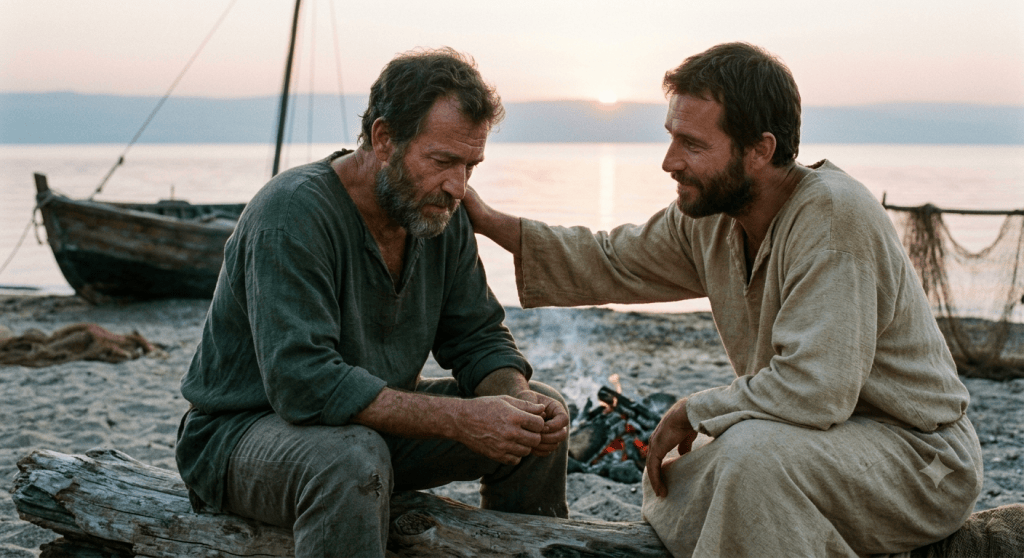
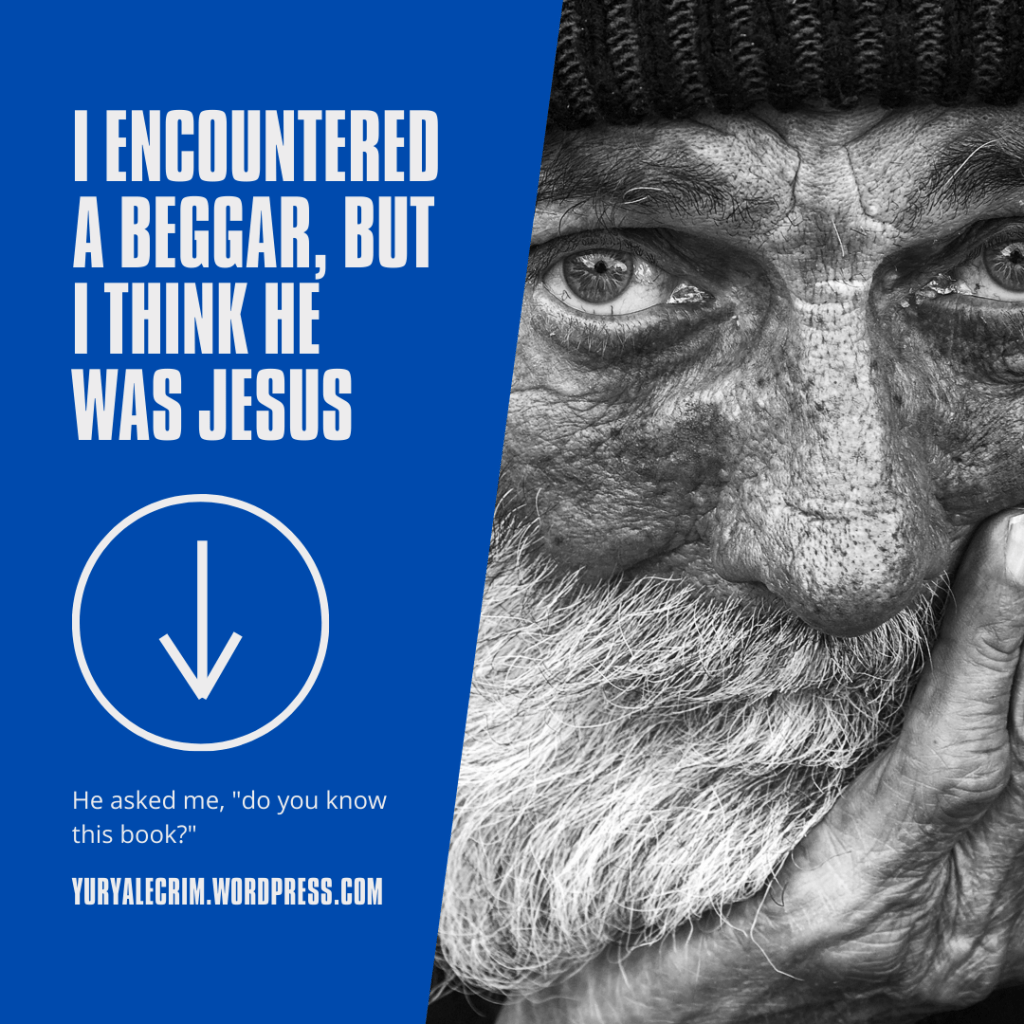
I remember going to fetch some late night snacks at the Petrol Station close to my house when I lived in South Africa.
South Africa was a country undergoing a massive financial crisis, and it was very common to have people begging for money at almost every corner. One should be careful, especially at night.
We used to say that it wasn’t safe to be on foot wandering around town after 18:00. But there I was, in my car, going to the Petrol Station. When I parked the car at the Petrol Station, right on the side of the entrance to the convenience store, I saw a homeless person sitting beside the trash can.
I parked the car and noticed that the homeless person was reading something with a lot of intent, even though there wasn’t much light where he was. I went into the store and came back outside with the late night snacks, passing by the self-absorbed homeless person sitting beside the trash bin, and sat in my car.
For a few moments, I observed this man, still trying to read the small book in his hands. His behavior was unusual, to say the least. A homeless person at that time of night, sitting beside the entrance of the convenience store at the Petrol Station, would typically jump at every opportunity to beg for some food. But not this man.
Despite being intrigued, I switched on the car, and when I did, the Holy Spirit spoke strongly to my heart, saying, “Take care of my servant.” It was a very clear and strong instruction, and I started asking both myself and the Holy Spirit as to how I should approach the man.
With no answer as to how to approach, I decided to just go for it. I switched off the car and hopped outside, walking towards the man. When I approached, he kept his eyes fixed on the book and didn’t even bother to acknowledge my presence.
I then asked him, “Sorry sir, what are you reading?” He replied, pointing to the book, “This is the source of my joy, my wisdom in difficult times, a fountain of life.” He continued, asking me, “Do you know the Bible? Do you know Proverbs? You need to read this! You have to read it!”
As he spoke, I felt a deep sense that this encounter was more than just a regular meeting. It felt like a divine moment, similar to the encounters with angels mentioned in the Bible, where people often didn’t even realize it.
At the same time a sense of shame she confusion rang through my mind, because after all, of course I know the Bible. After all, I am a pastor. And after all, it took me a strong prompt of the Holy Spirit to attend to the needy.
It had not been something spontaneous. Because of that, I felt a deep sense of shame, followed by the silence in sharing my so about my calling.
In a state of awe and shock, I could only nod at the man. And my reaction was emptying my pockets of everything I had and giving it to him. Surprisingly, he didn’t even look at what I was giving him.
Instead, he smiled at me, a smile that felt truly divine. He placed the items I had given him to the side and reminded me not to forget the fountain of life and wisdom found in the written words of the Bible.
Filled with emotion, I returned home and couldn’t stop crying as I told my wife that I believed the man I encountered was (possibly) an angel, or maybe even Jesus himself (a belief I still hold). Determined to help further, I gathered blankets, food, money, and even chocolates.
When I returned to the spot where I met the man, he was no longer there, leaving me feeling desperate. I began asking people at the petrol station if they had seen the beggar who was there just ten minutes ago, but no one had seen anything or anyone.
Heartbroken, I got back in my car and drove around, hoping to find the man (whom I strongly felt was Jesus). Eventually, I noticed someone walking towards a closed street, with no other path to follow.
As I approached the person, I realized it was a different beggar. I asked him if he had seen the specific person I described, and he smiled, replying that it might have been one of his brothers.
As I observed him, it looked to me that this beggar was the same man I had conversed with at the Petrol Station. I was filled with a sense of wonder as I inquired about his whereabouts and the location of his brother.
He informed me that they were constantly on the move, never staying in one place.
Concerned, I asked him where he planned to sleep for the night. He reassured me, saying he would be joining his other homeless brothers. Despite my persistence, he refused to disclose their sleeping spot. In an act of compassion, I gave him all the belongings I had brought with me.
He smiled gratefully before continuing his journey towards the end of a closed street, where he would join his “homeless brothers.” I might be wrong, but to me, Jesus tested my heart that night. And it might even be that it was Him or an Angel in person I had encountered.
Hebrews 13:2 NIV Do not forget to show hospitality to strangers, for by so doing some people have shown hospitality to angels without knowing it.
Mateus 7:1-6 NVIP “Não julguem, para que vocês não sejam julgados. [2] Pois da mesma forma que julgarem, vocês serão julgados; e a medida que usarem, também será usada para medir vocês. [3] “Por que você repara no cisco que está no olho do seu irmão e não se dá conta da viga que está em seu próprio olho? [4] Como você pode dizer ao seu irmão: ‘Deixe-me tirar o cisco do seu olho’, quando há uma viga no seu? [5] Hipócrita, tire primeiro a viga do seu olho, e então você verá claramente para tirar o cisco do olho do seu irmão. [6] “Não deem o que é sagrado aos cães, nem atirem suas pérolas aos porcos; caso contrário, estes as pisarão e, aqueles, voltando-se contra vocês, os despedaçarão.
Aqui está o que Jesus quis dizer:
Antes de compartilhar conselhos ou sabedoria valiosos, é crucial compreender o poder de liderar pelo exemplo. É hipocrisia apontar pequenas falhas nos outros quando você também tem falhas significativas.
Portanto, é essencial primeiro aplicar as mudanças e melhorias necessárias à sua própria vida antes de tentar ajudar os outros. Ao fazer isso, é importante abordar os outros com bondade, misericórdia e compaixão, pois a medida dessas qualidades em seu coração será usada para avaliá-lo.
Depois de refinar seu próprio caráter, você poderá compartilhar sua sabedoria, como pérolas preciosas, com aqueles que são receptivos. No entanto, tenha cuidado, pois se partilhar as suas pérolas com aqueles que não estão prontos ou dispostos a ouvir, eles poderão distorcer as suas palavras e prejudicar tanto a sua reputação como a sua mensagem com as suas línguas maliciosas.
Por exemplo, digamos que você queira incentivar as pessoas a terem um estilo de vida mais saudável. Antes de oferecer conselhos sobre dieta e exercícios, é importante dar o exemplo. Comece fazendo mudanças positivas em sua vida, como adotar uma alimentação balanceada e incorporar atividade física regular à sua rotina. Ao incorporar os princípios que deseja promover, você não apenas demonstra sua eficácia, mas também ganha credibilidade. É mais provável que as pessoas sejam receptivas à sua mensagem quando virem o impacto positivo que ela teve no seu próprio bem-estar.
“Lidere pelo exemplo, pois suas ações falam mais alto que palavras.”
These is a passage in Scripture that always makes me the most confused, yet at the exact same time, takes me to a place of absolute marvel.
In 1 Corinthians 2:1-5, we read about the most influential apostle of all time—a man who reached the furthest, wrote the most, and expanded the gospel further than anyone could have ever imagined. Yet, when he came to preach, he did so in fear, in weakness, and in much trembling.
Think about who Paul actually was. He was a brilliant intellectual, a Roman citizen who spoke at least four languages, and a Rabbi with elite political and religious “pedigree”.
He was brought up at the feet of Gamaliel, one of the three greatest teachers of the Law Israel had ever seen, and was in line to replace him—until Jesus found him.
Even his post-conversion resume is staggering. Commissioned by Jesus Himself, Paul suffered intensely for Christ: he was whipped, shipwrecked, imprisoned, persecuted by the Jews, questioned by the church, and even stoned to death and resurrected by a prayer.
Paul had every right to boast, to speak with authority, and to demand respect.But instead, he humbled himself, served, and worked with his own hands to provide for himself. He actively chose not to use the superiority of speech he was fully capable of using.
He refused to use his human wisdom—those persuasive words of knowledge that impress people and ultimately make them dependent on human intellect. Instead, the only wisdom he chose to rely on was Christ, and Him crucified.What an upside-down Kingdom!
Like Israel limping after wrestling with the angel, Paul chose to be weak (non-dependent on his personal strength), fearful (non-dependent on his own plans), and trembling (treating his mission with great awe and fear of the Lord). He didn’t want to be the “powerful Paul” he could easily claim to be in his flesh.
The Contrast: Paul vs. Modern Communication
When we look at Paul’s radical approach, it stands in glaring contrast to how we do things today. Modern writing, speaking, and leadership are almost entirely built on “superiority of speech” and human wisdom.
We are taught to write persuasively, to manipulate emotions, to polish our personal brands, and to leverage our “pedigrees” to build an audience. Modern communicators often try to be the “powerful” version of themselves in the flesh, relying on impressive intellect and clever marketing to make people dependent on their platforms and their knowledge.
But Paul completely rejected persuasion and manipulation. The great, wise man who sat at Gamaliel’s feet realized he had to diminish and completely die to himself. He knew that if he used his natural talents, people would be impressed by him, but if he relied wholly on the Spirit, their faith would rest in the power of God.
Wow! Wow! Wow!
Reading this brings me to a simple, desperate prayer:
Teach me, Lord, to die to myself so that people will have their faith established entirely on You! Please teach me to make disciples for You, and never for myself. In Jesus’ name!
John 10:31-42 NASBSThe Jews picked up stones again to stone Him. [32] Jesus answered them, “I showed you many good works from the Father; for which of them are you stoning Me?” [33] The Jews answered Him, “For a good work we do not stone You, but for blasphemy; and because You, being a man, make Yourself out to be God.” [34] Jesus answered them, “Has it not been written in your Law, ‘I SAID, YOU ARE GODS’? [35] If he called them gods, to whom the word of God came (and the Scripture cannot be broken), [36] do you say of Him, whom the Father sanctified and sent into the world, ‘You are blaspheming,’ because I said, ‘I am the Son of God’? [37] If I do not do the works of My Father, do not believe Me; [38] but if I do them, though you do not believe Me, believe the works, so that you may know and understand that the Father is in Me, and I in the Father.” [39] Therefore they were seeking again to seize Him, and He eluded their grasp. [40] And He went away again beyond the Jordan to the place where John was first baptizing, and He was staying there. [41] Many came to Him and were saying, “While John performed no sign, yet everything John said about this man was true.” [42] Many believed in Him there.
This is a scene in the life of Jesus that should stop our hearts every single time we read it, yet it often goes unnoticed. It is the jarring, scandalous image of the Maker of the Universe making an escape. The King of Glory—the one whose voice sustained the atoms of the universe and ordained “Let there be Light”—is suddenly making a run for His life, searching for a place of safety.
Is this serious? The very people He came primarily to save are the ones taking up stones to kill Him. If you have ever experienced betrayal, rejection, or a crushing lack of gratitude, you know the tremendous amount of pain and disappointment that follows. They tried to stone Him by force—how ungrateful! Jesus made an escape to the desert, returning to the place where John once baptized, seeking a momentary place of safety among those who actually affirmed His ministry.
To the world, this looks like a collapse, a complete failure of a person without the capacity to walk in triumph before His enemies. But look closer. This isn’t a failure of power; it is the most robust exercise of divine restraint in the history of the Universe. It is the majesty of muzzled might—the Almighty God choosing not to use the very power that sustains all things.
The King Who Borrowed Everything
We often struggle to grasp the paradox of Kenosis—the self-emptying of Christ. Let’s be clear: Jesus didn’t “lose” His divinity; He voluntarily restrained the independent use of it. He muzzled His omnipotence so that He could experience, in full, the limitations and frustrations of our human fragility.
Think about the sheer, staggering humility of this: The one who owns the cattle on a thousand hills spent His life as a guest. He chose to embrace a borrowed manger to be born in, a borrowed boat to preach from, an animal that wasn’t His to ride, and a borrowed room for the Passover. He was the only person who ever lived on Earth with a legal right to everything on it, yet He ended up with nothing.
This wasn’t just a “feeling” of poverty; it was a reality in which He made Himself poor so we could access the full inheritance as children of God. It was an act of self-substitution—God paying the debt we owed through His refusal to use His divine power for His own benefit.
The Power of Refusal in the Garden
Nowhere is this power of refusal more evident than in the Garden of Gethsemane. Before the mob arrived, Jesus was on His knees, bleeding through His sweat glands in complete anguish, asking if the terrible cup could be avoided. But His answer was a conscious surrender: “May your will be done, not mine”.
When the torches and swords finally appeared, Peter did what any of us would do—he swung. But Jesus did something radical. He rebuked the violence and healed the very ear of the man who came to arrest Him. In that moment, as Peter was stopped, Jesus revealed the “veiled majesty” behind His restraint:
“Do you think that I cannot now pray to My Father, and He will provide Me with more than twelve legions of angels?”
Understand this: Jesus wasn’t trapped. He wasn’t a victim of a clever political plot or the betrayal of a friend. He was the Master of the moment, exercising an authority that chooses to serve rather than dominate. History is full of stories of kings who asked their people to die for them; Jesus is the only King who used His power to die for His subjects. His restraint was chosen because His redemptive mission transcended His personal safety.
The Great Forensic Exchange
Why the “escape” and the “fragility”? It was for the sake of a radical reversal of fortune—the heart of substitutionary atonement. On the cross, Jesus wasn’t just sympathizing with our condition; He was doing a legal business of exchange.
This is the great forensic exchange: He took our infinite debt and gave us His infinite worth. Our sins were imputed to Him, and His righteousness was imputed to us. Justice was not bypassed; it was fulfilled as the penal retribution we earned was absorbed into His own body. He became a curse for us so the cycle of death could finally be broken.
“But he was wounded for our transgressions, he was bruised for our iniquities; upon him was the chastisement that made us whole, and with his stripes we are healed.” (Isaiah 53:5)
Shattering the Retribution Loop
Finally, we see the ultimate aim of this divine restraint in His final cry: “Father, forgive them, for they know not what they do.”In that single sentence, Jesus shattered the cycle of retribution that has haunted humanity since Eden.
He refused to mirror the behavior of His oppressors. Rather than meeting violence with counter-violence, He absorbed the full weight of human sin and divine justice simultaneously. This wasn’t “cheap grace”—it was costly grace, the most expensive gift in existence. By absorbing the consequences we deserved, He eliminated the basis for perpetual retribution and showed us a “creative agency” that transforms oppression rather than just submitting to it.
A Pastoral Call to the Scars
When life leaves you feeling fragile—when you feel like a fugitive in your own story—remember the King who ran. His fragility was a mask for a strength that could move mountains but chose to carry a cross instead.
He denied the “normal human way” of frustration and anger to choose the Father’s path. He took what we deserved so we could have what He possessed. He ran, so that you would never have to run from God again.
This is the scandal. This is the beauty. This is the absolute, unshakeable power of the Gospel.
Na jornada de formação espiritual, existe um divisor de águas crítico: o momento em que a teoria sobre nossa identidade precisa enfrentar a realidade caótica e “suja” dos encontros humanos. No currículo “Incomparável”, a Semana 4 marca exatamente esse ponto de virada, saindo da abstração e entrando na prática missionária intencional.Para navegar nessas águas, somos apresentados a um “díptico” espiritual — dois quadros contrastantes que revelam a amplitude da resposta humana ao Divino. De um lado, Nicodemos, o insider por excelência; do outro, a Mulher Samaritana, a outsider marginalizada. Analisaremos esses encontros através da Matriz FOFA (Forças, Oportunidades, Fraquezas e Ameaças), utilizando-a não como uma burocracia organizacional, mas como um diagnóstico teológico profundo para identificar as barreiras e pontes que construímos em relação ao Reino de Deus.
1. O Perigo do Pedigree: Quando sua Força é sua Maior Ameaça
Nicodemos apresenta-se com um currículo que é o topo da pirâmide do sucesso religioso do primeiro século. Ele é um anthrōpos ek tōn Pharisaiōn (homem dos fariseus), um archōn (autoridade/membro do Sinédrio) e, crucialmente, Jesus o identifica como ho didaskalos — o mestre de Israel. O uso do artigo definido no grego indica uma proeminência singular; ele não era apenas um professor, mas a referência teológica da nação.No entanto, ele vem a Jesus nyktos (de noite). Para o evangelista João, a noite é o símbolo do reino da incredulidade e da ignorância espiritual. Nicodemos possui toda a luz externa da religião, mas caminha na escuridão. Sua autossuficiência é revelada no plural arrogante ” oidamen ” (Nós sabemos). Ele tenta encaixar Jesus em suas categorias preexistentes, usando sua “força” como um véu.Auditando as Forças de Nicodemos (Ameaças ao Discipulado):
Santidade (Fariseu): Gera o Legalismo — a crença de que o comportamento obriga Deus a abençoar.
Status (Principal): Gera o Orgulho — a incapacidade de admitir necessidade por medo de perder a reputação.
Conhecimento (O Mestre): Gera o Racionalismo — descartar o que não se pode explicar, valorizando informação acima da transformação.”O seu currículo religioso não é o seu ingresso para o banquete; muitas vezes, ele é o muro que você precisa derrubar para conseguir ver o Rei.”
2. A Teologia da Necessidade: Oportunidade não é Sorte, é Imperativo
Em João 4:4, o texto afirma que “era-lhe necessário ( edei ) passar por Samaria”. O termo edei denota uma necessidade divina, um imperativo do plano redentor. Geograficamente, os judeus evitavam Samaria, preferindo rotas mais longas e exaustivas para manter a pureza ritual. A rota de Jesus, portanto, não foi logística, mas missional. No Reino, a oportunidade é um compromisso divino que exige desvios desconfortáveis da nossa agenda e risco à nossa reputação.Visão Comum de Oportunidade vs. Visão do Reino (Edei)
Conveniente vs. Necessária: A oportunidade do Reino interrompe sua rota habitual e exige um “desvio” que, na verdade, é o caminho principal.
Confortável vs. Alto Custo: Enquanto buscamos afinidade, o edei nos empurra para cruzar barreiras de raça, classe e moralidade, arriscando o estigma social (como visto na reação dos discípulos no v. 27).
Passiva vs. Ativa: Em vez de esperar que a porta se abra, o discípulo persegue o caminho que o Espírito impele.
3. Hardware Novo, não Patch de Software: A Natureza do Renascimento
Ao confrontar Nicodemos, Jesus introduz o termo anōthen (nascer de novo / do alto). Preso à lógica da sarx (carne), Nicodemos só enxerga a impossibilidade biológica. Jesus, porém, estabelece uma distinção ontológica: o que é nascido da carne é carne.A sarx possui uma inabilidade total de evoluir para o espírito ( pneuma ). Ela pode ser melhorada, educada ou tornada “religiosa”, produzindo uma “carne de alta qualidade”, mas nunca produzirá espírito. O Evangelho não propõe uma modificação de comportamento ou um “patch” de software no seu sistema antigo.A carne só produz carne melhorada, mas nunca produz espírito; o chamado é para uma substituição completa de hardware, uma ressurreição radical vinda do alto.
4. Vulnerabilidade como Estratégia: O Poder de Pedir Ajuda
O encontro no poço ocorre à “hora sexta” (meio-dia). O fato de a mulher estar ali sozinha, sob o sol a pino, revela seu “evitamento social” e sua vergonha; as mulheres “decentes” buscavam água em grupos, no frescor da manhã. Jesus aproxima-se dela em um estado de kekopiakōs — exausto, cansado e sedento.Jesus inverte a dinâmica de poder. Ele não começa com um sermão de autoridade, mas como um “mendigo” de água: “Dá-me de beber”. Ele usa sua sede física real para acessar a sede existencial dela. Ao se fazer vulnerável, Jesus constrói uma ponte de dignidade. Enquanto Nicodemos escondeu sua necessidade nas sombras, a mulher teve sua fragilidade exposta sob a luz do dia. No diagnóstico da alma, a fraqueza exposta é um ativo missionário superior à força oculta.”O seu quebrantamento não é uma barreira para Jesus; é o próprio poço onde Ele está sentado, esperando para trocar a sua água temporária pela Vida Eterna d’Ele.”
5. Ameaças Religiosas: A Pneumatologia do Vento e a Verdade
Quando Jesus toca na ferida dos “cinco maridos”, a mulher utiliza uma “ameaça” clássica: a deflexão teológica. Ela tenta iniciar um debate sobre o Monte Gerizim vs. Jerusalém para evitar o confronto com sua realidade interna. Jesus responde descentralizando o endereço sagrado e apresentando a adoração em Pneuma (Espírito) e Aletheia (Verdade).Aqui reside a imprevisibilidade do Espírito. Jesus compara o nascido do Espírito ao vento ( pneuma ): “sopra onde quer… não sabes de onde vem, nem para onde vai”. Para Nicodemos, prisioneiro de estruturas rígidas, isso é aterrorizante. O discípulo não é apenas movido pelo vento; ele torna-se como o vento — imprevisível para o mundo, governado por um sistema de alta pressão celestial e impossível de ser domesticado por tradições. A adoração real exige um coração nu, não uma localização litúrgica correta.
6. Abandonando o Cântaro: A Substituição do Temporal pelo Eterno
João 4:28 registra um detalhe crucial: a mulher deixou seu cântaro ( hydria ). O cântaro era sua ferramenta de sobrevivência, o símbolo de seu fardo diário e de seus mecanismos de defesa. Ao abandoná-lo, ela demonstra o que o estrategista teológico Thomas Chalmers chamou de “o poder expulsivo de um novo afeto” .A fonte interna de água viva tornou o balde externo secundário. Deixá-lo foi um ato de fé: ela esqueceu a razão de ter ido (buscar água física) porque encontrou uma razão maior para voltar (testemunhar). O cântaro representa o que carregamos achando que não podemos viver sem. O verdadeiro avivamento estratégico acontece quando valorizamos mais a Fonte do que a ferramenta.
Conclusão: Do Conhecimento Silencioso ao Testemunho Público
O contraste final é revelador: Nicodemos, o expert teológico, desaparece nas sombras após perguntas hesitantes; a Mulher Samaritana, a pecadora sem pedigree, abala uma cidade inteira. A eficácia no Reino não vem da perfeição, mas da proclamação experiencial: “Vinde e vede”.Se você é do “Tipo Nicodemos” (muito conhecimento, pouca ousadia), sua estratégia é arriscar sua reputação e sair da noite. Se é do “Tipo Samaritana” (muita bagagem, mas uma experiência real), sua estratégia é alavancar sua história agora. Interrogue suas forças: elas o mantêm na noite ou suas fraquezas o levam ao poço?Larguem o cântaro. Confiem no Vento. Adorem em Verdade.
Assista a aula completa no YouTube no link abaixo:
A maioria de nós tem uma imagem simplificada de Jesus. Preferimos o Jesus da graça, aquele que transforma água em vinho em Caná, que provê abundância e livra uma família da vergonha social. É o Jesus que acolhe, que serve, que ama incondicionalmente.
No entanto, na mesma semana, o Evangelho de João nos apresenta outro Jesus: aquele que trança um chicote de cordas, vira mesas e expulsa comerciantes do templo. Este é o Jesus da verdade, que exige santidade e confronta a corrupção de frente. De um lado, o vinho da graça; do outro, o chicote da verdade.
Esse paradoxo revela um dos desafios centrais da liderança moderna: a luta para ser compassivo sem ser fraco e para ser firme sem ser cruel. Como evitamos cair na armadilha da complacência, que tolera o erro em nome da paz, ou no legalismo severo, que esmaga as pessoas em nome de um padrão?
Este artigo explora cinco lições surpreendentes desses dois eventos que oferecem um modelo de liderança mais integrado e poderoso. Prepare-se para descobrir como a graça e a verdade não são forças opostas a serem equilibradas, mas parceiras inseparáveis na jornada de uma liderança transformadora.
Graça e Verdade Não São Opostos a Serem Equilibrados, Mas Parceiros Inseparáveis
Líderes frequentemente sentem que precisam fazer uma escolha. Se inclinarem demais para a graça, correm o risco de cair na “complacência”, ignorando conflitos e tolerando comportamentos tóxicos em nome de uma falsa harmonia. Se, por outro lado, se inclinarem demais para a verdade, caem no “legalismo”, tornando-se juízes frios que aplicam regras sem compaixão.
A Escritura argumenta que esta é uma premissa falsa. A verdadeira oposição não é entre graça e verdade, mas entre graça e legalismo. A verdade sem graça se torna crueldade; a graça sem verdade se torna uma licença para o erro. Jesus personifica a união perfeita de ambas, sendo “cheio de graça e de verdade” (João 1:14). Nele, elas não são forças concorrentes que precisam de equilíbrio, mas qualidades perfeitamente complementares que operam em harmonia.
Imagine um belo vaso, lascado e rachado. Um artista bondoso o aceita com amor, exatamente como está. Mas seu amor não para por aí. Ele pega o vaso e, em vez de esconder as falhas, preenche cada rachadura com uma laca dourada transformadora, tornando-o ainda mais belo e valioso. Assim é a parceria da graça e da verdade. A graça nos aceita como somos; a verdade nos transforma em tudo o que fomos criados para ser.
“O problema não é que a graça e a verdade existam em oposição — é que as separamos artificialmente.”
O Primeiro Milagre Não Foi uma Demonstração de Poder, Mas um Resgate da Vergonha
A cena é um casamento em Caná. O vinho, elemento central da celebração, acaba. No contexto cultural do primeiro século, isso não era um pequeno inconveniente, mas uma “catástrofe de honra”. As festas de casamento duravam até uma semana, e a falha em prover para os convidados não apenas traria uma vergonha social profunda e duradoura para a família do noivo, mas poderia até resultar em ações legais. Era um desastre social, financeiro e legal.
A primeira “demonstração de glória” de Jesus não foi um espetáculo público, mas um ato silencioso e discreto para salvar uma família que ele amava da humilhação. O texto nos diz que apenas sua mãe e os servos sabiam o que realmente havia acontecido. O milagre foi feito de forma a preservar a honra da família, não para exaltar a si mesmo.
A lição de liderança aqui é profunda: o impacto mais significativo muitas vezes não vem de grandes exibições de poder ou autoridade, mas de atos silenciosos de graça que preservam a dignidade das pessoas e atendem às suas necessidades sociais e emocionais mais profundas.
A Fúria no Templo Foi um Ato de Justiça Premeditado, Não um Descontrole
A imagem de Jesus virando mesas no templo é frequentemente interpretada como um raro momento de perda de controle. No entanto, um detalhe crucial em João 2:15 desmente essa ideia: antes de expulsar os comerciantes, ele primeiro “fez um chicote de cordas”.
Trançar um chicote leva tempo. Este não foi um ato impulsivo de raiva, mas um gesto profético, deliberado e estratégico, provavelmente usando o chicote não para ferir pessoas, mas para conduzir os animais maiores, como bois e ovelhas, para fora do pátio. Pense em um bombeiro que prepara metodicamente seu equipamento não para causar caos, mas para restaurar a ordem. Jesus não estava descontrolado; ele estava totalmente no controle, executando uma purificação planejada.
O alvo de sua ira era o sistema de exploração corrupto, comandado pela família do sumo sacerdote, os “Filhos de Anás”. Eles haviam estabelecido dois golpes principais no Pátio dos Gentios — o único lugar onde os não-judeus podiam orar:
O Golpe dos Animais: Sacerdotes inspecionavam o animal de sacrifício de um peregrino, encontravam uma “imperfeição” e o forçavam a comprar um animal “aprovado” deles mesmos por até quinze vezes o preço.
O Golpe da Usura: Cambistas trocavam moedas romanas por moeda do templo a taxas de câmbio predatórias, explorando os mais pobres que só queriam adorar a Deus.
Eles estavam bloqueando o acesso a Deus para obter lucro pessoal. A ação de Jesus foi um ato de “zelo”: um amor protetor e feroz que se recusa a permitir que o sagrado seja profanado e que os excluídos sejam explorados.
Os Melhores Sistemas Religiosos, por Si Sós, Ficam Vazios
No casamento em Caná, João menciona um detalhe específico: havia ali seis talhas de pedra para os rituais de purificação judaicos. O simbolismo é poderoso.
Pedra: Os recipientes de pedra eram o “padrão ouro” para a pureza ritual. Ao contrário da argila porosa, a pedra era considerada incorruptível e não precisava ser quebrada se se tornasse impura. Elas representavam o melhor sistema que a religião humana poderia oferecer.
Seis: Na simbologia bíblica, seis é o número da humanidade, um a menos que o sete, o número da perfeição divina. Representa o esforço humano que, por si só, é incompleto.
Vazias: Apesar de serem o melhor sistema, as talhas estavam vazias.
Em contraste com essa vacuidade, Jesus não apenas supre a necessidade; Ele a supera com o que a fonte chama de uma “avalanche de graça”, criando entre 120 e 180 galões de vinho da mais alta qualidade — o equivalente a 900 garrafas modernas.
A lição de liderança é clara: liderar a partir de “vasos de pedra” — confiando na performance externa, em rituais, regras ou na aparência de pureza — no final nos deixa sem nada real para oferecer. Uma verdadeira liderança deve fluir de uma transformação interna, assim como Jesus transformou a água comum da purificação no vinho da celebração.
Você Pode Aplicar o ‘Chicote da Verdade’ em Si Mesmo com uma Ferramenta da Toyota
Se o chicote no templo foi um ato de purificação externa, como podemos aplicar esse mesmo princípio de verdade aos motivos ocultos do nosso próprio coração? A resposta pode vir de um lugar inesperado: o sistema de produção da Toyota.
Podemos usar uma ferramenta chamada “Auditoria do Coração”, baseada no método dos “5 Porquês” desenvolvido por Sakichi Toyoda. A técnica foi criada para encontrar a causa raiz de problemas mecânicos, insistindo em perguntar “Por quê?” cinco vezes para ir além do sintoma superficial.
Vamos aplicar isso a um líder viciado em trabalho (workaholic):
Por que trabalho 14 horas por dia? Porque tenho muitos prazos a cumprir. Este é o sintoma superficial.
Por que os prazos são tão urgentes? Porque eu não delego tarefas à minha equipe. Esta é a justificativa imediata.
Por que não delego? Porque sinto que ninguém faz o trabalho tão bem quanto eu, e se der errado, a culpa será minha. Este é o padrão de comportamento.
Por que tenho tanto medo do fracasso? Porque minha reputação e meu valor dependem desse sucesso. Esta é a crença subjacente.
Por que minha reputação é tão importante? Porque, no fundo, não confio que Deus me ame se eu não for ‘o melhor’. Esta é a raiz do problema: a idolatria do controle e da aprovação.
Essa autoanálise rigorosa não nos leva ao desespero, mas ao arrependimento. Ela nos mostra onde trocamos a confiança em Deus por ídolos de performance e aprovação. É nesse ponto que podemos nos voltar e beber novamente do “Vinho da Graça”.
O que Há no Átrio da Sua Mente?
Quando as autoridades no templo exigiram um sinal que justificasse a autoridade de Jesus, Ele respondeu: “Destruam este templo, e em três dias eu o levantarei”. Ele não falava da estrutura física (o Hieron, ou seja, todo o complexo do templo), mas do santuário do Seu corpo (o Naos), o verdadeiro lugar da habitação de Deus. Jesus é o Templo final. Porque Ele tem autoridade como o verdadeiro Templo, Ele pode purificar o templo físico.
A liderança modelada por Jesus, portanto, não é sobre equilibrar dois comportamentos, mas sobre permitir que o verdadeiro Templo — o próprio Cristo — purifique o templo do nosso coração. A liderança integrada começa com essa purificação interna, antes de poder ser oferecida externamente. Precisamos permitir que Jesus vire as mesas da ansiedade, do medo e da busca por autojustificação dentro de nós, para que o nosso interior se torne uma casa de oração.
A pergunta final, portanto, é para você:
“Se Jesus entrasse hoje no ‘átrio da sua mente’ ou na sua organização, o que Ele encontraria? Encontraria oração, ou encontraria o ruído da ansiedade e a busca incessante por aprovação e pela própria integridade?”
Many believers embrace “either-or” thinking when it comes to spiritual growth. Either they assume maturity is entirely up to God—a “divine zap”—or they suppose it is all their responsibility, leading to discouragement.
The Apostle Paul offers a different path: The Both-And Proposition.
What “Working Out” Really Means
When Paul says to “work out your own salvation,” he is not suggesting we work to obtain it. The Greek phrase denotes the expression, manifestation, or actualization of something one already possesses.
Consider these three biblical analogies:
The Silver Mine: The first-century author Strabo used this term to describe digging silver out of a mine. The silver is there; you are simply extracting it.

The Farmer: A farmer “works the soil” to make a field bear fruit. He doesn’t create the life, but he facilitates its growth.
The Gift: Salvation is like a massive gift that needs to be unwrapped for thorough enjoyment.
The Mechanics of Transformation
The reason we can work is that God is already at work within us. He doesn’t just apply external pressure; He transforms us from within by reshaping our preferences.
The Desire: God generates the desire to obey Him.
The Strength: He provides the strength to act on that desire.
The Mind: He works in our minds to formulate thoughts and plans.
Justification vs. Sanctification
While there is a beginning point in our experience—repentance and justification—this is only the start. We are called to “work out” our salvation into maturity, growing into the full stature of Christ. This process, known as sanctification, involves the Holy Spirit creating a new nature that overcomes the old.
Fear, Trembling, and Security
Paul commands us to do this with “fear and trembling”. This does not mean salvation is uncertain or that we should fear losing it. Rather, it is a call to:
Reverence: Having a “sensitive heart” and a deep desire not to miss God’s direction.
Humility: Recognizing that because God works in us, we have no grounds for boasting.
Confidence: Moving forward with the assurance that the omnipotent God operates both within and for the believer.
Conclusion
You cannot “work out” what has not first been “worked in”. If you are in Christ, the power to change is already inside you. Your role is to submit, follow, and exercise that gift.
The Philippian Christians needed to obey by working out their own salvation with fear and trembling.
Philippians 2:12-13 NASBSSo then, my beloved, just as you have always obeyed, not as in my presence only, but now much more in my absence, work out your salvation with fear and trembling; [13] for it is God who is at work in you, both to will and to work for His good pleasure.
However, this command requires careful interpretation, as it addresses both individual spiritual development and communal well-being.The verb “work out” means to continually labor toward bringing something to completion or fruition, which believers accomplish through actively pursuing obedience in the process of sanctification.
This wasn’t a call to passivity but to engaged effort. The glorious truth that Christ has done everything necessary to save us does not mean believers passively wait for God to transform them into godliness. Rather, grace-empowered obedience to all that Jesus commanded flows from a proper understanding of God’s grace shown in the cross.
The phrase “fear and trembling” carries nuance often misunderstood. The Greek word translated “fear” can equally mean “reverence” or “respect.” This posture before God recognizes the reality of who God is, the eternal nature of the stakes involved, and the seriousness with which one must pursue Christ-likeness, growing out of recognition of weakness and of the power of temptation.
Interpreters debate whether Paul addressed individual believers or the entire community. Some scholars understand Paul as calling the church to work to rid themselves of divisions and discord, noting that the word “your own” is plural.
Regardless, the command unites divine and human agency—believers work while simultaneously depending on God’s empowerment, creating a dynamic partnership rather than a contradiction between human effort and divine grace.
References
Got Questions Ministries, Got Questions? Bible Questions Answered (Bellingham, WA: Faithlife, 2014–2021).[2] Matthew S. Harmon, Philippians: A Mentor Commentary, Mentor Commentaries (Great Britain; Ross-shire: Mentor, 2015), 244.[3] Derek R. Brown, Philippians, ed. Douglas Mangum, Lexham Research Commentaries (Bellingham, WA: Lexham Press, 2013).
Se confessarmos os nossos pecados, ele é fiel e justo para perdoar os nossos pecados e nos purificar de toda injustiça.
A confissão nos liberta para desfrutar de uma comunhão plena com Cristo! Ela alivia nossa consciência, tira a vergonha e diminui o peso da culpa. Mas, olha só, alguns cristãos não entendem bem como a confissão funciona.
Eles se sentem tão culpados que confessam os mesmos pecados várias e várias vezes, e ainda ficam se perguntando se não esqueceram de algo.Outros cristãos acham que Deus os perdoa quando confessam, mas que se morressem com pecados não confessados, estariam perdidos para sempre. Gente, eles não entenderam que Deus quer nos perdoar!
Ele permitiu que seu Filho amado morresse só para poder nos oferecer o perdão. Ele cancelou nossa dívida e jogou fora todas as acusações. Quando a gente se entrega a Cristo, Ele perdoa todos os pecados que cometemos ou que um dia vamos cometer.
Claro, devemos continuar confessando nossos pecados, mas não é porque a falta de confissão vai nos fazer perder a salvação. Nosso relacionamento com Cristo é seguro! A gente confessa para poder ter a melhor e maior comunhão e alegria com Ele.
O Verdadeiro Sentido da ConfissãoA verdadeira confissão também envolve o compromisso de não continuar no pecado. Não seria uma confissão genuína a Deus se a gente planejasse cometer os pecados de novo, só querendo um perdão temporário, né? Em vez disso, devemos orar pedindo força para vencer a tentação da próxima vez que ela aparecer.
Que o Senhor nos fortaleça e nos guie a uma vida aonde a confissão genuína faça parte do nosso dia a dia, aonde o desejo de agradar a Deus e ter comunhão com Ele seja maior que o poder do pecado em nossas vidas, e que possamos viver mais e mais em comunhão genuína com o nosso amado Jesus.
Que não nos esqueçamos, o Seu sangue derramado é mais poderoso do que qualquer pecado e que Ele quer nos perdoar! Confesse a Jesus e seja perdoado em nome de Jesus! Amém!
In times of depletion, only Jesus can fill our hearts with strength and compassion. When facing physical and emotional exhaustion, we should rely on Him; He strengthens us, holding us together amidst chaos. He guides us when lost, comforts us with words of peace, and grants miraculous breakthroughs and heavenly solace. His power shines through our weakness. It’s His power, not our own, that brings to fulfilment His purpose in our lives.
Believe this spiritual truth: God still performs miracles, heals, calls us individually with purpose, saves, transforms pain into triumph, mends broken hearts, and uses His church on Earth as a vessel of love, power, and transformation.
Thank you Jesus for bringing me to a place of knowledge of you. I love to know you. I love to feel your love. I love to walk in your pathway. You are my way Jesus, you are my life, you are my light and in your light my feet find the peace promised to those who follow you.
You are my ligthhouse, my refuge, my rock, and my salvation. You are my safe place Lord. You au my Lord, Jesus Christ, and also my saviour. I confess your name. I adore your name. I am safe in your name, Jesus!
I want to know you more. I want to see you, I want to experience you, I want to love you more. I want to live for you all the days of my life. I want to live in the house of the Lord forever, serving you and loving you, as well as leading others to you, in the name of Jesus, amen!
A number of years ago I went to America with a steamship captain who was a very devoted Christian. When we were off the coast of Newfoundland, he said to me, “The last time I sailed here, which was five weeks ago, something happened that revolutionized my entire Christian life.
I had been on the bridge for twenty-four straight hours when George Mueller of Bristol, England, who was a passenger on board, came to me and said, ‘Captain, I need to tell you that I must be in Quebec on Saturday afternoon.’ ‘That is impossible,’ I replied. ‘Very well,’ Mueller responded, ‘if your ship cannot take me, God will find some other way, for I have never missed an engagement in fifty-seven years.
Let’s go down to the chartroom to pray.’“I looked at this man of God and thought to myself, ‘What lunatic asylum did he escape from?’ I had never encountered someone like this. ‘Mr. Mueller,’ I said, ‘do you realize how dense the fog is?’ ‘No,’ he replied. ‘My eye is not on the dense fog but on the living God, who controls every circumstance of my life.’“
He then knelt down and prayed one of the most simple prayers I’ve ever heard. When he had finished, I started to pray, but he put his hand on my shoulder and told me not to pray. “He said, ‘First, you do not believe God will answer, and second, I BELIEVE HE HAS.
Consequently, there is no need whatsoever for you to pray about it.’“As I looked at him, he said, ‘Captain, I have known my Lord for fifty-seven years, and there has never been even a single day that I have failed to get an audience with the King.
Get up, Captain, and open the door, and you will see that the fog is gone.’ I got up, and indeed the fog was gone. And on Saturday afternoon George Mueller was in Quebec for his meeting.”
Porque devemos perdoar? A Biblia diz: Mateus 6:14-15 “Se vocês perdoarem aqueles que pecam contra vocês, seu Pai celestial os perdoará. Mas, se vocês se recusarem a perdoar os outros, seu Pai não perdoará suas ofensas.”
Marcos 11:25 “Quando vocês orarem, perdoem primeiro a quem vocês guardam rancor, para que o Pai de vocês, que está nos céus, também perdoe os pecados de vocês.”
Acredito que precisamos compreender que receberemos o perdão de Deus somente quando estivermos dispostos a perdoar aqueles que nos prejudicaram. Quando não estamos dispostos a perdoar, demonstramos que não compreendemos ou não acessamos o perdão e a graça de Deus. A Bíblia continua nos guiando em como agin quando diz Mateus 5:44 diz: “Mas eu digo: amem os seus inimigos! Orem por aqueles que os perseguem!”
Vc ja orou por alguém que te fez mal? como foi a sua experiencia?
Queridos, perdoar não significa que estamos perdendo, mas sim que somos obedientes além do poço raso do nosso orgulho. Orar por aqueles que nos odeiam e nos ferem, nos liberta das emoções destrutivas da raiva, da amargura e da vingança. A palavra nos diz em Efésios 4:31: Livrem-se de toda amargura, raiva, cólera, palavras ásperas e calúnias, bem como de todo tipo de comportamento maligno.
Quando carregamos sentimentos fortes contra alguém, aqueles pensamentos e sentimentos se estabelecom no nosso coração. A única maneira de se livrar desses pensamentos e sentimentos é tomar uma decisão para perdoar e abençoar a pessoa.
A falta de perdão é uma atitude implacável que não só arruína nossos relacionamentos, como também envenena nossas almas. Somos nós mesmos que mais sofremos com a nossa falta de perdão. É como carregar um saco de lixo que não é nosso. No final, somos nós, que não perdoamos, que começamos a cheirar como o lixo que escolhemos carregar somente por não perdoar aqueles que nos ofenderam.
A Palavra de Deus nos diz em Efésios 4:32 é um forte lembrete do porquê devemos perdoar quando diz: Sejam bondosos e compassivos uns para com os outros, perdoando-se mutuamente, assim como Deus os perdoou em Cristo.
Ter sido perdoado por Deus é a motivação e serve como modelo para o nosso perdão aos outros.
Você já parou pra pensar que se Deus nos perdoou, como podemos nos recusar a perdoar alguém que nos prejudicou?
Nosso perdão, assim como o de Deus, é uma dádiva da graça, gratuita para quem o recebe, mas muitas vezes custosa para quem o doa.
O perdão é uma dádiva da Graça, que flui da própria essência do que significa ser cristão para aqueles que não compreenderam ou não acessaram a Graça de Deus. O perdão é o maior condutor da Graça de Deus para os não alcançados.
Você ja tentou se vingar de alguém por algo que a pessoa tenha feito contra você?
Jogando futebol, quando alguém chegava mais forte e nos machucava, normalmente na primeira oportunidade que tinhamos, nós revidavamos. Masquando nascemos de novo, Deus nos chama a viver uma realidade diferente.
Ele mas chama a não mos preocuparmos com aqueles que te feriram. Há um segredo para você. Nada está escondido de Deus. Deus é justo, e fazer justiça é o trabalho de Deus, não nosso, e podemos confiar que Deus fará justiça.
A justiça de Deus e manifesta em que nós oremos pela salvação daqueles que nos fazem o mal, não neles se dando mal. E nisso, enquanto oramos por eles, nosso coração se enche de misericadia e de compaixão por aqueles que estão perdidos. é possível nos afastaranos do ciclo interminável de vingança e retaliação por meio do perdão.
A palavra de Deus diz em Romanos 12:19: Caros amigos, nunca se vinguem. Deixem isso para a justa ira de Deus. Pois as Escrituras dizem: “Eu me vingarei; eu lhes darei a paga”, diz o Senhor.
Mas é importante lembrar que Jesus disse em Lucas 23:34: Jesus disse: “Pai, perdoa-lhes, porque não sabem o que fazem”.
Jesus perdoou até aqueles que zombaram dele e o mataram. Deveríamos nos preocupar mais com nossos ofensores e seu relacionamento com Deus do que em alimentar os nossos rancores e autopiedade.
Quão difícil é perdoar?
Veja o que diz 1 Pedro 3:8-9: Tenham compaixão uns pelos outros. Amem-se como irmãos. Sejam compassivos e mantenham uma atitude humilde. Não retribuam o mal com o mal. Não revidem com insultos quando as pessoas os insultarem. Em vez disso, retribuam com uma bênção. É para isso que Deus os chamou, e ele lhes concederá a sua bênção.
Abençoe aqueles que planejam o mal contra você. Quando as pessoas dizem coisas ofensivas sobre nós, Deus nos chama para responder abençoando-as.
Perdoe, porque você foi perdoado. Sem perdoar aqueles que nos fizeram algo, não podemos receber o perdão dos nossos próprios pecados. Orar pelos seus inimigos é o antídoto para superar sentimentos de impiedade. Ore por eles. Ore por aqueles que amam magoá-lo.
A amargura é o resultado da falta de perdão. Amargura, raiva e tristeza acompanham aqueles que não conseguiram perdoar. Em vez disso, quando você perdoa, você libera sua amargura e raiva e se torna um instrumento da Graça de Deus na vida daqueles a quem perdoa.
Não se preocupe em se vingar. Deus vê tudo e é Ele quem cuida das injustiças. Além disso, se você acha que alguém fez algo que você não consegue perdoar, inspire-se a ser como Jesus, que perdoou aqueles que o mataram. Somos chamados a pagar por aqueles que nos atacam e a abençoá-los.
Concluindo, só podemos perdoar aqueles que nos feriram profundamente se compreendermos o perdão que recebemos, sabendo que Deus é justo e fiel para cuidar de você. Ore por eles e, por meio de uma decisão de obediência, abençoe aqueles que o feriram, perdoando-os.
Mas, ao falar sobre perdoar as pessoas, uma pergunta que ouço frequentemente é se devemos continuar a acolher em nossas vidas aqueles que continuam nos intimidando e maltratando.
Se você é novo por aqui, clique no botão de inscrição e aguarde a próxima postagem. Ceebel, responderei a esta pergunta.
Matthew 6:14-15 “If you forgive those who sin against you, your heavenly Father will forgive you. But if you refuse to forgive others, your Father will not forgive your sins.”
Mark 11:25 “When you are praying, first forgive anyone you are holding a grudge against, so that your Father in heaven will forgive your sins, too.”
We will receive God’s forgiveness only when we are willing to forgive others who have wronged us. Being unwilling to forgive shows that we have not understood or benefited from God’s forgiveness.
You can match the video instead of reading the post on the link below:
Matthew 5:44 “But I say, love your enemies! Pray for those who persecute you!”
Forgiveness means praying for those who hate and hurt us. This releases us from the destructive emotions of anger, bitterness, and revenge.
Ephesians 4:31 Get rid of all bitterness, rage, anger, harsh words, and slander, as well as all types of evil behavior.
An unforgiving attitude not only ruins our relationships, but it also poisons our souls. It is we ourselves who suffer the most from our unforgiveness.
Ephesians 4:32 Be kind to each other, tenderhearted, forgiving one another, just as God through Christ has forgiven you.
God’s forgiveness is the motivation and the model for our forgiveness of others. If God has forgiven us, how can we refuse to forgive someone who has wronged us? Our forgiveness, like God’s, is a gift of grace, free to the recipient yet often costly to the giver.
Romans 12:19 Dear friends, never take revenge. Leave that to the righteous anger of God. For the Scriptures say, “I will take revenge; I will pay them back,” says the Lord.
Punishing evildoers is God’s job, not ours, and God can be trusted to administer justice. Therefore, we can remove ourselves from the endless cycle of revenge and retaliation by forgiving.
Luke 23:34 Jesus said, “Father, forgive them, for they don’t know what they are doing.”
Jesus forgave even those who mocked and killed him. We should be more concerned about our offenders and their relationship with God than about nursing our grudges and self-pity.
1 Peter 3:8-9 Sympathize with each other. Love each other as brothers and sisters. Be tenderhearted, and keep a humble attitude. Don’t repay evil for evil. Don’t retaliate with insults when people insult you. Instead, pay them back with a blessing. That is what God has called you to do, and he will grant you his blessing. When people say hurtful things about us, God calls us to respond by blessing them.
Forgive, because you were forgiven. Without fagiving those who did something against us, we cannot receive forgiveness for our own sins. Pray for your enemies is the very antidote to overcoming unforgiving feelings. Pray for them. Pray for those who love to hurt you.
Bitterness is the outcome of unforgiveness. Bitterness, anger, and sadness accompany those who haven’t been able to forgive. Instead of that, when you forgive, you release your bitterness and anger, and become an instrument of God’s Grace in the lives of those you forgive
Don’t you worry about taking revenge either. God sees it all, and he is the one who takes care of the injustices. Also, it you think someone did to yod something you can’t forgive, be inspired to be like Jesus, who forgave those who killed him. We are called to pay for those who attack us, and to bless them.
In conclusion, we can only forgive those who have hurt us deeply by understanding the forgiveness me received, knowing God is just and faithful to take care of you. Pray for them and through a decision of obedience, bless those who have hurt you by forgiving them.
But in speaking about forgiving people, a question that I often hear is if we should continue to celcome into our lives those who keep bullying and mistreating us.
If you are new here, hit the subscription button and wait for the next post ceebel I will be answering this question.
Hey everyone, for years I have been writing daily about the Bible and Its profound meaning and application. Together with writing, I have been creating Bible devotionals that are Social Media ready, like Instagram reels, Instagram swipe right JPEG files, and so on. I didn’t know how to share them in a way people can make it their own. What I mean is that you can edit my words, my pictures, my designs. All free, no catch…
For free it was given, for free I give. If you can share, like or comment that is great. The link below will take you to the camua design.
Can radical faith be left for pastors and missionaries, while we remain comfortable, secure, and in control of our future? Click on the expand button below and find out how Jesus dealt with the rich young man:
You can use the template, dowload it, change it, and share the truth of Ephesians 4:25 and its applications. Click on the link and enjoy it! I will give you access to the template though the Canva app.
Efésios 4:26-27 NVI Ficai irados, mas não pequeis; não se ponha o sol sobre a vossa ira, [27] e não deis ocasião ao diabo.
A Bíblia não proíbe sentir raiva, mas nos instrui a administrá-la efetivamente para evitar que ela nos domine. A raiva, como todas as emoções, serve a um propósito ordenado por Deus. Ela pode atuar como uma força motriz, impulsionando-nos em direção aos nossos objetivos. Ela sinaliza quando nossos princípios e limites estão sendo ultrapassados, nos levando a confrontar o problema. A raiva prepara nossos corpos para a ação, aumentando nossa consciência quando necessário e quando expressa de forma assertiva, ela educa os outros a respeitar nossos limites e pontos de vista.
Mas aqui está a questão: se desabafarmos sem pensar, a raiva pode machucar os outros e destruir relacionamentos. Se engarrafada, pode nos tornar amargos e nos destruir por dentro. Paulo nos diz para lidar com nossa raiva de uma forma que construa relacionamentos em vez de destruí-los. Se alimentarmos nossa raiva, daremos ao diabo uma oportunidade de nos dividir.
Você está bravo com alguém agora? O que você pode fazer para resolver suas diferenças? Não deixe o dia terminar antes de começar a trabalhar para consertar seu relacionamento.
Aqui vai uma piada boba para aliviar o momento: Por que a Bíblia irada começou uma rotina de exercícios? Para entrar em forma de escritura e se afirmar! Deus abençoe!
Ephesians 4:26-27 NASBS Be ANGRY, AND yet DO NOT SIN; do not let the sun go down on your anger, [27] and do not give the devil an opportunity.
The Bible does not prohibit feeling anger, but it instructs us on managing it effectively to prevent it from overpowering us. Anger, like all emotions, serves a purpose ordained by God. It can act as a driving force, propelling us towards our objectives. It signals when our principles and limits are being crossed, prompting us to confront the issue. Anger readies our bodies for action, heightening our awareness when needed. When expressed assertively, it educates others on respecting our boundaries and viewpoints.
But here is the thing, If vented thoughtlessly, anger can hurt others and destroy relationships. If bottled up inside, it can cause us to become bitter and destroy us from within. Paul tells us to deal with our anger in a way that builds relationships rather than destroys them. If we nurse our anger, we will give the devil an opportunity to divide us.
Are you angry with someone right now? What can you do to resolve your differences? Don’t let the day end before you begin to work on mending your relationship.
Here is a silly joke to lighten the moment: Why did the angry Bible start a workout routine? To get in scripture shape and assert itself! Blessings!
Ephesians 4:17-24 NASBS So this I say, and affirm together with the Lord, that you walk no longer just as the Gentiles also walk, in the futility of their mind, [18] being darkened in their understanding, excluded from the life of God because of the ignorance that is in them, because of the hardness of their heart; [19] and they, having become callous, have given themselves over to sensuality for the practice of every kind of impurity with greediness. [20] But you did not learn Christ in this way, [21] if indeed you have heard Him and have been taught in Him, just as truth is in Jesus, [22] that, in reference to your former manner of life, you lay aside the old self, which is being corrupted in accordance with the lusts of deceit, [23] and that you be renewed in the spirit of your mind, [24] and put on the new self, which in the likeness of God has been created in righteousness and holiness of the truth.
After discussing the 5 major ministries of the church, maturity, unity, and a functional church, Paul transitions to talk about the concept of the New self. This new transformed individual, created in the image of God, embodies the righteousness and holiness of the truth. Unlike those who aimlessly walk in the darkness of their minds, detached from God’s life, lacking comprehension, and possessing hardened hearts, the New self is fundamentally different. A heart hardened and desensitized, indulging in impurity without remorse, contrasts sharply with a heart instructed in Christ, which is receptive to truth and righteousness.
This calloused heart, devoid of shame for its sins, has grown indifferent and engulfed in the world’s corruption. However, God beckons us towards a different path. He calls us to cultivate a heart that embraces the truth in Jesus, adorning itself with the New self, renewing the mind, and walking in the righteousness and holiness of the truth found in Jesus. The antithesis of a callous heart is a heart open to transformation through God’s Word, striving to discern and fulfill His good, pleasing, and perfect will.
Just as a withered plant struggles to thrive without water and sunlight, a calloused heart finds difficulty in embracing God’s truth and righteousness. But in the other hand, the transformation of the heart through God’s Word is like a caterpillar turning into a butterfly, embracing a new identity and purpose.
My prayer is that we will not let our hearts become callous, indifferent, or corrupt. Instead, let’s embrace our new selves and the beautiful purpose that comes with it: representing the likeness of God and shining His light in a world in need.
“I told my wife today that I am so tired. My life is so rushed that sometimes I only get to sit down at night, but by then, my energy levels are depleted.
I end up sleeping late as I try to reclaim some sense of independence from my busy schedule, which includes work, studies, children, church, friends, exercise, a hobby (writing), and playing the same game on my phone for the past 15 years.”
In sleeping late, I find myself waking up tired, which leads to feeling rushed, irritable, and responding harshly. When I’m tired, I lack the energy for meaningful conversations, which results in superficial interactions and occasional loneliness. I often wonder, “where is this leading us, as it seems to be a shared experience with everyone else.”
Additionally, we are becoming like zombies, fixated on our phones, seeking validation through likes, dopamine, and information. Could information overload be making our brains tired? I find myself questioning this.
If that wasn’t challenging enough, we find ourselves amidst a pandemic that appears to be even more severe and damaging than COVID-19. Anxiety has become a common struggle for us all, causing us to forget the simple pleasure of sitting in the garden and embracing peace and quiet.
We are all part of this scenario. However, how can we break free from the cycle of hectic routines, anxiety, and exhaustion? This is a significant question, and one that I plan to tackle from a biblical perspective.
From Genesis to Revelation, we see God calling us to a place of rest, peace, and balance. A friend once asked me, “Can we ever achieve that? Can our lives ever reach normality?”We are called by God to the place of Rest, Peace, and Balance. God invites us to find peace, rest, and balance in Him, offering refuge to the weary and tired. But how do we get there? Here’s where the Bible points us to:
Why is rest so important?
– God made rest “a holy thing!”
Rest is so important that God himself established the rest. He made the world and everything in it in six days, and in the seventh day He rested. But not only that. He called His rest holy.
Genesis 2:1-3 NIV Thus the heavens and the earth were completed in all their vast array. [2] By the seventh day God had finished the work he had been doing; so on the seventh day he rested from all his work. [3] Then God blessed the seventh day and made it holy, because on it he rested from all the work of creating that he had done.
God, in His wisdom, understood the importance of rest for our well-being. By setting aside time for physical, emotional, and spiritual rest, we are able to recharge, revitalize, and refocus on what truly matters in life. This rest allows us to care for ourselves, support others effectively, and maintain a deep connection with God.
– God intended rest to be “a consistent thing!”
Exodus 23:12 NASBS “Six days you are to do your work, but on the seventh day you shall cease from labor so that your ox and your donkey may rest, and the son of your female slave, as well as your stranger, may refresh themselves.
A person who doesn’t make time for regular rest in their life will soon find themselves overwhelmed by stress, anxiety, and potential burnout. Ignoring the need for rest can affect relationships, increase feelings of loneliness, and diminish overall contentment in life.
Individuals may turn to unhealthy coping mechanisms in search of temporary relief to replace the sense of emptiness and reward themselves as a way to cope with the tiredness. That’s why it is crucial to prioritize regular rest and self-care to maintain our mental and emotional well-being.
– God intended rest to be “a refreshing thing!”
When we make time for proper rest, we can experience a divine refreshment in various aspects of our lives – mental health, physical well-being, emotions, spirit, and relationships.
By embracing rest as a holy and consistent practice as intended by God, we receive His healing for our souls. This healing provides us with the essential strength needed to keep progressing.
Psalm 23:1-3 NASBS The LORD is my shepherd, I shall not want. [2] He makes me lie down in green pastures; He leads me beside quiet waters. [3] He restores my soul; He guides me in the paths of righteousness For His name’s sake.
Psalm 127:2 NASBS It is vain for you to rise up early, To retire late, To eat the bread of painful labors; For He gives to His beloved even in his sleep.
Jeremiah 31:25 Voice I will satisfy those who are weary, and I will refresh every soul in the grips of sorrow.
To find inner balance and strength, it is important to elevate our resting activities to a sacred level. Once we achieve that, we should establish a routine of sacred rest, breaking it down into small daily tasks that can be practiced regularly on a daily, weekly, and monthly basis. Through this practice, we will experience a renewal that presents us with the strength needed to excel.
“Embrace the sacredness of rest to find inner balance and strength.”
It was the Sunday morning that divided history into two parts. Jesus has been denied by Peter, betrayed by Judas, whipped, mocked, spat on, abandoned by all disciples who fled and hid in fear, crucified and then put in a grave.
The son of God, who had just taken away the sins of the world. He who bore sins through the nails ripping his skin, was now laid in a grave, bringing tears, doubts, and fears. The Word, the Light of the World, the Bread of Life, the Good Shepherd, the Door, the True Vine, the Resurrection and Life had not perished? Could not perish? Should not perish.
All those who believed were frightened, their hopes fading like the ephemeral beauty of summer evenings.
The disciples had forgotten what He had taught them. As Rick Riordan wrote in The Battle of the Labyrinth, Sometimes…sometimes monsters get forgotten and they lose their will to stay immortal.” Sometimes… sometimes, in our human existence, we lose what is most important for us, that is the capacity to believe and stand firm when the circumstances in life are saying otherwise.
But as Louis L’Amour wrote, there will come a time when you believe everything is finished. Yet that will be the beginning.
When everything seemed doomed, through tears of despair and hopelessness, Mary Magdalene felt an earthquake of significant consequences.
The resurrection of Jesus took place in a tumultuous Sunday morning. Angels, shining like lightning and dressed in snow-white clothes, descended. As the earth shook violently, the soldiers were terrified by the sight of the Angels and the now-open rolled stone. A small group of women were there to witness the dawn of a new era.
The air was filled with a sense of awe and wonder as the women beheld the miraculous scene before them. The sound of the earthquake reverberated through the ground, adding to the drama of the moment. The smell of dust and earth lingered in the air, mixing with the sweet scent of flowers blooming nearby. The women felt a mixture of fear, excitement, and hope as they realized they were witnessing a divine event (little they knew) that would change the course of history.
The silence was shattered by the whispers of angels and the gasps of those who beheld the empty tomb. It was a moment frozen in time, where faith and reality collided in a symphony of divine power.
“Fear not, for He has risen,” said the Angel. He instructed Mary Magdalene to go and tell the disciples about the resurrection. Mary Magdalene, who had been present at the crucifixion, set out to find where they had laid Jesus’ body. She then gathered spices to anoint Jesus’ body and headed to the tomb, unsure of how she would move the stone.
While the disciples were consumed by fear, disappointment, and doubt, retreating to their old lives and occupations, Mary Magdalene remained steadfast in her devotion. She stayed by the tomb with no expectations, only driven by her deep sense of devotion.
Is it true that those whose devotion goes beyond the ordinary rhythm of life also believe in a good God whose eyes see the hearts and reward the efforts of those who seek Him? Could extravagant devotion catch God’s attention in a unique way and could bold steps of obedience and trust set the stage for extraordinary miracles to occur? Moreover, can a loving God stop for the one that no one else would stop for?
It was Oscar Wilde who said “I delight in men over seventy. They always offer one the devotion of a lifetime.” It was God who came down reaching to our fallen humanity to demonstrate He delights in sinners more than in pretend to be holies, because he who is forgiven little, loves little.” Luke 7:47 NASBS
Mary Magdalene was, to many, a woman tormented by demons, a cast out in the very society she lived. A nobody, forgotten, judged, nonentity, ignored, rejected, and avoided by all who claimed God and goodness. But her many torments saw the light, and the love, and the compassion, and the grace, and the care.
“Her many torments saw infinite love and infiniter care was Emily Dickinson wrote in the collected poems of Emily Dickinson, by Emily Dickinson; Rachel Wetzsteon.” He didn’t overlook her in the way so many others had disregarded her. Her name was Mary, and at the sound of her name she knew, He had loved her beyond the walls of death till the rivers of Eternity.
I have risen, and I have chosen her, I call her by her name. I have risen, and I have chosen her, to witness to those who would not believe her. I have risen, and I have chosen her, because out of all of mine, she is the one who stayed. I have risen, and I have chosen her, transformed her, loved her, and sent her.
I have risen, and the world must know that I, a holy and powerful God, am with the forgotten, the poor, the rejected, the beggars, the ones with leprosy, with the prostitutes, with the traitors, with the prisoners, with the lonely, with the sinners. I have risen, and sin has lost its power.
Now, those who are weary find rest in Him, while all who are thirsty are given living waters. Those who are hungry are fed the very Bread of Life, and the rejected find purpose in the embrace of His arms. The beggars and poor have found an incorruptible inheritance as they have been made heirs.
The sick find comfort, healing, and peace, and even the prostitutes, who are normally destitute of honor in a hypocritical society, have now found peace, restitution, righteousness, protection, and real love. His name is Jesus, and He is Risen.
Furthermore, the traitors find forgiveness in repentance, and the prisoners find freedom in abundance. Just as a magnet attracts metal objects, the resurrected Jesus will draw in those who are in need, providing them with nourishment and fulfillment beyond measure.
Go Mary, and tell them. Go, woman, and tell them I am Risen, and there is hope, there is purpose, there is love. Go, and tell the world! He had risen, and He had chosen her, He called her by her name.
I have risen, and I have chosen her, I call her by her name. I have risen, and I have chosen her, to witness to those who would not believe her. I have risen, and I have chosen her, because out of all of mine, she is the one who stayed. I have risen, and I have chosen her, transformed her, loved her, and sent her.
I have risen, and the world must know that I, a holy and powerful God, am with the forgotten, the poor, the rejected, the beggars, the ones with leprosy, with the prostitutes, with the traitors, with the prisoners, with the lonely, with the sinners. I have risen, and sin has lost its power.
Now, those who are weary find rest in Him, while all who are thirsty are given living waters. Those who are hungry are fed the very Bread of Life, and the rejected find purpose in the embrace of His arms. The beggars and poor have found an incorruptible inheritance as they have been made heirs.
The sick find comfort, healing, and peace, and even the prostitutes, who are normally destitute of honor in a hypocritical society, have now found peace, restitution, righteousness, protection, and real love. His name is Jesus, and He is Risen.
Furthermore, the traitors find forgiveness in repentance, and the prisoners find freedom in abundance. Just as a magnet attracts metal objects, the resurrected Jesus will draw in those who are in need, providing them with nourishment and fulfillment beyond measure.
Go Mary, and tell them. Go, woman, and tell them I am Risen, and there is hope, there is purpose, there is love. Go, and tell the world!
The first woman in Jesus Genealogy sets a pattern to be followed by the other 4 women in the Genealogy. All 5 had a story of overcoming enormous difficulties.
Tamar, for instance, had to overcome the judgment and rejection of society due to her unconventional actions to ensure her rights. Rahab, a former prostitute, had to overcome the stigma attached to her profession and prove her worthiness through her courageous acts. Ruth, a Moabite woman, faced the prejudice and discrimination of being an outsider in a society that favored Israelites. Bathsheba, who was involved in a scandalous affair with King David, had to face the consequences of her actions and navigate through the political and social ramifications. Lastly, Mary, the mother of Jesus, had to overcome the immense pressure and scrutiny of being an unwed mother in a deeply religious and conservative society.
Despite all these challenges, these women persevered and played significant roles in the lineage of Jesus, leaving a lasting impact on history. In Genesis chapter 38 we see the story of Tamar:
Judah, after separating from his brothers, married a Canaanite woman named Shua and had three sons: Er, Onan, and Shelah. Judah arranged for Er to marry Tamar, but Er was wicked and was killed by Yahweh. Judah instructed Onan to fulfill his duty to Tamar, but Onan also acted wickedly and was killed. Judah then told Tamar to remain a widow until Shelah grew up, fearing for his life. After Judah’s wife died, he went to Timnah to shear sheep.
Tamar, realizing she had not been given to Shelah, disguised herself as a prostitute and encountered Judah, who did not recognize her. They had relations, and Tamar became pregnant. When Judah learned of her pregnancy, he ordered her to be burned for her perceived infidelity. Tamar revealed Judah’s belongings as proof of her encounter with him. Judah acknowledged her righteousness for not giving her to Shelah. Tamar later gave birth to twins, Perez and Zerah, marking a significant lineage.
The story of Tamar could’ve been a story of a forgotten woman, treated unfairly by Judah, without family to take care of her. She then decides to act in a way that would have landed her in tremendous trouble if it wasn’t for the fact that the whole story of her sinful behaviour brought up the story of Judah’s tremendous injustice. Which is worse, Tamar making herself as a prostitute to the father of her 2 ex-husbands, or Judah not being faithful to his promise to Tamar and letting her to be forgotten and without any future or support?
I myself tend to be on Tamar’s side, and God, who is a God of mercy, rewrote a story of redemption where there was rejection and prostitution. Tamar gave birth to twins and Perez became a direct part of Jesus’ lineage.
Here we see the unsearchable riches of Him who is the high and exalted One, Who lives forever, whose name is Holy, who says“I dwell on a high and holy place, And also with the contrite and lowly of spirit, In order to revive the spirit of the lowly, And to revive the heart of the contrite. Isaiah 57:15.
He reaches down to sinners and prostitutes to transform their stories in a way that the reflection of His Glory in their transformation makes their blessings shine down to many generations. Brokenness and sin are transformed in immeasurable blessings by the touch of the One true God who loves us beyond the reach of our imagination.
I was 18 years old, and I went with my church to a conference in another city. With 30 thousand people gathering to listen, a well-known preacher took the stage and suggested the worship team return. The Lord had asked him to pray for healing, and he disappeared amid the crowd, praying for healing.
Besides me there was a small girl, with her mother. She was blind and her eyes were white. But her mother didn’t go after the preacher, possibly because her faith wasn’t big enough to believe her 6 years old daughter, born blind, could be healed just like that.
But even though her faith didn’t lead her to the preacher, the Holy Spirit lead the preacher to her. When he came, He went straight to the little girl and asked her what was her problem. The mother explained saying that she was born blind and I could see that her eyes were white.
As he prayed, the little girl jumped and started crying, seeing for the first time in her life. Her mother cried, the girl’s eyes were looking normal, and I was stunned. Jesus had done something I would never believe if I hadn’t seen with my own eyes.
In that awe-inspiring moment, I began to believe that I could pray for others in Jesus’ name and heal them. And it is true. I have prayed for many and they were healed. I have tasted and seen that the Lord is amazing, and wants to heal!
But in knowing that the Lord wants to heal, I have asked myself the question of why didn’t Jesus use the healing to gather more and more people to himself?
Jesus did not perform miracles to get a crowd. In fact, He usually would avoid the crowd. Time after time, Jesus instructed those whom He had healed not to talk too much about it (8:4,18; 9:30; Luke 8:56). He did not want people trusting Him simply on the basis of spectacular deeds (see John 4:46–54). Faith must be based on His Word (Rom. 10:17).
“True faith is not built on miracles, but on the unwavering foundation of His Word.”
Miracles are signs that point us to the one we should seek, not the thing we should seek. To seek Jesus, not just His blessings, we should know Him in His Word. The more we know Him, the more we understand that miracles follow, instead of being something we should actively seek.
“Miracles are like a compass that points us towards Jesus, but seeking Him in His Word is the true path we should follow.”
John 12:1-8 NKJV Then, six days before the Passover, Jesus came to Bethany, where Lazarus was who had been dead, whom He had raised from the dead. [2] There they made Him a supper; and Martha served, but Lazarus was one of those who sat at the table with Him. [3] Then Mary took a pound of very costly oil of spikenard, anointed the feet of Jesus, and wiped His feet with her hair. And the house was filled with the fragrance of the oil. [4] But one of His disciples, Judas Iscariot, Simon’s son, who would betray Him, said, [5] “Why was this fragrant oil not sold for three hundred denarii and given to the poor?” [6] This he said, not that he cared for the poor, but because he was a thief, and had the money box; and he used to take what was put in it. [7] But Jesus said, “Let her alone; she has kept this for the day of My burial. [8] For the poor you have with you always, but Me you do not have always.” Join me in discovering answers to my many questions. The fundamental question is why we didn’t see in the Bible many acts of worship, like this one to Jesus while he was on earth? And why would someone, out of nowhere, pour a year’s wage worth on Jesus’s feet? I wonder what thoughts were running through Mary’s head at that time.
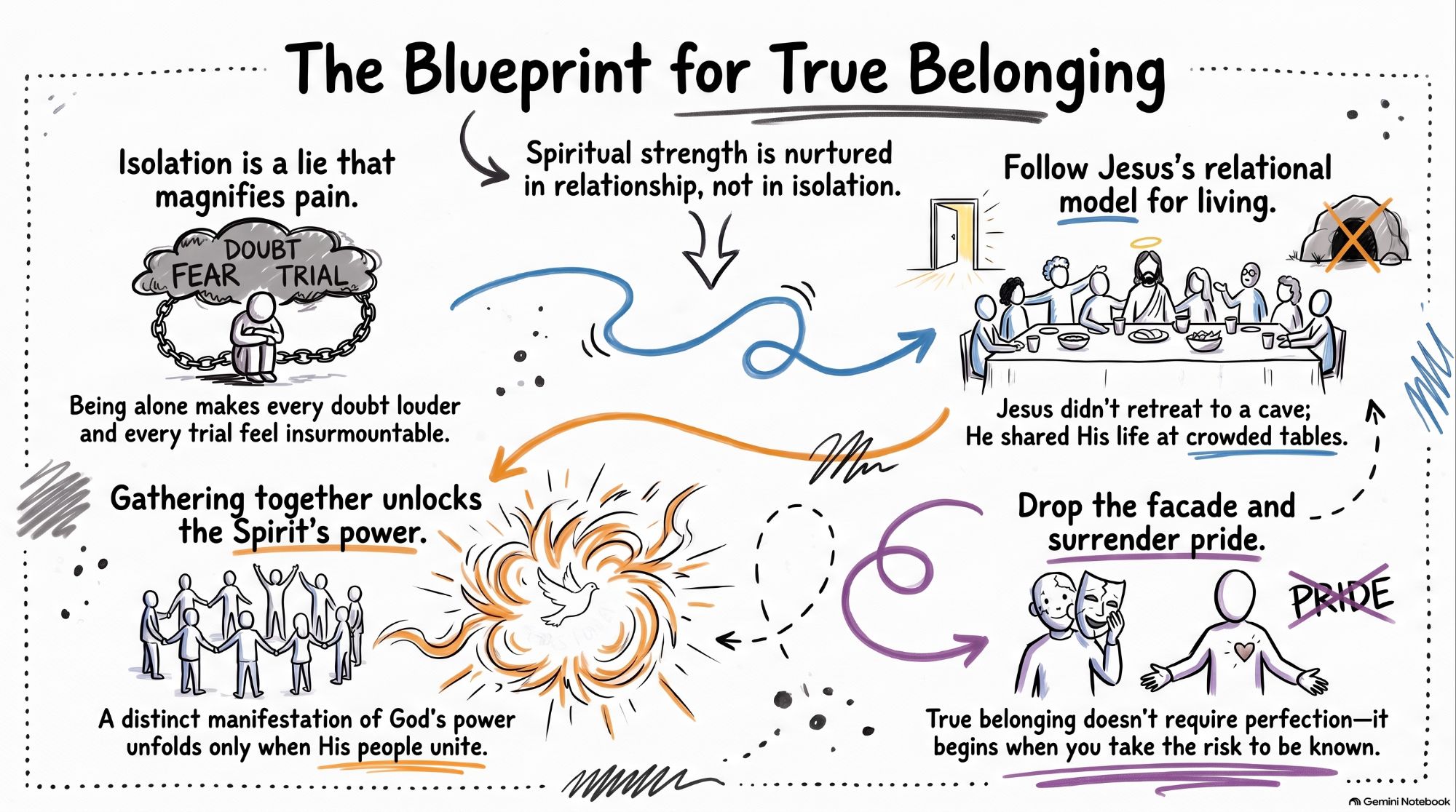
Let’s begin from the start. The Bible contains two separate stories that require distinction.
The story in Luke 7:36-50 happens at Simon the Pharisee’s house in Galilee, but this one takes place at Simon, the former leper’s house. Simon, the former leper, lived in Bethany of Judea, where Lazarus was resurrected, and where Mary and Martha lived.
Another precious difference between the two stories is that the woman that anointed Jesus’ feet in Luke 7 was a sinner and a prostitute. Mary, Lazarus, and Martha’s sister, who sat at Jesus’ feet while Martha served the guests, was the one anointing Jesus’ body in Matthew 26:6-13 and Mark 14:3-9. Mary was Jesus’ disciple and a virtuous woman.
The amusing part of this situation is that Martha is busy serving the guests and attending to practical aspects, again, while Mary is engrossed in worshiping Jesus, without even attempting to help with serving. This had happened before, and it’s happening again.
So many scenes unfolded, but only one stood the test of time, the one that unfolded with passion, devotion, extravagant love, public, and costly worship, sacrificial in its essence and personal in its beauty. Only a heart deeply in love could ever offer such lavish devotion.
John 12:3 NASBS Mary then took a pound of very costly perfume of pure nard, and anointed the feet of Jesus and wiped His feet with her hair; and the house was filled with the fragrance of the perfume.
Martha was serving the guests, attending to the needs at hand, and without her, no one could be accommodated. Lazarus sat at the table with Jesus in a place of honor and celebration. It is truly an honor to serve the Lord and attend to the needs of those who are close to Jesus. What an honor to recline at the table and share the most precious moments of intimacy with Jesus, our beloved.
It’s a great honor to be celebrated by Him. Beautiful moments that were undoubtedly in the memories of those inside that house. The time spent with Jesus is something that will leave a lasting impression and create memories that will never fade away.
But it was Mary who created the most precious moment and strongest memory of that night. She anointed Jesus’ body prophetically, making a profound worship statement without saying a word. In doing so, she captured Jesus’ attention in her sacrificial worship.
In that, we learn two things. The first one is that true devotion speaks louder than words and captures God’s heart with our extravagant love. The second is that the time spent with Jesus is something that will leave a lasting impression and create memories that will never fade away.
O sucesso material e as realizações pessoais são frequentemente associados à vitória no mundo contemporâneo. Mas a vitória para os primeiros cristãos significava fé inabalável e entrega total, mesmo diante de perseguição e morte. Ao mesmo tempo em que o mundo se alegrava com o sofrimento dos cristãos, eles eram mostrados não como perdedores, mas como pilar de vitória da fé.
Em situações difíceis, a entrega altruísta serve como um sinal da vitória final da fé. Graças ao que Jesus estava prestes a lhes dizer, os primeiros cristãos se prepararam para lutas, sofrimento e entrega.
Em um cenáculo mal iluminado na agitada cidade de Jerusalém, os 12 discípulos se reuniram com Jesus durante o clima solene da última ceia. A luz bruxuleante das velas dançava nas paredes, produzindo longas sombras que refletiam a incerteza em seus corações. O cheiro forte do pão recém-assado e da comida que eles haviam compartilhado preenchiam o ar.
Eles estavam sentados ao redor da mesa, os olhos fixos em Jesus, e podiam ouvir os sons distantes das ruas movimentadas da cidade. Esses sons contrastavam fortemente com o silêncio sufocante dentro da sala. Jesus já havia se humilhado lavando seus pés cansados, lembrando a cada discípulo de seu amor infinito e coração de servo.
No entanto, uma sensação de traição iminente pairava em meio a esse momento íntimo. Jesus falou com eles com determinação e tristeza, ciente da escuridão que se aproximava. Sua voz, carregada de um forte senso de propósito, refletia o peso de seu sacrifício inevitável.
Jesus revelou a dura verdade que os esperava no meio da partilha do pão e do vinho, que são símbolos da nova aliança. Suas almas sentiram suas palavras como uma melodia triste. Ele os alertou sobre os desafios que enfrentariam, a perseguição e a morte como resultado de seu amor inabalável por eles.
Os discípulos, com os corações pesados de descrença, agarraram-se a cada palavra sua, desesperados por segurança e orientação. Jesus procurou fortalecer a fé deles, para impedi-los de tropeçar em seu caminho. Naquele momento sagrado, os discípulos sentiram uma mistura de medo, confusão e uma lealdade inabalável ao seu amado Rabbi.
A sala, antes cheia de esperança e expectativa, agora tinha um ar de solenidade e pressentimento. Os discípulos, embora inconscientes da magnitude total do que estava por vir, sabiam que suas vidas estavam prestes a mudar para sempre. Naquele cenáculo, em meio à luz bruxuleante das velas e ao aroma da refeição, Jesus preparou seus discípulos para as provações que viriam, enquanto eles se preparavam para enfrentar o inimaginável.
Jesus abriu a boca e disse:
João 16:1-3,33 NVIP
“Eu tenho dito tudo isso para que vocês não venham a tropeçar. [2] Vocês serão expulsos das sinagogas; de fato, virá o tempo quando quem os matar pensará que está prestando culto a Deus. [3] Farão essas coisas porque não conheceram nem o Pai, nem a mim. [33] “Eu disse essas coisas para que em mim vocês tenham paz. Neste mundo vocês terão aflições; contudo, tenham ânimo! Eu venci o mundo”.
Avançando um pouco mais de um século, chegamos a um período que Tertuliano, um membro proeminente da igreja primitiva, descreveu como sendo tão sangrento e opressivo que ele disse “o sangue do mártir e a semente da igreja”. O livro Eusébio: A História da Igreja, de Paul L. Maier, afirma que “Pois o adversário, na antecipação de seu próprio advento iminente, nos atacou com todas as suas forças. Ele usou todos os meios para treinar seus seguidores contra os servos de Deus, de modo que não fomos apenas excluídos de casas, banheiros e mercados, mas fomos proibidos de aparecer em qualquer lugar. Mas a graça de Deus resgatou os fracos ao diminuir os fortes, pilares de homens que atraíram para si o ataque total do Inimigo e suportaram todo castigo enquanto se apressavam para Cristo, provando que os sofrimentos deste tempo presente não são dignos de serem comparados com a glória que será revelada em nós. Romanos 8:18.
Enquanto muitos estavam sendo arrastados para serem torturados, presos e mortos só porque confessavam ser cristãos, um jovem chamado Vettius Epagathus se ofereceu para falar em defesa daqueles que estavam sendo acusados de serem ateus (não adorar o Imperador como um Deus) ou ímpios. O entendimento no Império era que a ira dos Deuses estava vindo sobre o Império porque os cristãos não cumpriam com sua parte em adorar e sacrificar da maneira que os romanos faziam.
Vettius enfrentou clara resistência e foi questionado diretamente sobre sua afiliação ao cristianismo. Totalmente ciente das consequências de declarar abertamente sua fé diante das autoridades romanas, ele corajosamente admitiu ser um cristão. Como resultado, ele ganhou um título reverenciado entre seus companheiros cristãos – “O Consolador dos Cristãos”. Embora esse nome tradicionalmente pertencesse ao Espírito Santo, Vettius foi um jovem notável que sacrificou sua vida em uma tentativa de proteger e defender seus irmãos e irmãs em Cristo.
Em contraste gritante, muitos cristãos hoje se tornaram consumidos pela busca incessante por riqueza, sucesso e conforto. A mudança de perspectiva distorceu sua compreensão da vitória, como uma miragem nebulosa no horizonte. Agora, a vitória é equiparada à abundância material e às realizações mundanas, cegando-os para a verdadeira essência do que significa ser um cristão. O caminho outrora vibrante de Jesus, pavimentado com altruísmo e sacrifício, tornou-se obscurecido. A serenidade que vem de saber o destino final do crente parece distante, como um sussurro intangível no vento.
Nós nos adaptamos aos costumes do mundo em troca de riqueza, reconhecimento e prosperidade? É compreensível se você se adaptou. Até Jesus foi tentado a fazer isso quando estava no deserto. No entanto, quero convidá-lo a mudar seus caminhos e começar a viver um caminho mais profundo e significativo em sua fé. Em vez de viver para ganho pessoal, vamos nos concentrar em ajudar os outros, servir com humildade e trabalhar juntos para expandir e sustentar o reino de Deus.
Encontraremos desafios que superam as lutas habituais enfrentadas por cada indivíduo. Essas dificuldades surgirão quando nos opusermos à corrupção prevalecente neste mundo e resultarão em perseguição por causa de nossa devoção. Jesus nos garante isso. No entanto, em meio a essas provações, experimentaremos uma paz celestial indescritível quando vivermos de acordo com Sua vontade e entregarmos nossas vidas diárias a Ele.
De acordo com a Bíblia e as experiências dos primeiros cristãos, tribulação e perseguição são sinônimos de uma vida vitoriosa e são dignas de louvor. Essas dificuldades frequentemente envolviam a perda de vidas e posses, tortura, abandono por entes queridos e dispersão. No entanto, em meio a essas provações, Jesus assegurou a seus discípulos seu amor, bem como o amor do Pai. Ele enviou o Espírito Santo para ajudar, confortar, guiar e lembrá-los da verdade, dando-lhes a certeza de que são filhos de Deus.
Na verdade, seguir Jesus significava aceitar uma sentença de morte. Mas dentro dessa sentença de morte, a vontade deles, seus sonhos, aspirações, propósito, missão e planos estavam alinhados com Sua Vontade, sonhos, aspirações, propósito, missão e planos. É nesse lugar de entrega completa que eles encontraram paz profunda, um claro senso de direção e alegria indescritível, tudo Nele!
É neste lugar de rendição que oramos: “Venha o teu reino, seja feita a tua vontade, assim na Terra como no Céu!” Aceitaremos o convite para redefinir nossa compreensão de uma vida bem-sucedida como cristãos, mesmo que enfrentemos perseguição, tribulação e sejamos obrigados a nos render a Ele completamente?
Lembremo-nos de que o ato altruísta de entrega é a vitória final da fé em tempos difíceis. Concentremo-nos em ajudar os outros, servir com humildade e trabalhar juntos para o benefício do reino de Deus em vez de viver para nosso próprio lucro.
In the modern world, the concept of victory is often linked to material success and personal achievements. However, for early Christians, victory meant unwavering faith and selfless surrender, even in the face of persecution and death. While the world laughed and rejoiced at the suffering of Christians, they were depicted not as losers, but as victorious pillars of the faith.
“In times of persecution, the selfless act of surrender becomes a testament to the ultimate victory of faith. The early Christians were prepared for the battle, the suffering, and the surrender, thanks to what Jesus was about to tell them.”
It all unfolded during the solemn atmosphere of the last supper, as the 12 disciples gathered with Jesus in a dimly lit upper room in the bustling city of Jerusalem. The flickering candlelight danced on the walls, casting long shadows that mirrored the uncertainty in their hearts. The air was heavy with the scent of freshly baked bread and the lingering aroma of the meal they had shared.
As they sat around the table, their eyes fixed on Jesus, they could hear the distant sounds of the city’s bustling streets, a stark contrast to the weighty silence within the room. Jesus had already humbled himself by washing their weary feet, a gesture that resonated with each disciple, reminding them of his boundless love and servant heart.
But amidst this tender moment, a sense of impending betrayal hung in the air. Jesus, aware of the approaching darkness, spoke to them with a mixture of sorrow and determination. His voice, filled with a profound sense of purpose, carried the weight of his impending sacrifice.
In the midst of sharing the bread and wine, symbols of the new covenant, Jesus unveiled the harsh truth that awaited them. His words were like a bittersweet melody, resonating in their souls. He warned them of the trials that would come, the persecution and death they would face for their unwavering love for him.
The disciples, their hearts heavy with disbelief, clung to his every word, desperate for reassurance and guidance. Jesus sought to strengthen their faith, to prevent them from stumbling on their path. In that sacred moment, the disciples felt a mixture of fear, confusion, and an unwavering loyalty to their beloved teacher.
The room, once filled with hope and anticipation, now held an air of solemnity and foreboding. The disciples, although unaware of the full magnitude of what lay ahead, knew that their lives were about to change forever. In that upper room, amidst the flickering candlelight and the scent of the meal, Jesus prepared his disciples for the trials to come, as they prepared themselves to face the unimaginable.
Jesus opened his mouth and said:
“These things I have spoken to you so that you may be kept from stumbling. [2] They will make you outcasts from the synagogue, but an hour is coming for everyone who kills you to think that he is offering service to God. [3] These things they will do because they have not known the Father or Me. [33] These things I have spoken to you, so that in Me you may have peace. In the world you have tribulation, but take courage; I have overcome the world.”
John 16:1-3,33 NASBS
Moving ahead a little more than a century, we come to a period that Tertullian, a prominent member of the early church, described as being so bloody and oppressive that he said “the blood of the martyr is in the seed of the church.” The book Eusebius: The Church History by Paul L. Maier, states that “For the adversary, in the foretaste of his own imminent advent, attacked us with all his might. He used every means to train his followers against the servants of God, so that we were not only excluded from homes, baths, and marketplaces, but were forbidden to appear anywhere. But the grace of God rescued the weak by deploying the strong, pillars of men who drew themselves the full attack of the Enemy and endured every punishment as they hurried to Christ, proving that the sufferings of this present time are not worthy to be compared with the glory that shall be revealed in us. Romans 8:18.
While many were being dragged to be tortured, imprisoned, and killed just because they confessed to be Christians, a young man named Vettius Epagathus offered to speak in defense of those being accused of being atheistic (not worshiping the Emperor as a God) or impious. The understanding in the Empire was that the wrath of the Gods was coming upon the Empire because the Christians did not comply with their part in worshipping and sacrificing the way the Romans would.
Vettius faced clear resistance and was directly questioned about his affiliation with Christianity. Fully aware of the consequences of openly declaring his faith before the Roman authorities, he bravely admitted to being a Christian. As a result, he earned a revered title among his fellow Christians – “The Comforter of the Christians.” Although this name traditionally belonged to the Holy Spirit, Vettius was a remarkable young man who sacrificed his life in an attempt to protect and defend his fellow brothers and sisters in Christ.
In stark contrast, many Christians today have become consumed with the relentless pursuit of wealth, success, and comfort. The shift in perspective has distorted their understanding of victory, like a hazy mirage on the horizon. Now, victory is equated with material abundance and worldly achievements, blinding them to the true essence of what it means to be a Christian. The once vibrant path of Jesus, paved with selflessness and sacrifice, has become obscured. The serenity that comes from knowing their ultimate destination feels distant, like an intangible whisper in the wind.
Have we adapted to the ways of the world in exchange for wealth, recognition, and prosperity? It’s understandable if you have. Even Jesus was tempted to do so when he was in the desert. However, I want to invite you to change your ways and start living a more profound and meaningful path in your faith. Instead of living for personal gain, let’s focus on helping others, serving with humility, and working together to expand and sustain God’s kingdom.
We will encounter challenges that surpass the usual struggles faced by every individual. These difficulties will arise when we oppose the corruption prevailing in this world and will result in persecution because of our devotion. Jesus guarantees us this. However, amidst these trials, we will experience an indescribable heavenly peace when we live in accordance with His will and surrender our daily lives to Him.
According to the Bible and the experiences of early Christians, tribulation and persecution are synonymous with a victorious life and are worthy of praise. These hardships often involved the loss of life and possessions, torture, abandonment by loved ones, and being scattered. However, amidst these trials, Jesus assured his disciples of his love, as well as the love of the Father. He sent the Holy Spirit to assist, comfort, guide, and remind them of the truth, giving them the assurance that they are God’s children.
In fact, following Jesus meant accepting a death sentence. But within this death sentence, their will, dreams, aspirations, purpose, mission, and plans were aligned with His Will, dreams, aspirations, purpose, mission, and plans. It is in this place of complete surrender that they found profound peace, a clear sense of direction, and indescribable joy, all in Him!
It is in this place of surrender that we pray, “Your kingdom come, your will be done, on Earth as it is in Heaven!” Will we accept the invitation to redefine our understanding os a successful life as Christians even if we came to face persecution, tribulation, and are obliged to surrender to Him completely?
Let us remember that in times of persecution, the ultimate victory of faith shines through in the selfless act of surrender. Instead of living for personal gain, let’s focus on helping others, serve with humility, and work together for the benefit of God’s kingdom.
And the peace of God, which surpasses all comprehension, will guard your hearts and your minds in Christ Jesus.
Just as a strong fortress protects a city from enemy attacks, the peace of God acts as an impenetrable shield, safeguarding our hearts and minds in Christ Jesus. But that only happens when we bring before God our uncertainties. And Him, through our interaction with Him, He acts in our hearts removing the uncertainties and replacing them with a sense of protection, of provision, and of satisfaction within His Arms. That’s what His Peace means.
For example, imagine a person who is facing a difficult decision in their career. They may feel anxious, uncertain, and fearful about making the wrong choice. However, when they bring their uncertainties before God and seek His guidance, the peace of God comes upon them.
In this moment of interaction with God, He works in their hearts, removing the uncertainties and replacing them with a deep sense of protection.
They no longer feel overwhelmed by the decision, but rather, they trust that God is guiding their steps. They find satisfaction and contentment within the loving embrace of God’s arms, knowing that He will provide for their needs and lead them on the right path.
This is the transformative power of God’s peace, which goes beyond human comprehension and guards our hearts and minds in Christ Jesus. The peace of God brings clarity, and helps us discern the direction God is guiding us!
“In the embrace of God’s peace, uncertainties fade and clarity prevails, guiding us towards our divine purpose.”
2 Timóteo 2:11-13 NVIP Esta palavra é digna de confiança: Se morremos com ele, com ele também viveremos; [12] se perseveramos, com ele também reinaremos. Se o negamos, ele também nos negará; [13] se somos infiéis, ele permanece fiel, pois não pode negar-se a si mesmo.
A bondade de Deus não muda diante das nossas falhas. Ele continuou nos perseguindo e tentando nos mostrar Seu amor mesmo quando estávamos mortos em nossos pecados. É apenas no sua Graça que somos salvos, é pela Sua Graça que permanecemos e é pela Sua Graça que ofertamos.
As bênçãos de Deus continuam a ser derramadas apesar da falamos em ofertar. Ele faz nascer o sol sobre as pessoas justas e injustas. Não ofertamos porque queremos receber de volta, ofertamos porque sabemos que Ele é bom e confiamos no Seu cuidado sobre nós.
Ofertar éo mesmo que carregar Sua Glória em nossos ombros. O rei Davi tentou trazer a Arca para Jerusalém nas costas de animais, mas Deus só ficou satisfeito quando ela foi levada sobre os ombros do seu povo. Ofertar é participar de Sua Glória. É nossa responsabilidade como crentes apoiar a Obra de Deus e ofertar é uma forma de expandir o Seu reino.
Através daqueles que oram, dos pés que vão e das mãos que dão expandimos o Seu Reino. Não damos com o coração para receber de volta, mas com o coração alegre para abençoar Seu reino. Servir a Deus não é construir um tesouro na Terra, mas construir um tesouro que não será consumido. Damos para abençoar, não para receber.
Ofertar é um exercício de fé, e através de ofertamos a nossa fé cresce, e na fé agradamos a Deus. Hebreus 11:6 NASBS – E sem fé é impossível agradá-lo, pois aquele que se aproxima de Deus deve crer que Ele existe e que é galardoador daqueles que o buscam.
Ofertar com alegria nos permite ver Sua multiplicação em nossas vidas, porque Deus ama quem dá com alegria. Além disso, quem semeia pouco, colherá pouco. E aqueles que semeiam abundantemente colherão abundantemente. 2 Corinthians 9:6.
No final, se envolver financeiramente com a obra de Deus é uma oportunidade de experimentar em primeira mão o poder transformador de ofertar com fé. “Oferte com o coração alegre, não para receber, mas para experimentar o poder transformador da fé.”
”Ofertar com o coração alegre é como plantar uma semente em solo fértil; pode começar pequeno, mas com fé e tempo, tem potencial para se transformar numa colheita bela e abundante.”
It is a trustworthy statement: For if we died with Him, we will also live with Him; [12] If we endure, we will also reign with Him; If we deny Him, He also will deny us; [13] If we are faithless, He remains faithful, for He cannot deny Himself.
God’s goodness doesn’t change in the face of our shortcomings. He kept pursuing us and trying to show us His love even when we were dead in our sins. It is by His Grace we are saved, it is by His Grace that we stand and it is by His Grace that we give.
God’s blessings continue to pour despite our lack of giving. He makes the sun rise over just and unjust people. We don’t give because we want to receive back, we give because He is good!
Giving is the same than carrying His Glory on our shoulders. King David tried to bring the Ark to Jerusalem on the back of animals, but God was only pleased when it was taken on the shoulders of his people. Giving is participating in His Glory. It’s our responsibility as believers to support God’s Work and giving is one of the ways to expand His kingdom. Through the knees that pray, the feet that go and the hands that give we expand His Kingdom.
We don’t give with the heart of receiving back, with give with a cheerful heart to bless His kingdom. Serving God isn’t about building a treasure on Earth, but about building a treasure that’s not going to be eaten away. We give to bless, not to get.
Giving is an exercise of faith, and through giving out faith grows, and in faith we please God. Hebrews 11:6 NASBS – And without faith it is impossible to please Him, for he who comes to God must believe that He is and that He is a rewarder of those who seek Him.
Giving cheerfully allows us to see His multiplication in our lives, because God loves those who give cheerfully. Also, those who sow sparingly, will reap sparingly. And those who sow bountifully will reap bountifully. 2 Corinthians 9:6.
In the end, giving is an opportunity to experience first hand the transformative power of giving in faith. “Give with a cheerful heart, not to receive, but to experience the transformative power of faith.”
Ministry teams collaborate for a common spiritual goal. They bring diverse talents and different levels of input to serve communities and further God’s kingdom. The benefits of ministry include spiritual growth and a sense of community, which usually outweigh the costs. However, it is important to understand and prepare for these costs.
Motivation Behind Ministry Team Participation
Initial Motivation
Many individuals join ministry teams seeking spiritual fulfillment and to be part of a growing and exciting ministry. This sense of purpose and belonging can be highly motivating.
Impact of Costs on Motivation
However, when the costs of participation outweigh the perceived benefits, motivation can decline. These costs can include time, energy, and personal sacrifices. It is crucial to balance expectations with reality in order to maintain long-term commitment.
Q: When the costs of something outweigh the benefits, what happens to your motivation? Why does this occur? In your opinion, do the costs of ministry outweigh the benefits?
Disciples’ View of Jesus Before Understanding Costs
Q: How did the disciples see Jesus before he spoke as about the costs of following Him? Who was Jesus to the disciples before He told them about the costs?
In Luke 14:25-33, the disciples initially saw Jesus as a miracle worker and leader. They were drawn to His charisma and the miracles He performed. However, they had to come to terms with the sacrificial nature of truly following Jesus, which required understanding the significant costs involved.
Jesus was teaching hard things to his disciples:
Luke 14:27,33 NASBS
Whoever does not carry his own cross and come after Me cannot be My disciple. [33] So then, none of you can be My disciple who does not give up all his own possessions.
Suddenly, the focus shifted from ruling on Earth with Jesus to dedicating our hearts, lives, possessions, and everything we have to expanding His kingdom. Jesus illustrated this through the story of the rich young man.
The Issue with the Rich Young Man (Mark 10:17-31)
Attachment to Wealth
The rich young man was eager to follow Jesus but was reluctant to part with his possessions. His attachment to wealth became a barrier to fully committing to Jesus.
Barrier to Full Commitment
Just like the rich young man, personal attachments such as wealth, relationships, and personal ambitions can hinder full commitment to Jesus and His call.
What do you think was the rich young man’s problem?
Highlighting Costs Related to a Vision or Decision
Timing
We have been discussing the costs and benefits of ministry involvement and in that matter I have an important question for you: When should we talk about the costs of ministry in relation to the vision, your involvement, and the decision you’ll make about how involved you want to be?
Early transparency about the costs related to a vision or decision is crucial. This helps in setting realistic expectations and preparing individuals for the sacrifices they might need to make.
Barriers to Fully Committing to Jesus and His Call
Personal Attachments
What is holding you back from giving yourself and surrendering yourself even more to Jesus and His calling for your life?
Personal attachments can often be barriers to fully committing to Jesus. These include:
Wealth as seen in Luke 12:13-21, 32-34
Relationships and Personal Ambitions: Philippians 3:7-15; 1 Corinthians 9:3-18
Keys to Better Ministry Participation
Fulfillment in your Calling – Each member needs to feel fulfillment in their calling
Engaging in ministry gives individuals a sense of value and accomplishment. Jeremiah 1:4-10 talks about God’s calling on Jeremiah’s life. This calling includes not just a job, but also a deep relationship with God and authority in His Kingdom. It’s important to understand that those involved in ministry are not just motivated by a servant heart or a job to do. People in the ministry team should feel valued, fulfilled, and experience personal growth in their ministry in order to experience fulfillment in their service to God and people.
For example, imagine a person who feels called to youth ministry. They may initially be motivated by their love for young people and their desire to serve God. However, as they engage in ministry, they begin to see the impact they have on the lives of the youth they work with. They witness the transformation and growth in their spiritual lives, and they feel a sense of accomplishment knowing that they are playing a part in shaping their future. Additionally, as they invest time and effort into building relationships with the youth, they also develop a deeper connection with God. They learn to rely on Him for guidance and wisdom in their ministry, strengthening their faith and deepening their relationship with Him. This experience of personal growth and spiritual intimacy brings a sense of value and fulfillment to their ministry. They no longer see it as just a job or a duty, but as a calling that empowers them to make a difference in the lives of others and to serve God wholeheartedly.
“Engaging in ministry not only brings value and accomplishment, but also a deep sense of purpose and fulfillment.”
Risk of Burnout – The is a tremendous need for us to both protect ourselves and the members of our team against burn out
It is crucial to avoid over-commitment to prevent burnout. When we take on too many ministry responsibilities or force others to do the same, we reach a dangerous point in our ministry. We end up doing so much that our lives become imbalanced, and we eventually become unable to continue with ministry. Some people are even unable to do ministry for the rest of their lives. I know many pastors who have experienced emotional exhaustion and depression, causing them to stop serving God in ministry and give up on their calling.
Over-commitment can lead to burnout because it places excessive demands on individuals, both physically and emotionally. When we take on too many responsibilities in ministry or expect others to do the same, we risk reaching a breaking point where our energy and enthusiasm are depleted. This can result in emotional exhaustion, depression, and ultimately, a loss of passion for serving in ministry. To prevent this, it is crucial to prioritize a balanced lifestyle that includes time for work, family, personal interests, self-care, and ministry. By maintaining this balance, we can sustain our commitment to ministry in the long term and avoid the risk of burnout.
For example, imagine a pastor who is passionate about their ministry and wants to make a difference in their community. They take on multiple leadership roles within their church, volunteer for various outreach programs, and constantly say yes to every request for help. They work long hours, sacrifice time with their family, neglect their personal interests, and rarely take time for self-care.
At first, they may feel a sense of accomplishment and satisfaction from their busy schedule, but over time, the demands become overwhelming. Their energy levels decline, and they start experiencing symptoms of burnout such as chronic fatigue, irritability, and a lack of motivation. Their family excitement to serve the Lord also diminishes and they might even experience anger towards the pastor for abandoning them and over committing to is
As a result, their ability to effectively serve in ministry diminishes, and they may eventually have to step down from their roles altogether. This scenario highlights the importance of avoiding over-commitment and maintaining a balanced lifestyle to preserve our well-being and sustain our passion for ministry.
“Balance is the key to sustaining our passion and preventing burnout in ministry.”
Proverbs 14:33 NASBS invites us to live our lives with wisdom and understanding by saying: Wisdom rests in the heart of one who has understanding, But in the hearts of fools it is made known.
1 John 4:17-19 NASBS tells us that:
By this, love is perfected with us, so that we may have confidence in the day of judgment; because as He is, so also are we in this world. [18] There is no fear in love; but perfect love casts out fear, because fear involves punishment, and the one who fears is not perfected in love. [19] We love, because He first loved us.
Overcommitment in ministry may be caused by a malignant root, which is the belief that our worth is determined by how much we do for others and for the greater good. This mindset leads to a constant need to prove ourselves and fear of not being enough in the eyes of God. However, our true worth and calling are not based on our actions, but on the fact that God loved us first. We can find confidence in knowing that as Jesus is, so are we in this world, and our worth is secure in His love.
Just as a tree’s worth is not determined by how many branches it has or how much fruit it bears, our worth in ministry is not determined by how much we do for others. Our true worth lies in the fact that we are deeply loved by God, and that alone is enough.
“Our worth is not measured by what we do, but by the love we receive and share.”
When we embrace this truth, we can find freedom from overcommitment and a renewed sense of purpose in ministry. We can focus on receiving and sharing the love of God, knowing that it is through this love that we truly make a difference in the lives of others. God is responsible for His bride and He takes care of His church.
Love and Support in the Team
A supportive team environment is crucial. Mutual understanding and pastoral care help to nurture a loving and supportive atmosphere. It is in unity that the Lord ordains the blessing and pours out His anointing over our lives (Psalm 133:1-3). It is in showing His love to one another and in becoming one that the world will know we have been sent by Jesus. (John 17:21)
While working with others, we may have encountered competition and backstabbing. However, if we strive to create an atmosphere of love, care, and service, we can experience real growth. We can also find genuine friendships and support, along with a profound sense of belonging.
A supportive team environment is like a fertile soil that nourishes the growth of a thriving garden. “A supportive team environment is the fertile soil that cultivates the seeds of success.”
Conflict Resolution
Conflicts are bound to happen, but it is crucial to address and resolve them for a healthy ministry team.
The relationship holds more importance than holding onto your offense. Winning an argument should not overshadow the significance of the relationship. Moreover, protecting your physical and mental health should be prioritized over putting yourself at risk.
If your health, whether physical or mental, is in jeopardy, it is important to forgive and bless the person but also protect yourself from their advice and abuse.
Unfortunately, there have been numerous cases of pastors and leaders mistreating their team members within ministry teams.
Emotional manipulation concerning money, time, and power has been observed. Disturbingly, there have been cases of pastors manipulating vulnerable individuals emotionally to fulfill their own sexual desires.
To determine if you are a victim of abuse, consider the following signs: if it involves physical abuse, it should be obvious and you should leave the abuser and contact the police.
In cases of emotional abuse, the abuser will employ various tactics, such as shaming, guilt-tripping, and pushing you in all directions to serve their desires at your expense.
This can harm your finances, time, health, family, and mental well-being. Emotional manipulation can be recognized by its forcefulness and disregard for your input, opinions, dreams, and well-being. You may serve them, but they do not take care of you.
Remember, Jesus is the good Shepherd. In situations like these, consider whether the person is interested in caring for you or only in what you can give.
Matthew 18:15-22 provides tremendous further guidance on conflict resolution within the team.
Maintaining Divine Priorities
It’s vital to ensure that God and family come before ministry. While ministry is an important calling, our relationship with God and our family should always take precedence.
By placing God first, we seek His guidance and strengthen our faith, enabling us to serve others more effectively.
Similarly, prioritizing our family ensures that we nurture and support our loved ones, fostering healthy relationships and a strong foundation. Balancing our commitments is crucial to maintain a harmonious and fulfilling life, ensuring that our ministry is built on a solid and sustainable foundation.
The biggest regret of many pastors by the end of their lives is having given all their time to ministry and neglected their wives and kids. Billy Graham was one of the pastors that came forward to publicly apologize to his wife and kids for his neglect. His wife even though about ending her own life.
The neglect of pastors for their own families have been for years now breaking their families and making their kids not want to serve the Lord.
Just as a tree needs strong roots to grow and thrive, our ministry must have a solid foundation in God and family. Neglecting these essential aspects is like neglecting to water and nourish the roots of a tree, eventually causing it to wither and die.
For example, imagine a pastor who dedicates all their time and energy to their ministry, often neglecting their relationship with God and their family. They spend countless hours at church, attending meetings, counseling others, and organizing events. While their ministry may flourish on the surface, behind closed doors, their family suffers. Their spouse feels lonely and disconnected, longing for quality time and emotional support. Their children feel neglected and resentful, as their parent is rarely present for important milestones and moments. Over time, the strain and neglect take a toll, and the once-strong family unit begins to crumble.
The pastor’s children may rebel against their faith, feeling abandoned and unimportant. The spouse may grow resentful and bitter, feeling like a secondary priority in their partner’s life. Ultimately, this neglect of God and family undermines the pastor’s ministry as well, as they lose credibility and effectiveness due to the instability and brokenness within their own household. By prioritizing God and family, the pastor could have built a solid foundation and nurtured strong relationships, ensuring the longevity and success of their ministry.
“Before ministry, let God and family be the pillars that uphold your calling.”
The dialogue below aims to encourage families of pastors to restore balance in their lives. It suggests that pastors should learn to delegate tasks, say no to busyness, prioritize time with their family, repent for neglecting their families, and create a schedule that suits their family’s needs in collaboration with their spouse and children. Personally, I firmly believe that a pastor should spend no more than two nights away from their family each week, with the ultimate goal being to spend just one night away from them.
Pastor: (Busy typing on his laptop) Honey, I’m sorry I can’t help with the kids right now. I have so much work to do for the ministry.
Wife: (Sighs) It feels like you’re always too busy for us. The kids miss spending time with their dad, and honestly, I’m feeling overwhelmed trying to handle everything alone.
Pastor: I understand, but this ministry work is important. It’s my calling, and I have to prioritize it.
Wife: I know it’s your calling, but shouldn’t our family also be a priority? The kids need your guidance and support, and I need your help too. We can’t keep feeling neglected like this.
Pastor: I just thought that by serving God through the ministry, I’m doing what’s best for our family.
Wife: I appreciate your dedication, but it’s not just about serving God. Our family needs you present in our lives. We need to strengthen our bond, create memories together, and feel supported.
Pastor: I never intended to neglect you or the kids. I thought I could balance it all, but maybe I’ve lost sight of what truly matters.
Wife: It’s not too late to make a change. Let’s find a way to prioritize both the ministry and our family. Maybe we can set aside specific times for family activities or find someone to help with some of your workload.
Pastor: You’re right. I’ve been so focused on the ministry that I’ve neglected my role as a husband and father. I need to reassess my priorities and find a better balance.

Wife: I’m glad you see that. We’re in this together, and we’ll figure it out. But please remember, God and family should be the pillars that uphold your calling, not one at the expense of the other.

Pastor: I promise to make a change and prioritize our family. Let’s work together to create a healthy balance between ministry and our lives as a family.
Conclusion
Balanced Commitment
Ensuring that team members feel fulfilled while avoiding burnout is key to sustainable ministry participation.
Support System
Building a supportive and loving team environment helps to nurture and sustain the commitment of all members.
Divine Priorities
Keeping God and family at the forefront ensures that we maintain a healthy and balanced ministry life. By doing so, we can fully commit to Jesus and His call without being overwhelmed by the costs.
This blog post aims to highlight the commitment required in ministry teams, the potential barriers, and the immense benefits of participating in such teams. Through transparency, realistic expectations, and maintaining divine priorities, we can ensure a fulfilling and sustainable ministry experience.
1 Peter 3:9 NASBS not returning evil for evil or insult for insult, but giving a blessing instead; for you were called for the very purpose that you might inherit a blessing.
Dealing with evil schemes against you can be truly difficult. However, it is important to respond with blessings, endure suffering for the sake of righteousness, and strive for peace in all relationships. This is the calling we have received. It is comforting to know that the Lord hears the prayers of the righteous and opposes evildoers.
Just as a lighthouse guides ships through treacherous waters, in the face of evil schemes against you, you must shine your blessings, navigate through suffering for righteousness’ sake, and seek peace in every relationship. For we were called to be beacons of light in a world of darkness. The Lord listens to the prayers of the righteous, illuminating their path, while setting His Face against evildoers, casting them into the shadows.
For example, imagine a person facing constant bullying at their workplace. Instead of retaliating with more negativity, they choose to respond with kindness and compassion, blessing those who mistreat them. They endure the suffering for the sake of doing what is right, refusing to engage in the same evil schemes. In their interactions with colleagues, they actively seek peace, striving to build healthy relationships. This person becomes a beacon of light in the midst of darkness, guiding others towards a better way of treating one another. As they pray for guidance and strength, the Lord listens and provides wisdom, illuminating their path and giving them the courage to stand against the evildoers. Meanwhile, those who perpetuate the evil schemes are cast into the shadows, their actions exposed by the light of righteousness.
“In the face of evil schemes, let your blessings be the lighthouse that guides others towards a brighter path.”
It is evident that actions which cause destruction, humiliation, brokenness, gossip, anger, and any form of an assault on someone’s integrity and identity are not of God, but of the devil.
For example, spreading rumors and engaging in gossip about someone’s personal life not only causes humiliation and brokenness but also goes against the values of love and respect that the Word of God promotes. Such actions serve to divide and harm individuals, perpetuating a cycle of antagonism and hurt. They are manifestations of the devil’s influence, as they undermine unity, compassion, and the preservation of one’s integrity and identity.
Our actions should reflect honesty, kindness, compassion, fairness, respect, and patience, as all of these qualities are encompassed by love. Instead of plotting against or acting/reacting against people, our role as ambassadors of the kingdom of God is to foster unity, protection, and fairness.
“Our actions speak louder than words, revealing the true nature of our character and the presence of light or darkness within us.”
Building upon that reflection, my question is whether, as Christians, we should resort to attacking and plotting against those with whom we disagree.
In today’s world, there are numerous adversaries of the Christian doctrine, both within and outside the church. It is not uncommon for harsh words and heated disagreements to arise when Christians seek to exert their influence and stand firm in their beliefs.
Many of these arguments, discussions, and even protests stem from a genuine desire to make the world more Christ-like. However, I question whether adopting the tactics of the Pharisees, who opposed Jesus to protect their religion, is the appropriate approach to influencing society today.
Here’s how they acted against Jesus:
Matthew 26:1-5 NIV When Jesus had finished saying all these things, he said to his disciples, [2] “As you know, the Passover is two days away-and the Son of Man will be handed over to be crucified.” [3] Then the chief priests and the elders of the people assembled in the palace of the high priest, whose name was Caiaphas, [4] and they schemed to arrest Jesus secretly and kill him. [5] “But not during the festival,” they said, “or there may be a riot among the people.”
The Pharisees’ tactics were to kill, mock, demoralize, and destroy anything and everything that would stand against both their way of living and their liturgy, and that distanced them from those in need of help and vice versa. However, as Christians, it is important for us to reflect on Jesus’ teachings and example. Jesus, in contrast to the Pharisees, demonstrated love, compassion, and selflessness.
Instead of resorting to violence or harsh tactics, Jesus reached out to the marginalized, offered healing and forgiveness, and taught his followers to love their enemies. As Christians, our appropriate response should align with Jesus’ teachings, emphasizing empathy, kindness, and a willingness to help others, even when they differ from us.
Rather than seeking to destroy or distance ourselves from those who disagree with us, we should strive to build bridges, foster understanding, and promote unity through acts of love and grace. An example of this can be seen in the story of the Good Samaritan, where Jesus teaches us to extend compassion and assistance to those in need, regardless of their background or beliefs.
I am not here to challenge the eternal values Jesus taught us, nor the fact that some of these values may conflict with worldly standards of living. Rather, I suggest that we strive to live in harmony with those who hold differing beliefs.
Instead of emulating the Pharisees who schemed in secret, distanced themselves, and harbored dislike for those who were different, we should pray for our enemies, serve and do good to those who attack us, and let our example, particularly the benevolent actions that flow from a heart filled with God’s goodness, influence the world.
For example, instead of engaging in aggressive confrontations or plotting against those who disagree with us, we can choose to engage in open and respectful dialogue. We can seek to understand their perspectives, empathize with their concerns, and find common ground where possible. By demonstrating love, compassion, and genuine interest in their well-being, we can build bridges of understanding and foster meaningful connections.
This approach aligns with the teachings of Jesus, who encouraged his followers to love their enemies and pray for those who persecute them. Through our actions and attitudes, we can show the transformative power of Christ’s love and inspire others to consider the truth of the Gospel.
“Instead of attacking and plotting against those we disagree with, let us strive to be living examples of Christ’s love and compassion.”